
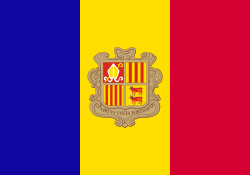
Andorra
Principality of Andorra
Authors: La Ligne Fine – Institut
Published date: August 18, 2026
Key data
Official name: Principality of Andorra.
Capital: Andorra la Vella.
Population: around 89,000 inhabitants at the beginning of 2026 according to available estimates, with a very highly internationalised resident population and a significant proportion of foreign residents. The IMF uses a population of about 0.09 million inhabitants for its 2026 projections[1].
Area: 468 km². Andorra is a Pyrenean micro-state landlocked between France and Spain, in the heart of a mountain area, cross-border traffic and logistical dependence. Its small size is both an advantage in terms of institutional agility and a structural constraint of scale.
Official language: Catalan. French, Spanish and Portuguese are widely used in social, commercial and tourist life, due to the proximity to France and Spain, the migratory history and the open economic model.
Currency: euro. Andorra uses the euro as part of a monetary agreement with the European Union. The country is not part of the eurozone, nor of the European Union, but has a close relationship with it.
Political system: parliamentary co-principality. Andorra is a parliamentary system whose heads of state are two co-princes: the President of the French Republic and the Bishop of Urgell. Day-to-day executive power is exercised by the government, headed by a head of government accountable to the General Council.
Heads of state: the two co-princes of Andorra: French President Emmanuel Macron and the bishop of Urgell, currently Joan-Enric Vives i Sicília until the ecclesiastical transition began, with Josep-Lluís Serrano Pentinat appointed coadjutor bishop in 2024 and called to become ecclesiastical co-prince. The structure of the co-principality remains one of the most unique institutional features of Andorra.
Head of government: Xavier Espot Zamora, head of government since 2019, re-elected after the 2023 legislative elections. He remains the central figure in Andorran political life and in the steering of the association agreement with the European Union.
Parliament: General Council, composed of 28 members. The 2023 legislative elections gave a majority to Demòcrates per Andorra and its allies, allowing Xavier Espot to continue his mandate. The IPU lists the legislative election of 2 April 2023 as the last general parliamentary election[2].
GDP: The IMF indicates a current GDP of around $4 billion for Andorra in 2026, in a very small but high-income economy[3].
Recent growth: According to the IMF, the Andorran economy continued to exceed expectations in 2025, with growth estimated at 2.9%, driven by financial services, real estate and construction[4].
Inflation: The IMF indicates that average inflation rose from 3.1% in 2024 to 2.4% in 2025, before an expected rise to around 3% in 2026[5].
Employment: The labour market is operating at almost full employment. The IMF points to near-full employment, but identifies labor shortages and affordable housing as major constraints on growth potential[6].
Structuring sectors: tourism, trade, hospitality, ski resorts, real estate, construction, financial services, attractive taxation, cross-border activities, services to residents and visitors.
European status: Andorra is not a member of the European Union. The country has been negotiating an in-depth association with the EU for more than a decade. In April 2024, the European Commission proposed the signing and conclusion of an association agreement with Andorra and San Marino. The European Parliament then considered the agreement between the EU, Andorra and San Marino to be one of the most comprehensive agreements ever concluded by the Union with third countries[7].
Main issues: association agreement with the European Union, post-banking secrecy economic model, housing, tourism, reception capacity, diversification, ageing, taxation, connectivity with France and Spain, climate change in the mountains, sustainability of ski resorts, governance of a very open micro-state.
- Executive Summary
Andorra is a micro-state whose strategic importance is measured neither by its population, nor by its military power, nor by its traditional diplomatic weight. Its centrality lies in something else: its ability to survive, adapt and prosper as an intermediation space between small-scale sovereignty, attractive taxation, service economy, mountain tourism, finance, cross-border trade and proximity to the European Union without full membership of it.
The Principality is a textbook case of European micro-sovereignty. It is not a member of the European Union, but uses the euro. It is not a member of the euro area, but is closely dependent on the European economic environment. It does not have an army, but benefits from a security environment stabilized by its position between France and Spain. It has a very old institutional regime, the co-principality, but in 1993 it adopted a modern Constitution. It has long been associated with a model of banking secrecy and attractive taxation, but it has gradually adapted its rules to international standards of financial transparency, exchange of information and tax cooperation.
Andorra’s central challenge for 2026-2030 is the transformation of its model. The country is gradually moving away from an economy based on the classic combination of tourism, trade, real estate, finance and a tax differential. This model is still efficient, but it is under pressure. There are many visitors, housing is becoming difficult to access, there is a shortage of employees, property prices are rising, cross-border infrastructure is becoming a strategic issue, public finances will have to absorb ageing, and climate change is weakening the mountain model.
The IMF praised the resilience of the Andorran economy in 2026, with growth in 2025 exceeding expectations, supported by financial services, real estate and construction. But it also identified the main structural risks: ageing, future pension and health spending, labour shortages, affordable housing, limited potential growth and climate risks to tourism[8]. This reading sums up the Andorran paradox: the country is rich, stable and attractive, but it is constrained by its own attractiveness.
The association agreement with the European Union is the main strategic dossier. It could open up more structured access to the European internal market and facilitate economic diversification. But it also raises internal concerns: loss of sovereignty, regulatory adaptation, competition, taxation, immigration, housing, social model, administrative capacity, transformation of the financial sector, relationship with regulated professions. The opposition and some citizens’ movements are calling for a binding referendum before signing or ratification, illustrating the sensitivity of the subject. In May 2026, the Andorran press reported that Concòrdia and Andorra Endavant supported the demand for a popular consultation before any irreversible progress on the agreement[9].
The European question is therefore more than a diplomatic issue. It is a question of society. For Andorra, the association with the EU is not just a treaty: it is potentially a transformation comparable, in its internal scope, to the 1993 Constitution. It forces the country to arbitrate between openness and protection, regulatory alignment and sovereignty, diversification and preservation of the model, mobility and real estate pressure. The European Parliament has described the agreement with Andorra and San Marino as particularly comprehensive, confirming its structural scope[10].
Economically, the Andorran model still works very well. Tourism remains a pillar. According to data taken up by the Andorran Minister of Tourism in 2025, tourism and trade account for around 60% of the country’s direct and indirect GDP, with 9.6 million visitors in 2024 and 11.9 million overnight stays[11]. In 2025, the local press reported that overnight stays remained around 12 million, with about 10 million visitors in total, including a significant proportion of day-trippers[12]. This tourist intensity gives wealth, but also raises the question of territorial carrying capacity.
The other major vulnerability is housing. In a territory of 468 km², subject to tourism, real estate, residential and cross-border pressure, housing is not just a social problem. It is becoming a factor of competitiveness, demographic balance, recruitment and cohesion. The IMF points out that labour shortages could worsen if housing affordability is not improved, which would weigh on production and investment[13]. In other words, housing is now an economic infrastructure.
Strategic reading: Andorra is a rich, stable and agile micro-state, but it has entered a phase of structuring choices. The country must preserve what makes it unique — sovereignty, taxation, stability, security, quality of life, attractiveness — while accepting that the model that has made it successful can no longer function without adaptation. What is at stake is not the survival of Andorra. The challenge is the quality of its transformation.
- Strategic historical landmarks
Andorra is one of the oldest political arrangements in Europe. Its history is that of a mountain sovereignty built by balance, compromise and external protection. Unlike the great European powers, Andorra did not build its continuity by expansion, but by neutralization. It has survived because it has occupied a sufficiently useful, sufficiently discreet and sufficiently balanced position between neighbouring powers.
The founding point is the medieval trimming system. In 1278, a paréage agreement established a form of shared sovereignty between the Count of Foix and the Bishop of Urgell. This architecture gave rise to the co-principality, the contemporary version of which continues in the duality between the President of the French Republic, institutional heir to the Count of Foix, and the Bishop of Urgell. This system is unique: it associates a French republican institution and a Catalan ecclesiastical authority in the function of head of state of a sovereign micro-state.
For centuries, Andorra remained a mountainous, rural, poor, isolated and sparsely populated territory. Its survival depends on its local autonomy, its customs, its geographical position and the absence of major interest of the great powers in direct annexation. This apparent weakness becomes a strength: Andorra is not threatening enough to be absorbed, but institutionalized enough to last.
The twentieth century gradually transformed the Principality. The improvement of roads, the development of trade, tourism and winter sports, and the rise of finance and attractive taxation, transformed Andorra from a mountain economy to a service economy. The absence of direct taxes for a long time, the price differential with France and Spain, banking secrecy and cross-border business opportunities attract visitors, capital and residents.
The 1993 Constitution is the modern turning point. It transforms Andorra into a fully recognised constitutional state, a member of the United Nations, with modern parliamentary institutions and responsible government. This step allowed the country to emerge from a residual feudal ambiguity while retaining the co-principality. Andorran modernity does not destroy tradition; it constitutionalizes it.
The 2000s and 2010s were marked by financial normalization. Under international pressure, Andorra is gradually abandoning practices associated with banking secrecy and strengthening its tax cooperation. The country signs information exchange agreements, aligns itself with OECD standards and adapts its financial system. In October 2025, the European Commission again highlighted the strengthening of international tax cooperation with Andorra, Liechtenstein, Monaco and San Marino, in order to align the agreements with the revised EU and OECD standards for the automatic exchange of financial information[14].
This transformation is decisive. It forces Andorra to move away from the classic model of the opaque banking micro-state to a model that is more compatible with European standards. The country retains an attractive tax system, but it can no longer base its competitiveness on opacity. It must now build a more complex attractiveness: stability, quality of life, security, moderate taxation, a clear regulatory environment, high-end tourism, transparent financial services, innovation and partial European integration.
The negotiation of the Association Agreement with the European Union is the last major milestone. Negotiations were concluded with the Commission in December 2023, and the Commission proposed to the Council in April 2024 the signature and conclusion of the agreement with Andorra and San Marino. This agreement opens a new stage: that of a much more structured integration into the European internal market, without full membership of the Union.
Historical reading: Andorra has always survived by balance. Balance between France and Spain. Balance between tradition and modernity. Balance between taxation and transparency. Balance between openness and protection. The agreement with the EU is a new test of this historic capability.
- Current political structure
Andorra is a parliamentary co-principality. This institutional formula is rare, but it operates within a modern constitutional framework. The two co-princes are the heads of state, but day-to-day political power belongs to the Andorran democratic institutions: the General Council, the government and the head of government.
The head of government, Xavier Espot Zamora, is the central figure in the current policy. Stemming from Demòcrates per Andorra, he governs in a line of stability, controlled modernisation and European openness. His second term in office is part of a political sequence dominated by the association agreement with the European Union, housing, economic diversification, tourism, infrastructure and institutional adaptations.
The legislative elections of 2 April 2023 gave Demòcrates per Andorra and its allies a majority allowing Xavier Espot to continue his action. The IPU lists this election as the last renewal of the General Council[15]. Electoral analyses show that Demòcrates per Andorra won a parliamentary majority, in a context where the future association agreement with the European Union was already a central issue[16].
Andorran political life is not polarised along the same lines as the major European states. The divisions are less about mass ideology than about sovereignty, Europe, the economic model, taxation, housing, labour immigration, reception capacity, transparency, social modernisation and the preservation of identity. The small size of the country makes politics very direct: personal, professional, family and territorial networks count strongly.
The opposition has been structured around several forces, including Concòrdia and Andorra Endavant. The European debate has become one of the main areas of confrontation. Part of the opposition criticises the government’s method, considers the association agreement to be insufficiently debated and calls for a referendum before signing or before any irreversible stage. In May 2026, Concòrdia joined the demand for a referendum carried by the citizens’ movement Claror, considering that pursuing the approval of the agreement without prior consultation would be profoundly undemocratic[17].
The government replied that the signature did not correspond to the entry into force, and that ratification would remain subject to the Andorran democratic process. This debate reveals a classic tension in micro-states: the European decision is technical, legal and economic, but its effects are existential. For a large state, regulatory alignment with the EU is a sectoral policy; for Andorra, it directly affects sovereignty, professions, taxation, the labour market, housing and the national model.
The co-principality adds a singular institutional dimension. The French president is a co-prince, which gives France a unique constitutional link with Andorra. The Bishop of Urgell represents the episcopal co-prince, recalling the country’s historical Catalan and ecclesiastical roots. This duality is generally stabilizing, but it can spark debates when sensitive societal issues emerge, including abortion. The visit of French co-prince Emmanuel Macron in 2026 was interpreted locally as support for the association agreement with the EU and certain institutional developments, including in the context of discussions with the Holy See on the decriminalisation of abortion[18].
Political interpretation: Andorra is stable, but its institutional model is entering a phase of soft tension. Stability is not threatened, but several debates — Europe, housing, sovereignty, abortion, attractiveness, taxation — are forcing the country to redefine what it wants to preserve and what it agrees to transform.
- Economic structure
The Andorran economy is small, very open, high-income and highly dependent on services. It is based on four pillars: tourism, trade, finance and real estate. In addition to these pillars, there are attractive tax systems, security, quality of life and proximity to two major neighbouring markets, France and Spain.
The IMF points out that the Andorran economy exceeded expectations in 2025, with growth estimated at 2.9%, driven by financial services, real estate and construction[19]. However, growth is expected to moderate in 2026 and over the medium term, due to labour constraints, housing, ageing and the limited ability to expand existing activities indefinitely[20].
Tourism remains the visible driver. Andorra attracts millions of visitors for skiing, mountaineering, shopping, thermal baths, gastronomy, cycling, events and short breaks. According to an interview with the Minister of Tourism, in 2025, tourism and trade account for about 60% of direct and indirect GDP; 2024 had recorded a record of 9.6 million visitors and 11.9 million overnight stays[21]. In 2025, overnight stays remained around 12 million, with around 10 million visitors, about half of whom are day-trippers[22].
This tourist intensity is an asset, but it raises a question of model. Andorra must avoid becoming a saturated area, dependent on volume tourism, vulnerable to snow, real estate pressure, congestion, water tensions and conflicts of use. The country is therefore seeking to improve the quality of the offer, diversify the seasons, strengthen summer tourism, nature, sports, culture, events and activities with higher added value.
Trade has long benefited from a tax and price differential with neighbouring countries. This function is still important, but it is less distinctive than it once was. European integration, tax transparency, online competition and changing consumer behaviour are gradually eroding some of the traditional advantages. Andorran commerce must therefore reposition itself towards experience, quality, brands, service and integrated shopping tourism.
The financial sector has undergone a profound transformation. Andorra has long been associated with banking secrecy. It has had to standardise its framework, cooperate more with international standards, strengthen controls and move away from a logic of opacity. The gradual alignment with European and OECD standards is now an element of credibility. In 2025, the European Commission highlighted the strengthening of international tax cooperation with Andorra and other European microstates, particularly in the area of automatic exchange of financial information[23].
Real estate and construction have become important drivers, but also sources of vulnerability. They support growth, attract residents, enrich certain local players and finance part of the activity. But they are aggravating the housing crisis. In a mountain micro-state, land tenure is limited. Tourism, residential, investment and labour demand is concentrated in a very constrained territory. Housing thus becomes the point where the economic model meets its social limit.
The IMF explicitly points out that labour shortages could worsen if housing affordability is not improved[24]. This diagnosis is fundamental: an economy can have demand, companies and investments, but it cannot grow if workers cannot find housing. Housing is therefore no longer just a social policy; it is a condition of production.
The Andorran economic structure remains efficient, but it is approaching a capacity limit. The country can continue to grow, but not by simply replicating the past model. It must diversify, increase productivity, make better use of digital technology, strengthen training, attract activities that consume less land and develop a more qualitative economy.
Economic reading: Andorra is rich because it has been able to exploit its small size, its position and its taxation. It must now become rich through the quality of its services, its innovation, its governance and its ability to manage scarcity.
- Association Agreement with the European Union
The association agreement with the European Union is Andorra’s central strategic dossier. It can open up more structured access to the internal market, strengthen economic diversification, secure relations with the EU and modernise the regulatory framework. But it can also profoundly transform the Andorran model.
Negotiations were concluded with the European Commission in December 2023, and the Commission proposed to the Council in April 2024 the signing and conclusion of the Association Agreement with Andorra and San Marino. The European Parliament then pointed out that the agreement with Andorra and San Marino was one of the most comprehensive ever concluded by the EU with third countries. This formulation is essential: it is not a symbolic or limited agreement, but a deep legal and economic integration.
The aim is to allow Andorra to participate more in the domestic market, with adaptations to its size and specificities. This could facilitate trade, services, investment, diversification, economic mobility and regulatory recognition. For a micro-state, access to the internal market can be a capacity multiplier: it gives access to a huge economic area without requiring full membership.
But the costs of adaptation are high. European regulatory alignment can weigh on companies, professions, administrations and protected sectors. The main fear is that of a loss of control. In a very small country, any opening is immediately apparent. The potential arrival of new players, changes in residency rules, the impact on housing, competition and the adaptation of the financial sector are fuelling the debate.
The government defends the agreement as an instrument for modernization and diversification. The opposition and some citizens’ movements are calling for more democratic guarantees. In May 2026, Concòrdia and Andorra Endavant supported the demand for a referendum before signature or before any step deemed irreversible, while the government recalled that entry into force would depend on ratification and an internal democratic process.
The European debate therefore functions as a revelation of Andorran tensions. Supporters see this as an opportunity to get out of a model that is too dependent on tourism, finance and real estate. Opponents fear that the deal will accelerate the loss of sovereignty, housing pressure, external competition and regulatory alignment. Between the two, part of the population seems to hesitate: in favour of Europe as an area of stability, but worried about the concrete consequences.
The strategic question is not only: should Andorra move closer to the EU? It is: under what conditions can a micro-state integrate into a market of 450 million inhabitants without losing its own value? The answer will depend on adaptation clauses, political pedagogy, timetable, administrative capacity and support for vulnerable sectors.
European reading: the association agreement is an opportunity, but also a stress test. It will test Andorra’s ability to modernise its model without provoking a crisis of internal sovereignty.
- International positioning
Andorra is a microstate with no military power, but with niche diplomacy. Its international positioning is based on neutrality, stability, cooperation, multilateralism, relations with its neighbours and the preservation of its uniqueness.
France and Spain are its two natural environments. Andorra depends on them for road access, trade, tourist flows, labour, part of the services, supplies and diplomatic projection. The relationship with Catalonia is particularly important, due to the Catalan language, geographical proximity and economic flows. In June 2026, Andorra and Catalonia announced a 2026 – 2030 work plan aimed at improving air and rail infrastructure, strengthening the Andorra-La Seu d’Urgell airport and studying a possible tramway between La Seu d’Urgell and Andorra[25].
This connectivity is strategic. Andorra is landlocked. It depends on mountain roads and the fluidity of its access. The slightest blockage, the weather, saturation or insufficient transport affect tourism, employees, deliveries and services. The improvement of the Andorra-La Seu airport, the railway project and cross-border cooperation are therefore not secondary projects. They are instruments of practical sovereignty.
France retains a unique institutional position through the French co-prince. Emmanuel Macron’s visit in 2026 has been interpreted as support for the European process and the country’s institutional development[26]. This Franco-Andorran link is unique: France is at the same time a neighbour, a partner, a co-principality, a European power and a consular actor.
Spain, on the other hand, is the main human and linguistic environment enlarged, particularly via Catalonia. Spanish flows are essential for tourism, trade, services, cross-border workers and infrastructure. The relationship with Madrid and Barcelona is therefore structural. Andorra must maintain a fine balance between its two major neighbours, without depending excessively on a single axis.
At the multilateral level, Andorra is a member of the UN, the Council of Europe and many international organisations. It uses these frameworks to exist as a sovereign state, defend its interests as a micro-state and participate in global agendas: human rights, sustainable development, taxation, the environment, cultural cooperation.
International reading: Andorra is not a power, but a space of balanced diplomacy. Its margin depends on its ability to remain useful, transparent, stable and well connected to its European environment.
- Risks and vulnerabilities
The first risk is housing. This is the most immediate vulnerability. The scarcity of land, residential attractiveness, tourism, investment property and salaries in certain sectors are creating strong pressure. The IMF clearly identifies affordable housing as a condition for maintaining labour supply and growth[27].
The second risk is tourist dependence. Tourism and trade account for about 60% of direct and indirect GDP according to tourism authorities, which is a major sectoral concentration[28]. A climatic, health, economic or geopolitical shock affecting French, Spanish or European visitors would have rapid effects.
The third risk is climatic. The mountain and ski model is exposed to global warming, more uncertain snow cover, water management, adaptation costs and competition from other destinations. Winter tourism must be complemented by more robust four-season tourism.
The fourth risk is demographic. Ageing will increase pension and health care expenditures. The IMF points out that, without reform, ageing will put increasing pressure on public finances[29].
The fifth risk is administrative. A micro-state must absorb increasingly complex European, financial, fiscal and prudential standards with a limited administration. The agreement with the EU will increase this pressure even further.
The sixth risk is political. The debate on the Association Agreement can polarise a country that is generally stable. If the government gives the impression of forcing the timetable, the protest could widen.
The seventh risk is the erosion of the tax model. Andorra retains an attractive tax system, but international pressure towards transparency and harmonisation reduces the margins of opacity and arbitration. The country must therefore base its attractiveness on something other than the tax differential.
- Opportunities and dynamics to follow
The first opportunity is the agreement with the European Union. If it is well negotiated, well explained and well supported, it can open a new phase of diversification, investment and legal certainty.
The second opportunity is tourism diversification. Andorra can strengthen tourism of nature, health, sport, culture, gastronomy, cycling, hiking, wellness and events. This would reduce dependence on skiing and seasonal peaks.
The third opportunity is niche innovation. A micro-state can experiment quickly in certain areas: digital administration, health, regulated finance, sustainable mountain, sport, data, training, cross-border services. Andorra Business and the Chamber of Commerce are already working to promote the country’s economy and businesses[30][31].
The fourth opportunity is cross-border cooperation. The projects with Catalonia on the airport, transport, health and infrastructure show that the Andorran future will not only be national, but Pyrenean.
The fifth opportunity is quality of life. Andorra can attract residents, entrepreneurs, athletes, families and talent if it preserves safety, the environment, moderate taxation, public services, connectivity and accessible housing.
- Final strategic reading
Andorra is a successful micro-state, but it has reached a threshold. Its success is based on its stability, its taxation, its tourism, its trade, its finance, its security and its position between France and Spain. But the drivers of this success are now producing their own limits: tourist saturation, expensive housing, insufficient labour, real estate pressure, dependence on the mountain climate, European adaptation, ageing and reduced administrative capacity.
The Andorran challenge is not to become a power. It is to remain sovereign in openness. A micro-state cannot close itself: it depends on flows. But it cannot open up without limits: it risks losing control of its soil, its prices, its housing, its rules and its identity. Andorra’s entire strategy is therefore to organise a filtered, controlled and negotiated opening.
The agreement with the European Union is the central test. If successful, it can give Andorra a new model: more transparent, more diversified, more integrated, more productive. If it is poorly prepared, it can become a symbol of a loss of control. Pedagogy, timetable and guarantees will be as important as legal content.
Housing is the other test. No economy can function sustainably if workers cannot live where activity is concentrated. Andorra cannot only be a welcoming space for tourists, investors and wealthy residents. It must remain a habitable country for those who make it work.
[1] International Monetary Fund. (n.d.). Andorra. IMF DataMapper. Retrieved August 12, 2026, from https://www.imf.org/external/datamapper/profile/AND
[2] International Monetary Fund. (2026, March 9). Principality of Andorra: Staff concluding statement of the 2026 Article IV mission. https://www.imf.org/en/news/articles/2026/03/09/cs-principality-of-andorra-staff-concluding-statement-of-the-2026-article-iv-mission
[3] Inter-Parliamentary Union. (n.d.). Andorra General Council April 2023 election: Election results. IPU Parline. Retrieved August 12, 2026, from https://data.ipu.org/parliament/AD/AD-LC01/election/AD-LC01-E20230402/
[4] International Monetary Fund. (2026, March 9). Principality of Andorra: Staff concluding statement of the 2026 Article IV mission. https://www.imf.org/en/news/articles/2026/03/09/cs-principality-of-andorra-staff-concluding-statement-of-the-2026-article-iv-mission
[5] International Monetary Fund. (2026, May 4). IMF Executive Board concludes 2026 Article IV consultation with Andorra (Press Release No. 26/134). https://www.imf.org/en/news/articles/2026/05/04/pr26134-andorra-imf-concludes-2026-article-iv-consultation
[6] Zovko, Ž. (2026, January 19). Interim report on the proposal for a Council decision on the conclusion, on behalf of the European Union, of the Agreement establishing an association between the European Union and the Principality of Andorra and the Republic of San Marino respectively (A10-0003/2026). European Parliament. https://www.europarl.europa.eu/doceo/document/A-10-2026-0003_EN.html
[7] Zovko, Ž. (2026, January 19). Interim report on the proposal for a Council decision on the conclusion, on behalf of the European Union, of the Agreement establishing an association between the European Union and the Principality of Andorra and the Republic of San Marino respectively (A10-0003/2026). European Parliament. https://www.europarl.europa.eu/doceo/document/A-10-2026-0003_EN.html
[8] International Monetary Fund. (2026, May 4). IMF Executive Board concludes 2026 Article IV consultation with Andorra (Press Release No. 26/134). https://www.imf.org/en/news/articles/2026/05/04/pr26134-andorra-imf-concludes-2026-article-iv-consultation
[9] Redacció. (2026, May 13). Concòrdia se suma a l’exigència per convocar el referèndum abans de signar l’acord d’associació. Padlock SER. https://cadenaser.com/andorra/2026/05/13/concordia-se-suma-a-lexigencia-per-convocar-el-referendum-abans-de-signar-lacord-dassociacio-radio-ser-principat-d-andorra/
[10] Zovko, Ž. (2026, January 19). Interim report on the proposal for a Council decision on the conclusion, on behalf of the European Union, of the Agreement establishing an association between the European Union and the Principality of Andorra and the Republic of San Marino respectively (A10-0003/2026). European Parliament. https://www.europarl.europa.eu/doceo/document/A-10-2026-0003_EN.html
[11] IFEMA MADRID. (2025, May 9). Jordi Torres: FITUR is an unmissable event for Andorra because it is the industry’s leading trade fair. FITUR. https://www.ifema.es/en/fitur/news/interview-minister-tourism-andorra
[12] Sanllehy, A. (2026, January 8). Les pernoctacions durant el 2025 es mantenen al voltant dels 12 milions. Padlock SER. https://cadenaser.com/andorra/2026/01/08/les-pernoctacions-durant-el-2025-es-mantenen-al-voltant-dels-12-milions-radio-ser-principat-d-andorra/
[13] International Monetary Fund. (2026, March 9). Principality of Andorra: Staff concluding statement of the 2026 Article IV mission. https://www.imf.org/en/news/articles/2026/03/09/cs-principality-of-andorra-staff-concluding-statement-of-the-2026-article-iv-mission
[14] Directorate-General for Taxation and Customs Union. (2025, October 13). EU strengthens international tax cooperation with Andorra, Liechtenstein, Monaco and San Marino. European Commission. https://taxation-customs.ec.europa.eu/news/eu-strengthens-international-tax-cooperation-andorra-liechtenstein-monaco-and-san-marino-2025-10-13_en
[15] Ages. (2026, April 29). Xavier Espot qualifica d’èxit rotund la visita del copríncep francès. Cadena SER. https://cadenaser.com/andorra/2026/04/29/xavier-espot-qualifica-dexit-rotund-la-visita-del-coprincep-frances-radio-ser-principat-d-andorra/
[16] Inter-Parliamentary Union. (n.d.). Andorra General Council April 2023 election: Election results. IPU Parline. Retrieved August 12, 2026, from https://data.ipu.org/parliament/AD/AD-LC01/election/AD-LC01-E20230402/
[17] Medir, L. (2024, January). Parliamentary election in Andorra, 2 April 2023. Group for Geopolitical Studies. https://geopolitique.eu/en/articles/parliamentary-election-in-andorra-2-april-2023/
[18] Redacció. (2026, May 13). Concòrdia se suma a l’exigència per convocar el referèndum abans de signar l’acord d’associació. Cadena SER. https://cadenaser.com/andorra/2026/05/13/concordia-se-suma-a-lexigencia-per-convocar-el-referendum-abans-de-signar-lacord-dassociacio-radio-ser-principat-d-andorra/
[19] IFEMA MADRID. (2025, May 9). Jordi Torres: FITUR is an unmissable event for Andorra because it is the industry’s leading trade fair. FITUR. https://www.ifema.es/en/fitur/news/interview-minister-tourism-andorra
[20] International Monetary Fund. (2026a, May 4). IMF Executive Board concludes 2026 Article IV consultation with Andorra (Press Release No. 26/134). https://www.imf.org/en/news/articles/2026/05/04/pr26134-andorra-imf-concludes-2026-article-iv-consultation
[21] International Monetary Fund. (2026b, March 9). Principality of Andorra: Staff concluding statement of the 2026 Article IV mission. https://www.imf.org/en/news/articles/2026/03/09/cs-principality-of-andorra-staff-concluding-statement-of-the-2026-article-iv-mission
[22] Sanllehy, A. (2026, January 8). Les pernoctacions durant el 2025 es mantenen al voltant dels 12 milions. Padlock SER. https://cadenaser.com/andorra/2026/01/08/les-pernoctacions-durant-el-2025-es-mantenen-al-voltant-dels-12-milions-radio-ser-principat-d-andorra/
[23] Directorate-General for Taxation and Customs Union. (2025, October 13). EU strengthens international tax cooperation with Andorra, Liechtenstein, Monaco and San Marino. European Commission. https://taxation-customs.ec.europa.eu/news/eu-strengthens-international-tax-cooperation-andorra-liechtenstein-monaco-and-san-marino-2025-10-13_en
[24] International Monetary Fund. (2026, March 9). Principality of Andorra: Staff concluding statement of the 2026 Article IV mission. https://www.imf.org/en/news/articles/2026/03/09/cs-principality-of-andorra-staff-concluding-statement-of-the-2026-article-iv-mission
[25] Sanllehy, A. (2026, June 26). Andorra i Catalunya es comprometen a avançar en les infraestructures aèries i ferroviàries fins el 2030. Padlock SER. https://cadenaser.com/andorra/2026/06/26/andorra-i-catalunya-es-comprometen-a-avancar-en-les-infraestructures-aeries-i-ferroviaries-fins-el-2030-radio-ser-principat-d-andorra/
[26] Ages. (2026, April 29). Xavier Espot qualifica d’èxit rotund la visita del copríncep francès. Padlock SER. https://cadenaser.com/andorra/2026/04/29/xavier-espot-qualifica-dexit-rotund-la-visita-del-coprincep-frances-radio-ser-principat-d-andorra/
[27] International Monetary Fund. (2026a, May 4). IMF Executive Board concludes 2026 Article IV consultation with Andorra (Press Release No. 26/134). https://www.imf.org/en/news/articles/2026/05/04/pr26134-andorra-imf-concludes-2026-article-iv-consultation
[28] IFEMA MADRID. (2025, May 9). Jordi Torres: FITUR is an unmissable event for Andorra because it is the industry’s leading trade fair. FITUR. https://www.ifema.es/en/fitur/news/interview-minister-tourism-andorra
[29] International Monetary Fund. (2026b, March 9). Principality of Andorra: Staff concluding statement of the 2026 Article IV mission. https://www.imf.org/en/news/articles/2026/03/09/cs-principality-of-andorra-staff-concluding-statement-of-the-2026-article-iv-mission
[30] Andorra Business. (n.d.). CCIS. Retrieved August 12, 2026, from https://www.andorrabusiness.com/en/ccis-en/
[31] Cambra de Comerç, Indústria i Serveis d’Andorra. (n.d.). Cambra de Comerç, Indústria i Serveis d’Andorra. Retrieved August 12, 2026, from https://www.ccis.ad/en/