
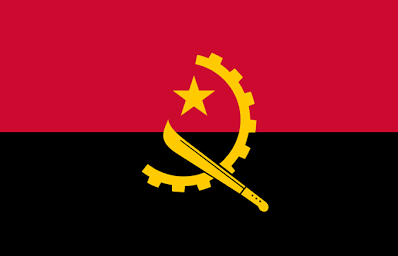
Angola
Authors: Violette MAZARD
Published Date: August 25, 2026
Key data
Official name: Republic of Angola
Capital: Luanda
Population: 37.8 million in 2025[1]
Area: 1,246,700 km²
Official language: Portuguese; several national languages are widely spoken
Border countries: DRC, Republic of Congo via Cabinda, Zambia and Namibia; Atlantic coast.
Currency: Kwanza (AOA)
Political system: Republic with presidential system.
President: João Manuel Gonçalves Lourenço, in office since 2017 and re-elected in 2022. Next general election scheduled for 2027
Vice-President: Esperança da Costa, in office since September 2022
Ruling party: Popular Movement for the Liberation of Angola (MPLA),[2] in power since independence in 1975
GDP: USD 122.17 billion in 2025[3]
Growth: 3.1% in 2025[4]
Inflation: 20.2% on average in 2025; 12.4% in March 2026[5]
Unemployment: 21.3% in the first quarter of 2026 according to the Instituto Nacional de Estatistica (INE).
Public debt: Around 53.5% of GDP in 2025[6]
- Executive Summary
Angola is a regional power in consolidation. Its trajectory is based on three pillars: a hydrocarbon rent that is still decisive, political stability built since the end of the civil war in 2002 and a growing desire for diplomatic projection in Central and Southern Africa. The country has significant territorial depth, an Atlantic coastline, major oil and gas resources and a regional role strengthened by its involvement in the Great Lakes issues.
However, this power remains limited. The economy remains heavily dependent on oil and gas, while inflation, unemployment, debt, social tensions, and the volatility of the kwanza limit the capacity for transformation. The challenge is therefore no longer just to preserve the stability achieved since 2002, but to diversify the national economy and benefit the population through social policies.
The political system remains dominated by the MPLA, which has been in power since independence. João Lourenço, president since 2017 and re-elected in 2022, is leading a sequence of political continuity. The 2027 general elections are the main political event in the medium term. Preparations for the election are already underway by the National Electoral Commission, which has authorised the production of electoral materials in 2026.
At the international level, Angola is seeking to increase its autonomy and influence without breaking with its major partners. China remains its main export market, while the European Union, the United States, India, the United Kingdom and South Korea are among the important trading partners. Luanda also plays a diplomatic role in regional crises, particularly around the Democratic Republic of Congo (DRC).
Angola is a stable state but still vulnerable to rent. Its 2026-2030 trajectory will depend on its ability to transform its energy and mineral resources into diversification, reduce social fragilities, and convert its regional diplomatic weight into sustainable influence.
- Strategic historical landmarks
Angola’s contemporary history largely explains its current power structure, the centrality of the MPLA, and the priority given to stability.
Portuguese colonization organized the economy and infrastructure around an extractive and coastal model. Nationalist movements were structured in the twentieth century, notably around the MPLA, the National Front for the Liberation of Angola (FNLA)[7] and the National Union for the Total Independence of Angola (UNITA).[8] Independence was proclaimed on 11 November 1975, in a context of internal rivalries and international confrontation.
The civil war that followed independence was mainly between the MPLA and UNITA. It became one of the major conflicts of the Cold War in southern Africa, with competing external supporters: the MPLA, which took control of Luanda, was supported by the USSR and Cuba, while UNITA received support from the United States and apartheid South Africa, making this conflict an indirect confrontation of the Cold War on Angolan soil.
The FNLA, present from the first hours of independence, gradually faded away from the military balance of power, which then focused on the MPLA-UNITA confrontation. The war ended on 22 February 2002 with the death in action of UNITA leader Jonas Savimbi near Luena. This disappearance paved the way for a general ceasefire a few weeks later, after twenty-seven years of a conflict that had left more than 500,000 dead. The end of the war in 2002 was a fundamental break: it allowed for reconstruction, the consolidation of the state and the rise of the oil sector.
The post-2002 period was dominated by the MPLA and José Eduardo dos Santos until 2017. João Lourenço succeeded him in 2017. His arrival opens a phase of reforms and the fight against corruption, while maintaining the institutional continuity of the MPLA.
The 2022-2026 period is marked by a desire for economic diversification, continued macroeconomic consolidation and stronger diplomatic affirmation. The chairmanship of the African Union held by João Lourenço from February 2025 to February 2026 has strengthened this visibility.
Contemporary Angola remains structured by the memory of the civil war, the centrality of the state and the MPLA, and the search for a balance between political stability and economic transformation.
- Current political structure
Angola is a republic with a presidential system. The President of the Republic occupies a central place in the executive and in the general orientation of national policy. João Lourenço has held this position since 2017 and was re-elected in 2022.
The MPLA remains the ruling party. He has led the state since independence in 1975. UNITA is the main opposition force and had made strong gains in the 2022 general elections, where it won 43.95% of the vote against 51.17% for the MPLA, the narrowest gap since the country’s independence. The political landscape therefore remains dominated by a logic of continuity of power, but with significant institutional opposition, which makes the 2027 elections a particularly hotly contested deadline.
The main political horizon is the general election of 2027 and the CNE is officially preparing for this deadline. Political stability is real in view of the country’s recent history, but it does not mean the absence of tensions, as France Diplomatie reports. Indeed, regular demonstrations and violence were recorded during certain mobilizations in July 2025. As we head into 2027, the cost of living, unemployment and social expectations are factors to watch.
The Angolan system is robust in institutional continuity, but its main test will be its ability to manage electoral competition under social and economic constraints. The issue is not only the possible alternation; it is also the capacity of power to preserve stability while responding to social frustrations.
- Economic structure
The Angolan economy is based on a rentier model in which oil and gas are still the bedrock, but Angola also has various other resources (diamonds, palm oil, cocoa and various other minerals), which offer diversification relays that are still under-exploited. GDP reached $122.17 billion in 2025 according to the World Bank. Real growth, after a peak of 4.4% in 2024 driven by the rebound in the oil sector, slowed to 3.1% in 2025 according to the World Bank, driven by the decline in world oil prices.
However, recent growth is not solely based on hydrocarbons. The INE notes in 2025 an increase in sectors such as information and communication, manufacturing, diamond and other mineral extraction. This development confirms the existence of a diversification movement, but it is still insufficient to significantly reduce dependence on rents.
Inflation remains a major risk. It stood at 20.2% on average in 2025 according to the World Bank, before slowing to 12.4% in March 2026 according to the IMF. Unemployment reached 21.3% in the first quarter of 2026 according to the INE. These data reflect a tension between macroeconomic improvement and weak economic integration.
Public debt represented about 53.5% of GDP in 2025 according to the IMF. Economic policy seeks to strengthen macroeconomic stability, diversify sources of growth, improve governance, and reduce dependence on oil.
Foreign trade remains in large surplus: Angola exported about $39.25 billion worth of goods in 2024 compared to $13.95 billion in imports. China accounted for 41.4% of Angola’s exports in 2024. The European Union accounted for 29.7% of imports, ahead of China, the United Kingdom, India and the United States.
Angola is not without resources; Its vulnerability lies in the concentration of its export and budgetary capacity on hydrocarbons. The strategic question is therefore that of the transition from a rentier economy to a more productive and diversified economy.
- Energy and strategic rent
Energy is at the heart of Angola’s economic power, with Angola accounting for 1/3 of sub-Saharan production. Oil and gas dominate exports and condition a significant share of public revenues (20% of GDP AND 95% of exports). This position gives Luanda financing capacity and external influence, but exposes it directly to international price and demand cycles.
Angola thus illustrates a paradox that is common among rentier states: it is one of the richest countries in Africa in terms of oil resources, long counted among the major suppliers of the United States (1/4 of the United States’ oil supplies), but its population is among the poorest on the continent. Hydrocarbons represent, depending on the year, around a fifth of GDP and almost all export revenues. This concentration constitutes what is known as a vulnerability to volatility: the country’s economic and fiscal pattern remains directly dependent on the price of oil, and a prolonged decline in prices would be enough to weaken the overall macroeconomic balance.
China occupies a central place in this architecture: it is the main outlet for Angolan exports. This relationship is commercial, financial and strategic. It allows Angola to have a major partner, but also creates dependence on a limited number of markets.
Diversification is therefore the central energy issue. It implies preserving oil and gas capacity while developing non-oil activities: agriculture, agri-food, industry, mining, infrastructure, digital technology and services.
Mineral resources, particularly diamonds, are a second lever. The growth in diamond and other mineral mining observed in 2025 confirms their importance in the diversification strategy. But extractive activities must be accompanied by improved governance, local transformation and infrastructure.
The rent gives Angola time, but this time must be used to build an economy that is less vulnerable to hydrocarbons. Diversification is not only an economic policy; it constitutes a policy of sovereignty.
- International positioning
Angolan diplomacy is structured by a logic of pragmatic regional power. The country seeks to play an active role in Central and Southern Africa while maintaining diversified relations with the world’s economic powers.
The first circle is regional. Angola is a member of the Economic Community of Central African States (ECCAS) and the Southern African Development Community (SADC) and participates in mechanisms related to the Great Lakes region. Relations with the DRC, the Republic of Congo, Zambia, Namibia and South Africa are structuring for its security, trade and regional projection. This position is based on a combination of assets: oil resources, the coastline, developing transport infrastructure and privileged access to the mining areas of the DRC and Zambia, which make Angola a junction point between continental Central Africa and the Atlantic.
The second circle is that of the Africa of the Great Lakes. Angola has played an important diplomatic role in mediation efforts, particularly between the DRC and Rwanda in the context of tensions related to eastern DRC, with João Lourenço positioning himself as a regional mediator. The chairmanship of the African Union held by João Lourenço between February 2025 and February 2026 has also strengthened his continental visibility.
The third circle is that of the world’s economic partners. China is the main export market. The European Union, the United Kingdom, India, the United States and South Korea are also important trading partners. This diversification allows Luanda to avoid exclusive diplomatic dependence.
This set of partners reflects a strategy of alliances that think tanks such as Chatham House describe as non-alignment and multipolarity. China remains a major historical partner, notably through tens of billions of dollars in loans granted since 2000 for infrastructure, housing and the oil sector, which makes Angola one of the very first African beneficiaries of Chinese financing. Russia retains a long-standing relationship, particularly on defence and military training issues, inherited from the days when the USSR and Cuba supported the MPLA during the civil war, but Luanda is now seeking to reduce its centrality. The U.S. is increasingly seen as a strategic partner, especially around the Lobito Corridor. This diversification also extends to France, Turkey, Portugal, the United Arab Emirates and Brazil, in a logic of asserting itself as a middle power.
This diplomacy is also based on a maritime asset. The port of Luanda, one of the most important in the region, gives Angola a direct frontage on the Gulf of Guinea. This area is positioned on maritime routes linking Europe and Asia, which gives the country a strategic interest that goes beyond the regional framework and makes it a potential logistical support point for external powers.
The Lobito corridor illustrates this geo-economic dimension. This rail link connects the Angolan port of Lobito to the Democratic Republic of Congo and Zambia, transporting critical minerals from the Copperbelt region, including copper and cobalt, to the Atlantic. Its development is supported by the United States and the European Union, which has mobilized more than two billion euros in investment as part of its Global Gateway strategy. This project goes beyond the strict logistical framework: it is both an economic and a geopolitical issue, in a context of increased competition between China, the United States and the European Union for access to strategic raw materials in Central and Southern Africa, as well as, more broadly, between the United States and China for access to Angolan oil and mining resources.
The fourth circle is multilateral. Angola has been a member of the United Nations since 1 December 1976 and participates in many African and international mechanisms.
Angola has a greater capacity for influence than its economic weight alone suggests. This is precisely the definition of middle power adopted by the European Council on Foreign Relations: a state capable of exerting an influence greater than its economic or demographic weight. Its main potential is to become a mediation and stabilisation player in Central Africa, provided that it retains margins of autonomy and credibility.
- Security, defence and conflict
Angola has been at peace since the end of the civil war in 2002. The main security risk today is therefore not a national civil war, but a combination of urban crime, social tensions, localized risks and regional issues.
Crime is a significant risk, especially in Luanda’s outlying neighbourhoods. France Diplomatie reports thefts at gunpoint or edged weapons. The security conditions must be assessed differently according to the provinces.
Cabinda is a specific point of vigilance. The French authorities advise against travel to the city and province of Cabinda unless there is an imperative reason. The diamond-producing provinces of Lunda Norte and Lunda Sul are also classified as areas requiring special vigilance.
Angola’s proximity to the DRC and its diplomatic involvement in the Great Lakes region give regional security particular importance.
For foreign operators, Angola also has significant advantages from a security point of view: most of the oil production takes place in deep offshore, which limits exposure to onshore risks; the government is generally conciliatory towards international investors, particularly in the hydrocarbon sector; and the country does not face an identified terrorist threat. These elements make it a generally reliable partner for offshore activities, subject to the points of vigilance mentioned elsewhere (Cabinda, urban crime, diamond areas).
Angola is much more stable than in its recent history, but this stability is based on a complex regional environment and internal fragilities that can result in social tensions and localized risks.
- Risks and vulnerabilities
The first risk is dependence on hydrocarbons. As long as oil and gas structure exports and a significant share of government revenues, Angola remains exposed to global prices and sector cycles.
The second risk is macroeconomic. Inflation, debt levels, exchange rate pressures, and vulnerability to external shocks can reduce the government’s room for manoeuvre. The slowdown in inflation in 2026 is a positive signal, but the level remains high.
The third risk is social. Unemployment reached 21.3% in the first quarter of 2026. Poverty remains high, with 39% of the population below the $3 per day threshold, according to data reported by France Diplomatie. The cost of living and expectations of improved living standards can fuel protest.
The fourth risk is political. The 2027 general elections will concentrate institutional, social and electoral tensions. The fact that the CNE has already begun the material preparation of the election means that the pre-electoral sequence must now be integrated into the monitoring of country risk.
The fifth risk is regional. The situation in eastern DRC remains a major issue for Luanda. Angola must simultaneously preserve its relations with its neighbours, maintain its credibility as a mediator and protect its security interests.
The sixth risk concerns governance and corruption. The IMF stresses the need to improve governance and fight corruption. Angola continues to rank poorly in terms of the perception of corruption: Transparency International gives it a score of 32 out of 100 in 2025, placing it 120th out of 180 countries, despite an increase over the last decade. This weakness in governance is also reflected in the UNDP’s Human Development Index, where Angola ranked 150th out of 193 countries in 2022. For companies, this refers in particular to the transparency of procedures, regulatory predictability and market access conditions.
The seventh risk is climatic and territorial. Heavy rains can cause flooding, while the size of the territory and the development gaps between urban and peripheral areas complicate development and access to infrastructure.
- Opportunities and dynamics to follow
- Relations with France and French interests
The Franco-Angolan relationship is based on regular political dialogue and cooperation that has expanded beyond the energy sector alone. France has an embassy and a consular section in Luanda; about 1,300 French people were registered in Angola in 2025.
The energy sector remains the most significant historical vector of French interests in Angola. TotalEnergies, which has been present in the country since 1953, operates in particular through the Girassol platform, in deep offshore, which has enabled the production of several million barrels since its first years of operation. The French group remains one of the country’s leading oil operators and concentrates a significant part of national production, which illustrates the extent of French economic interests in Angola, beyond political dialogue alone.
Economic cooperation includes agriculture and agri-food, water, infrastructure, health, space and biodiversity. Several intergovernmental agreements and memoranda of understanding were signed in January 2025.
This relationship is of particular interest to French companies because it corresponds to the diversification priorities declared by the Angolan government. However, opportunities must be assessed taking into account currency risk, administrative procedures, governance and local market access conditions.
For French nationals, the tourist visa exemption allows stays of up to 30 days per entry since September 2023, up to a cumulative limit of 90 days per year, subject to the applicable entry conditions.
The relationship has significant development potential, particularly in diversification sectors. France can position itself on Angola’s structural transformation needs, but must integrate a high level of intermediate risk.
- Final strategic reading
Angola is a central state in southern and central Africa, stable since 2002 but still in transformation. Its power is based on its hydrocarbons, its territory, its Atlantic position, its regional weight and its diplomatic capacity. Its main advantage is that it has a rent, geographical depth and regional influence at the same time.
But this power remains incompletely converted. Angola exports a lot but remains dependent on a limited number of products and markets. It has considerable resources but faces high unemployment, high poverty and social tensions. It has a recognised diplomatic capacity but must maintain its credibility in regional issues.
The challenge for 2026-2030 is therefore conversion: converting oil revenues into diversification; converting political stability into lasting legitimacy; converting the regional role into cumulative influence; converting mining resources into value chains; Converting international partnerships into infrastructure, jobs and human capital.
If this conversion succeeds, Angola can become one of the main economic and diplomatic hubs in Central and Southern Africa. If it fails, it will remain a resource-rich state but vulnerable to oil cycles, social tensions, and regional shocks.
The main risk lies in the state’s ability to transform the stability achieved since 2002 into inclusive economic development, while getting through the 2027 elections without a significant deterioration in the political and social climate.
[1] Ministry for Europe and Foreign Affairs. (n.d.). Presentation of Angola. France Diplomatie. https://www.diplomatie.gouv.fr/fr/information-par-pays/angola/presentation-de-l-angola
[2] Movimento Popular de Libertaçao de Angola
[3] World Bank. (n.d.). GDP (current US$) – Angola. https://donnees.banquemondiale.org/indicateur/NY.GDP.MKTP.CD?locations=AO
[4] International Monetary Fund. (2026, May 1). IMF Executive Board concludes 2026 Article IV consultation with Angola.https://www.imf.org/en/news/articles/2026/05/01/pr26135imf-executive-board-concludes-2026-article-iv-consultation-with-angola
[5] International Monetary Fund. (2025, December 17). Angola: IMF staff completes 2025 Article IV consultation mission. https://www.imf.org/en/news/articles/2025/12/17/pr-25428-angola-imf-staff-completes-2025-article-iv-consultation-mission
[6] International Monetary Fund. (2025, December 17). Angola: IMF staff completes 2025 Article IV consultation mission. https://www.imf.org/en/news/articles/2025/12/17/pr-25428-angola-imf-staff-completes-2025-article-iv-consultation-mission
[7] Frente Nacional de Liberação de Angola
[8] União Nacional para a Independencia Total de Angola