
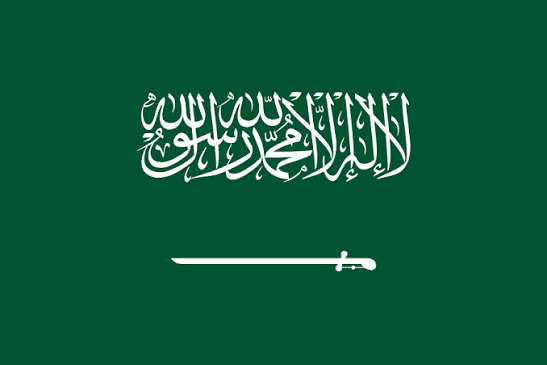
Saudi Arabia
Authors: La Ligne Fine – Institut
Published date: September 22, 2026
Key data
Official name: Kingdom of Saudi Arabia.
Capital: Riyadh.
Population: about 34.6 million in 2026 according to IMF data, with a population composed of Saudi citizens and a large foreign population employed in the private, domestic, construction, service and infrastructure sectors[1].
Area: about 2.15 million km². Saudi Arabia is the largest state on the Arabian Peninsula, with considerable desert depth, a Red Sea frontage, a Gulf frontage, and territorial control structuring around the holy sites of Islam.
Official language: Arabic.
Currency: Saudi Arabian riyal.
Political regime: dynastic absolute monarchy. Power is concentrated around the Al Saud family, the king, the crown prince, the Council of Ministers, the major administrative, security, economic and religious apparatuses.
Head of state: King Salman bin Abdulaziz Al Saud.
Crown Prince and effective head of government: Mohammed bin Salman, crown prince and prime minister. Since his rise to power, Mohammed bin Salman has become the center of gravity of Saudi power, driving economic transformation, controlled social modernization, foreign policy, restructuring of the security apparatus and investment diplomacy.
Current GDP: about $1.14 trillion in 2026 according to IMF projections, which keeps Saudi Arabia among the leading G20 economies and as the largest Arab economy by nominal size[2].
Recent growth: According to the IMF, Saudi real GDP grew by 4.5% in 2025, supported by the gradual dismantling of OPEC+ production cuts and strong non-oil activity[3].
Diversification: According to the official Saudi news agency SPA, Vision 2030’s 2025 annual report indicates that the non-oil economy reached about 55% of GDP and grew by 4.9% in 2025[4].
Reserves and financial stability: The IMF reported that the Saudi Central Bank’s net external assets reached $415 billion at the end of 2024, covering about 15 months of imports and 187% of the IMF’s reserve adequacy metric[5].
Military spending: According to SIPRI, Saudi Arabia’s military spending increased by 1.4% in 2025 to $83.2 billion, placing the country eighth in the world in military spending[6].
Strategic resources: oil, gas, petrochemicals, the financial capacity of the Public Investment Fund, Islamic holy sites, geographical position between the Red Sea and the Gulf, energy infrastructure, ability to influence OPEC+, capital markets, religious diplomacy, religious tourism, Vision 2030 projects.
Major international events: Saudi Arabia will host the 2030 World Expo in Riyadh, elected by the Bureau International des Expositions in November 2023, under the theme « The Era of Change: Together for a Foresighted Tomorrow ». [7]It has also been designated by FIFA as the host country of the 2034 World Cup[8].
Main vulnerabilities: residual dependence on hydrocarbons, cost of Vision 2030, potential budgetary tensions, extreme centralization of power, political repression, massive use of the death penalty, dependence on foreign labor, exposure to tensions with Iran and the Houthis, security of energy infrastructure, international reputation, climate and water fragility, pressure on youth employment, risks of megaproject execution.
- Executive Summary
Saudi Arabia is one of the most strategic states in the contemporary international system. It is at the same time an absolute monarchy, an oil power, the guardian of Islam’s two holy sites, a central player in the Gulf, a member of the G20, a pillar of OPEC+, a military partner of the United States, an interlocutor of China, a rival and then a prudent partner of Iran, a global investor, an emerging sports power and an authoritarian laboratory of economic transformation.
The kingdom is no longer just an oil-rich rentier state. It is trying to become a power of economic, financial, cultural, tourism, technological, sporting and urban projection. Vision 2030, launched in 2016 under the impetus of Mohammed bin Salman, is the matrix of this transformation. The objective is clear: to reduce dependence on oil, develop the private sector, attract investment, modernize society, create jobs for Saudis, transform Riyadh into a global capital, build new industries, host global events and reposition the kingdom as the economic center of the Middle East.
This transformation is real. The IMF points out that Vision 2030 reforms have strengthened institutions, improved economic policy, supported non-oil activity, and partially reduced dependence on oil[9]. The official Saudi agency says that Vision 2030’s 2025 annual report shows a non-oil economy accounting for about 55% of GDP, with growth of 4.9% in 2025[10]. The labor market has also transformed: the IMF reported that unemployment among Saudi citizens fell to 7% in 2024, reaching an all-time low and exceeding the initial Vision 2030 target[11].
But this success is also fragile. Saudi Arabia remains deeply dependent on oil for its public revenues, its external balance, its strategic investments and its ability to finance its ambitions. Vision 2030 is a rent-exit strategy financed by the rent itself. This is the ambiguity of the model: a lot of oil is still needed to prepare for the post-oil era. Diversification is progressing, but it requires massive spending, strong administrative capacity, a transformation of human capital, sustainable attractiveness for foreign investors and budgetary discipline that megaprojects can weaken.
The power structure is the second paradox. Mohammed bin Salman has accelerated considerable social reforms: opening up entertainment, allowing women to drive, increasing female participation in the labour market, reducing some of the prerogatives of the religious police, expanding tourism, concerts, sports, cinema, and cultural investments. But this social liberalization has not been accompanied by political liberalization. The kingdom remains authoritarian, repressive, and centralized. Human Rights Watch said in its 2026 report that the authorities are using the death penalty as an instrument of repression, that the rights of expression and association remain severely restricted, and that migrant workers continue to face significant abuses[12]. Amnesty International reported that between January 1 and June 22, 2026, Saudi Arabia carried out 96 executions, including 61 for drug-related offenses[13].
The third paradox is geopolitical. Saudi Arabia is an ally of the United States, but it now refuses to be a mere strategic customer. It cooperates with Washington, talks with Beijing, coordinates with Moscow in the OPEC+ framework, restores diplomatic relations with Iran since the 2023 China-sponsored deal, dialogues with Israel conditionally, invests in global sports, develops its relations with Turkey, Pakistan and Asian powers, and seeks to become a balancing power. Saudi diplomacy is less ideological than before; it is transactional, sovereignist and oriented towards the security of the regime and the success of Vision 2030.
The regionalisation of threats remains strong. Houthi attacks on Saudi infrastructure, tensions in the Gulf, the war in Gaza, relations with Iran, Red Sea security and risks to energy exports show that the kingdom is exposed to an unstable strategic environment. In August 2026, Reuters reported a Houthi attack on the Saudi Jazan refinery, two days after the signing of a defence agreement between Saudi Arabia, Turkey and Pakistan amid rising regional tensions[14]. Reuters and AP also reported the signing of the tripartite defence pact, although its operational implications remained unclear[15].
Strategic reading: Saudi Arabia is an authoritarian power of transformation. It wants to build the post-oil era without renouncing rent, modernize society without opening up politics, attract the world without accepting all its standards, secure its territory without depending exclusively on the United States, and become a global hub in an unstable regional environment. Its 2026-2030 challenge is one of conversion: converting oil into productivity, public investment into the private sector, megaprojects into profitable assets, social modernization into human capital, transactional diplomacy into sustainable security.
- Strategic historical landmarks
Contemporary Saudi Arabia is the product of a historic alliance between dynastic power, religious legitimacy, oil revenue, American security and territorial control of the peninsula. Its modern history cannot be understood without articulating the construction of the Saudi state, the centrality of Wahhabism, the discovery of oil, the alliance with the United States, the shocks of 1979, the Gulf War, jihadist terrorism, and then the rise of Mohammed bin Salman.
The Al Saud dynasty has a long history, but the contemporary Saudi state was truly born with Abdulaziz Ibn Saud. After a series of conquests and territorial consolidations, the Kingdom of Saudi Arabia was proclaimed in 1932. This new state unified much of the Arabian Peninsula around family power, religious legitimacy, and territorial control based on tribal loyalty, central administration, and coercion.
The discovery of oil radically transformed the country. The oil concessions and the development of Aramco transformed the kingdom from a poor, tribal, commercial and religious economy to a global rentier state. Oil became the central instrument of state-building: infrastructure, administration, redistribution, imports, modernization, urbanization, the army, diplomacy and social pact. The Saudi citizen received the benefits of rent; the state retained the political monopoly.
The alliance with the United States crystallized in the twentieth century around a strategic exchange: American security for energy stability. Washington guaranteed the kingdom’s security; Riyadh contributed to the world’s energy supply and became a pillar of the oil market. This relationship was subject to tensions, but it remained structuring. It allowed the kingdom to protect itself against regional threats, while benefiting from a privileged relationship with the world’s leading military power.
The year 1979 was a turning point. The Iranian Islamic Revolution created an ideological and geopolitical rival. The seizure of the Grand Mosque of Mecca by extremist militants shocked the kingdom and reinforced the weight of religious conservatism. The Soviet invasion of Afghanistan opened a phase of international Islamic mobilization. From this period on, Saudi Arabia strengthened its global religious role, financed networks, promoted a conservative doctrine and faced Iranian revolutionary competition.
The Gulf War of 1990-1991 revealed another dependence: Saudi security rested on the United States. Saddam Hussein’s invasion of Kuwait raised fears of a direct threat. The installation of American troops on Saudi soil protected the kingdom, but also fuelled Islamist criticism. Osama bin Laden and al-Qaeda exploited this foreign presence in their discourse. The attacks of 11 September 2001, perpetrated mainly by Saudi nationals, opened up a major crisis in terms of reputation and relations with Washington.
The 2000s were marked by an internal struggle against al-Qaeda, cautious modernisation and dynastic continuity. The kingdom remained conservative, but began to see the limits of its model: large youth, dependence on oil, unemployment, low participation of women, the weight of the public sector, inefficiency of certain expenditures, vulnerability to world prices, and the rise of regional competition with Iran.
The arrival of Mohammed bin Salman in the foreground changed the speed of the system. He became defence minister in 2015, crown prince in 2017 and then prime minister, and gradually concentrated power. Vision 2030 was launched in 2016. The same sequence saw the Saudi intervention in Yemen, the blockade of Qatar, the arrest of economic figures at the Ritz-Carlton, the assassination of Jamal Khashoggi in 2018, partial social liberalisation, the rise of the PIF, the oil price war and the proliferation of megaprojects.
The 2020-2026 period is one of consolidation. Mohammed bin Salman is no longer just a disruptive reformer; he is the enduring center of the system. The kingdom is seeking to stabilize its regional relations, especially with Iran, while remaining firm in the face of threats. It is accelerating its economic projects, hosting global events, attracting businesses and investors, and using the financial power of the PIF to transform its image. But it must simultaneously manage the fiscal equation, the credibility of Vision 2030, criticism of human rights, and regional uncertainty.
Historical reading: Saudi Arabia has gone from a conservative rentier kingdom to an authoritarian monarchy of transformation. Dynastic continuity remains, but the method of government, political economy and society are changing rapidly.
- Current political structure
Saudi Arabia is a dynastic absolute monarchy. Power does not derive from a national electoral competition, but from royal authority, the Al Saud family, allegiance, internal security, redistribution and religious legitimacy. The Shura Council exists, but it is not a sovereign parliament comparable to democratic legislative institutions. Political parties are not allowed. Organized opposition is repressed.
The political centre of gravity is Mohammed bin Salman. King Salman remains head of state, but the crown prince concentrates most of the government’s action. He directs the economic strategy, the PIF, major projects, foreign policy, defence, social modernisation and the regime’s balances. This concentration gives a great capacity for execution. It makes it possible to break blockages, reduce the influence of certain religious networks, discipline part of the economic elite and carry out rapid projects. But it also creates a personal dependence of the system on one man, on his agenda and on his ability to arbitrate.
The method of government is based on a combination of social modernization, political centralization and coercion. The kingdom has been profoundly transformed in daily life: the opening of cinemas, concerts, sporting events, tourism, more visible diversity, women’s conduct, the development of women’s employment, the transformation of Riyadh, and the reduction of the public role of the religious police. But this openness has not translated into political pluralism. Critics of the government, activists, independent preachers, academics, rights defenders and opponents remain vulnerable to detention, travel bans, trials or harsh sentences.
Human rights remain the main weak spot in Saudi Arabia’s soft power strategy. Human Rights Watch said in its 2026 report that the authorities continue to severely restrict freedom of expression and association, that migrant workers are exposed to abuses, and that the death penalty is used in a highly contested context[16]. Amnesty International reports that 96 people were executed between 1 January and 22 June 2026, including 61 for drug-related offences[17]. This contrast is stark: the kingdom wants to welcome the world, but retains an extremely harsh criminal justice system.
However, Saudi society is undergoing profound changes. Some young people support social changes, professional opportunities, cultural openness and national pride associated with major projects. Women’s participation in the labour market has risen sharply. The IMF points out that Saudi unemployment fell to 7% in 2024, exceeding the initial target of Vision 2030, and that the target has been revised to 5%. [18]This transformation changes the social pact: citizens are no longer just beneficiaries of rent; they must become workers, consumers, entrepreneurs, domestic tourists, investors, supporters and actors of national transformation.
But the new social pact is demanding. It asks Saudis to accept labor discipline, competition, the transformation of social norms, urban changes, the arrival of skilled foreigners, the diversification of public revenues, and even new taxes or higher costs. In exchange, it promises opportunities, renewed national pride, leisure, jobs, a better quality of life and a stronger international position.
Political interpretation: Saudi Arabia is a modernizing authoritarianism. Its effectiveness comes from centralization; so does its vulnerability. The system can decide quickly, but it has few public correction mechanisms.
- Economic structure
The Saudi economy is a rentier economy in transformation. Oil remains the bedrock, but the state is seeking to build a more diversified economy around it: tourism, logistics, sports, entertainment, mining, industry, finance, renewable energy, technology, real estate, defense, artificial intelligence, health and services.
Oil remains central. Saudi Arabia remains one of the world’s leading producers and exporters, a key player in OPEC+ and holder of an adjustment capacity that influences world prices. Aramco is one of the most important companies in the world. Saudi Arabia’s oil policy conditions public finances, the balance of payments, the investments of the PIF and the ability to finance Vision 2030.
But the weight of non-oil is increasing. The IMF indicates that real GDP grew by 4.5% in 2025, supported by the gradual dismantling of OPEC+ cuts and by the strength of non-oil activity, itself driven by domestic demand[19]. The Saudi authorities point to a non-oil economy reaching around 55% of GDP and non-oil growth of 4.9% in 2025[20]. These data show a real transformation, although they do not mean that public finances are already independent of oil.
The PIF is the central instrument of this transformation. It invests in domestic megaprojects, Saudi companies, infrastructure, sports, video games, technology, real estate, tourism, and international assets. In 2026, the PIF Board approved its 2026-2030 strategy, presented as a phase of transition from accelerated growth to more sustainable value creation, with a focus on governance, transparency, and investment efficiency[21]. This formulation is important: it implicitly recognizes that the phase of spectacular spending must be followed by a phase of performance, efficiency, and discipline.
Vision 2030 is largely based on megaprojects: NEOM, The Line, Qiddiya, Red Sea Global, Diriyah, Roshn, Riyadh Expo 2030, sports infrastructure, airports, metro, economic zones, religious tourism and cultural projects. These projects serve several objectives at once: to diversify the economy, create jobs, attract tourists, change the country’s image, build a new national identity, absorb public capital and impose modernization through architecture.
Risk is execution. Building cities, stations, infrastructure, and events is possible when finances follow. Making them profitable, inhabited, productive, and sustainable is more difficult. Megaprojects can become strategic assets or budget burdens. The shift from a construction economy to a productivity economy is the central test. Saudi Arabia doesn’t just want to build; it needs to fill, operate, profit, and maintain.
Tourism is a major pillar. It combines religious tourism, domestic tourism, leisure tourism, heritage, the Red Sea, sport, entertainment, events and business. Hosting Expo 2030 and the 2034 World Cup is part of this logic. The Bureau International des Expositions has elected Riyadh to host Expo 2030 between October 2030 and March 2031[22]. FIFA has designated Saudi Arabia as the host of the 2034 World Cup[23]. These events are instruments of political economy: they create delays, force infrastructure, attract attention and impose enforcement discipline.
The transformation of the labour market is also decisive. The country needs to create jobs for a young, better-educated and more demanding population. The increase in female employment is one of the visible successes of Vision 2030. But the Saudi economy is still heavily dependent on foreign workers, especially in construction, services, domestic work and some low-skilled jobs. The challenge is to Saudize jobs without degrading competitiveness or blocking projects.
Economic reading: Saudi Arabia is really moving towards diversification, but this diversification remains financed, guaranteed and protected by oil. The test is not to build the post-oil era in speeches; it is to create an economy capable of holding together when oil revenues become less central.
- Energy, climate and transition
Energy is the matrix of Saudi power. Oil has built the modern state, international influence, the relationship with the United States, the weight in OPEC, the investment capacity and the social pact. But oil is also the strategic problem that Vision 2030 tries to overcome.
Saudi Arabia remains indispensable to the global oil market. It has reserves, production capacity, Aramco, export infrastructure and a central role in OPEC+. Its ability to adjust its production gives it an influence that few states have. But this influence depends on global demand, prices, OPEC+ discipline, American competition, energy transitions and geopolitical tensions.
The global energy transition represents a risk and an opportunity. Risk, because a structural decline in oil demand or sustainably lower prices would reduce the revenues needed for Vision 2030. Opportunity, because Saudi Arabia can use its capital, sun, infrastructure, ports and energy expertise to position itself in hydrogen, renewables, petrochemicals, minerals, low-carbon fuels and transition-related technologies.
The kingdom is developing renewable energy projects, but it remains a very large consumer of domestic energy. Air conditioning, desalination, industry, transport, urbanization and megaprojects are increasing demand. Part of the challenge is to reduce domestic consumption of hydrocarbons in order to preserve export capacity and improve economic efficiency. The domestic transition is therefore not only climate-related; it is fiscal.
Climate is a major vulnerability. Saudi Arabia is exposed to extreme heat, water stress, desertification, sandstorms, dependence on desalination, pressure on cities and food security. The country imports much of its food and depends on expensive technologies to secure its water. Heat can also weigh on labour productivity, construction sites, tourism and the livability of certain spaces.
The tension between climate ambition and the reality of oil is high. The kingdom wants to be recognised as a player in the transition, while defending the value of its hydrocarbons. Its strategy is less about abandoning oil than about making its production more competitive, relatively less carbon-intensive, and developing complementary sectors. It is a transition by diversification, not by renunciation.
Energy reading: Saudi Arabia is not preparing a world without oil; it is preparing a world where oil will remain useful, but less sufficient. The difference is essential. Vision 2030 is not a moral exit from oil, but a post-rent survival strategy.
- International positioning
Saudi Arabia has become a balancing power. It is no longer content to align itself with Washington. It seeks to multiply its partners, maximize its margins and avoid depending on a single external guarantee.
The relationship with the United States remains fundamental. Security, armaments, intelligence, air defence, oil, investment, technology and regional diplomacy structure this partnership. But trust has been weakened by several sequences: the relative American withdrawal from the Middle East, the attack on the Abqaiq facilities in 2019, American criticism of human rights, the murder of Jamal Khashoggi, energy policy, the war in Gaza, relations with Iran and political uncertainties in Washington. Riyadh still wants the American guarantee, but no longer wants to be dependent exclusively on it.
The relationship with China has grown stronger. Beijing is a major energy customer, trading partner, investor, technology player and diplomatic mediator. The agreement to restore relations between Saudi Arabia and Iran in 2023, facilitated by China, was a strong symbol of the geopolitical shift. It does not mean that China replaces the United States in the security of the Gulf, but it shows that Riyadh now accepts Beijing to play a regional diplomatic role.
The relationship with Russia is structured by OPEC+. Despite the war in Ukraine, Riyadh has maintained energy coordination with Moscow, as the stability of oil prices is a strategic interest. This sometimes creates tensions with the West, but corresponds to a clear Saudi logic: oil policy serves the budgetary and strategic interests of the kingdom.
The relationship with Iran is ambivalent. Diplomatic normalization reduces the risk of direct escalation, but does not eliminate rivalry. There are still many issues: Yemen, Iraq, Syria, Lebanon, the Gulf, maritime security, militias, nuclear programme, missiles, religious influence and regional balance. Riyadh is seeking to avoid a war that would threaten Vision 2030, but remains wary of Iran’s ability to use armed relays.
The Israeli-Palestinian question remains central. Before the Gaza war, a Saudi-Israeli normalization seemed possible as part of a major agreement with the United States. Since then, the regional political cost of such normalization has been much higher. Riyadh is making any progress more conditional on guarantees on the Palestinian issue. The kingdom wants to obtain American and Israeli concessions without losing its Arab and Islamic legitimacy.
The relationship with Turkey and Pakistan is experiencing a strengthening of security. The signing of a tripartite defence agreement between Saudi Arabia, Turkey and Pakistan in August 2026, reported by Reuters and AP, illustrates a Saudi attempt to diversify its support in a deteriorating regional environment, although the precise operational scope of this agreement remains uncertain[24].
Diplomatic reading: Saudi Arabia wants to be courted by all and dependent on none. Its diplomacy is no longer that of a simple American ally, but that of a transactional power in the Gulf.
- Security, defence and conflict
Saudi Arabia is one of the main military powers in the Middle East. Its spending is very high. SIPRI estimates that it will have reached $83.2 billion in 2025, placing the kingdom eighth in the world[25]. This spending reflects the country’s security environment: Iran, Houthis, missiles, drones, maritime security, oil infrastructure, air defense, city protection, security of holy sites, border surveillance, and internal stability.
The Houthi threat remains one of the most concrete. Attacks on Saudi infrastructure have shown that the kingdom’s energy wealth is vulnerable to asymmetric strikes. Drones and missiles have changed the cost-effectiveness of the threat. A non-state or parastatal actor can impose high costs on a wealthy power by targeting its critical infrastructure. The attack reported in August 2026 on the Jazan refinery is a reminder of the persistence of this vulnerability[26].
Air and missile defence is therefore central. The kingdom needs multi-layered systems, radars, interceptors, drones, electronic warfare, intelligence, industrial resilience and response capabilities. The challenge is not only to prevent all attacks, which is difficult; it is to make infrastructure resilient enough to prevent an attack from causing a systemic shock.
Maritime security is also strategic. The kingdom depends on the Gulf and the Red Sea. Tensions in the Strait of Hormuz, the Red Sea and the Gulf of Aden are affecting exports, imports, insurance, energy routes and investor confidence. Reuters reported in August 2026 of new attacks on shipping amid stalled talks around Iran and threats to the Strait of Hormuz[27]. Even when Saudi Arabia is not directly hit, the deterioration of regional shipping threatens its model.
Internal security remains a priority. The kingdom was confronted by al-Qaeda in the 2000s and remains vigilant against jihadist threats. But internal security also concerns political surveillance, dissent, digital mobilizations, social tensions, foreign workers and the protection of major events.
Localizing the defense industry is an important goal of Vision 2030. Riyadh wants to reduce its dependence on arms imports and develop a domestic industrial base. This involves technology transfers, partnerships with the United States, Europe, Turkey, South Korea, China, and other players. But building a credible defense industry requires time, skills, supply chains, engineers, and rigorous industrial governance.
Security interpretation: Saudi Arabia is richly armed, but exposed to asymmetric threats. Its challenge is to transform military spending into real resilience.
- Risks and vulnerabilities
The first risk is dependence on oil. The non-oil economy is growing, but public finances and investment capacities remain very sensitive to hydrocarbon revenues. A sustained fall in prices or a prolonged reduction in production would complicate Vision 2030.
The second risk is the cost of megaprojects. NEOM, The Line, Qiddiya, Expo 2030, the 2034 World Cup, new infrastructure and tourism projects require massive financing. Their profitability is not automatic. The risk is to create prestigious but insufficiently productive assets.
The third risk is fiscal. The kingdom has reserves and access to markets, but Vision 2030 requires trade-offs. The IMF stresses the strength of the fundamentals, but also insists on the need to calibrate spending and preserve sustainability[28].
The fourth risk is political. Centralisation around Mohammed bin Salman gives coherence, but limits checks and balances. A highly personalised system can decide quickly, but it can also correct late.
The fifth risk is reputational. Human rights, the death penalty, migrant workers, the war in Yemen, the Khashoggi affair, NEOM and the 2034 World Cup are fuelling international criticism. The kingdom’s overall attractiveness may be affected by these controversies.
The sixth risk is social. The transformation of the labour market, rising expectations, the cost of living, Saudisation policies and dependence on foreign workers can generate tensions.
The seventh risk is regional. Iran, Houthis, Red Sea, Iraq, Syria, Lebanon, Gaza, Strait of Hormuz: the Saudi environment remains unstable. Vision 2030 assumes stability; the region produces uncertainty.
The eighth risk is climatic and water. Extreme heat, water, desalination, food security and the habitability of certain projects are long-term constraints.
- Opportunities and dynamics to follow
The first opportunity is non-oil diversification. If the kingdom can sustain non-oil growth around 4%, develop the private sector, and create skilled jobs, Vision 2030 will truly change the structure of the country.
The second opportunity is tourism. Religious tourism, the Red Sea, heritage, leisure, sport, events, Riyadh, Diriyah and major projects can lead to the emergence of a sustainable sector, provided that dependence on public spending is avoided.
The third opportunity is sport and world events. Expo 2030 and the 2034 World Cup are showcases, but also accelerators of infrastructure. Used well, they can transform the image and the urban economy.
The fourth opportunity is the defence industry. The partial localisation of defence chains can create jobs, technologies, partnerships and increased sovereignty.
The fifth opportunity is logistics. The position between the Red Sea, the Gulf, Africa, Asia and Europe can make Saudi Arabia a regional hub, if the infrastructure, ports, economic zones and corridors are well articulated.
The sixth opportunity is artificial intelligence and data. The kingdom is investing in digital technology, technological infrastructure and global partnerships. The challenge will be to build local skills, not just buy technology.
The seventh opportunity is balanced diplomacy. If Riyadh maintains functional relations with Washington, Beijing, Moscow, Tehran, Ankara and European capitals, it can become a pivotal player in the Middle East.
- Final strategic reading
Saudi Arabia is one of the few states that is trying to reinvent itself before their model is completely exhausted. It is not doing so through democratization, but through centralization. It is not doing so by reducing the state, but by mobilizing the investing state. It is not doing it by breaking with oil, but by using oil as financing the post-oil era. It is not doing it by Western alignment, but by diplomatic diversification.
The transformation is real. Society is changing. Riyadh is changing. Women are working more. Tourism is opening up. Sport is becoming an instrument of power. Investors are being wooed. Projects are moving forward. The non-oil economy is growing. The kingdom has given itself a calendar, showcases and a narrative.
But the transformation remains fragile. Megaprojects can exceed absorption capacities. Oil remains indispensable. Human rights weaken the image. The region remains unstable. Foreign labor remains essential. Centralization can produce speed, but also risk. The kingdom can build quickly; it must now learn to produce sustainably.
The challenge for 2026-2030 is therefore one of conversion. Convert oil revenues into productivity. Convert PIF into value creation. Convert megaprojects into real cities and industries. Convert social openness into human capital. Convert sporting ambition into sustainable attractiveness. Convert transactional diplomacy into regional security. Convert centralization into effective governance.
Strategic conclusion: Saudi Arabia is no longer just the kingdom of oil. It is a laboratory state of authoritarian power in the twenty-first century. Its success would transform the Middle East, the Gulf economy, the energy market, tourism, global sport and the balance between the United States, China and Europe. Its failure would not necessarily mean the collapse of the kingdom, but the installation of a costly, dependent, spectacular and vulnerable model. The question is therefore not whether Saudi Arabia is changing. It is already changing. The question is whether this change will produce lasting power or a façade modernization financed by the last great phase of oil rents.
[1] International Monetary Fund. (n.d.). Saudi Arabia. IMF Data Mapper. Retrieved September 21, 2026, from https://www.imf.org/external/datamapper/profile/SAU
[2] International Monetary Fund. (2025, June 26). Saudi Arabia: Concluding statement of the 2025 Article IV mission. https://www.imf.org/en/news/articles/2025/06/25/saudi-arabia-concluding-statement-of-the-2025-article-iv-mission
[3] International Monetary Fund. (2026, June 3). IMF staff completes 2026 Article IV mission to Saudi Arabia [Press Release No. 26/181].https://www.imf.org/en/news/articles/2026/06/03/pr26181-saudi-arabia-imf-staff-completes-2026-article-iv-mission
[4] Saudi Press Agency. (2026, April 28). Vision 2030 annual report records strong non-oil growth and economic diversification. https://www.spa.gov.sa/en/N2573071
[5] International Monetary Fund. (2025, June 26). Saudi Arabia: Concluding statement of the 2025 Article IV mission. https://www.imf.org/en/news/articles/2025/06/25/saudi-arabia-concluding-statement-of-the-2025-article-iv-mission
[6] Stockholm International Peace Research Institute. (2026, April 27). Global military spending rise continues as European and Asian expenditures surge [Press release]. https://www.sipri.org/media/press-release/2026/global-military-spending-rise-continues-european-and-asian-expenditures-surge
[7] Bureau International des Expositions. (2023, November 28). Saudi Arabia elected host country of World Expo 2030. https://www.bie-paris.org/site/en/news-announcements/world-expo/saudi-arabia-elected-host-country-of-world-expo-2030
[8] Fédération Internationale de Football Association. (n.d.). [Announcement of the confirmation of the host countries of the 2030 and 2034 World Cups].https://www.fifa.com/en/tournaments/mens/worldcup/articles/2030-2034-host-nations-confirmed
[9] International Monetary Fund. (2026, June 3). IMF staff completes 2026 Article IV mission to Saudi Arabia [Press Release No. 26/181]. https://www.imf.org/en/news/articles/2026/06/03/pr26181-saudi-arabia-imf-staff-completes-2026-article-iv-mission
[10] Saudi Press Agency. (2026, April 28). Vision 2030 annual report records strong non-oil growth and economic diversification. https://www.spa.gov.sa/en/N2573071
[11] International Monetary Fund. (2025, June 26). Saudi Arabia: Concluding statement of the 2025 Article IV mission. https://www.imf.org/en/news/articles/2025/06/25/saudi-arabia-concluding-statement-of-the-2025-article-iv-mission
[12] Human Rights Watch. (2026). Saudi Arabia: Events of 2025. In World report 2026. https://www.hrw.org/world-report/2026/country-chapters/saudi-arabia
[13] Amnesty International. (2026, 22 June). Saudi Arabia: Almost 100 people executed so far this year as dozens more remain on death row for drug-related offences[Press Release]. https://www.amnesty.org/en/latest/news/2026/06/saudi-arabia-almost-100-people-executed-this-year-for-drug-related-offences/
[14] Reuters. (2026, August 9). Fire extinguished at Aramco facility in Jazan, Saudi Arabia says. https://www.reuters.com/business/energy/fire-extinguished-aramco-facility-jizan-saudi-arabia-says-2026-08-09/
[15] Reuters. (2026, August 7). Saudi Arabia, Turkey and Pakistan sign joint defence deal amid regional turmoil. https://www.reuters.com/world/asia-pacific/saudi-arabia-turkey-pakistan-sign-joint-defence-deal-amid-regional-turmoil-2026-08-07/
[16] Human Rights Watch. (2026). Saudi Arabia: Events of 2025. In World report 2026. https://www.hrw.org/world-report/2026/country-chapters/saudi-arabia
[17] Amnesty International. (2026, 22 June). Saudi Arabia: Almost 100 people executed so far this year as dozens more remain on death row for drug-related offences[Press Release]. https://www.amnesty.org/en/latest/news/2026/06/saudi-arabia-almost-100-people-executed-this-year-for-drug-related-offences/
[18] International Monetary Fund. (2025, June 26). Saudi Arabia: Concluding statement of the 2025 Article IV mission. https://www.imf.org/en/news/articles/2025/06/25/saudi-arabia-concluding-statement-of-the-2025-article-iv-mission
[19] International Monetary Fund. (2026, June 3). IMF staff completes 2026 Article IV mission to Saudi Arabia [Press Release No. 26/181]. https://www.imf.org/en/news/articles/2026/06/03/pr26181-saudi-arabia-imf-staff-completes-2026-article-iv-mission
[20] Saudi Press Agency. (2026, April 28). Vision 2030 annual report records strong non-oil growth and economic diversification. https://www.spa.gov.sa/en/N2573071
[21] Public Investment Fund. (2026, April 15). Chaired by HRH Crown Prince, PIF board of directors approves PIF 2026–2030 strategy [Press release]. https://www.pif.gov.sa/en/news-and-insights/press-releases/2026/chaired-by-hrh-crown-prince-pif-board-of-directors-approves-pif-2026-2030-strategy/
[22] Bureau International des Expositions. (2023, November 28). Saudi Arabia elected host country of World Expo 2030. https://www.bie-paris.org/site/en/news-announcements/world-expo/saudi-arabia-elected-host-country-of-world-expo-2030
[23] Fédération Internationale de Football Association. (n.d.). [Announcement of the confirmation of the host countries of the 2030 and 2034 World Cups].https://www.fifa.com/en/tournaments/mens/worldcup/articles/2030-2034-host-nations-confirmed
[24] Reuters. (2026, August 7). Saudi Arabia, Turkey and Pakistan sign joint defence deal amid regional turmoil. https://www.reuters.com/world/asia-pacific/saudi-arabia-turkey-pakistan-sign-joint-defence-deal-amid-regional-turmoil-2026-08-07/
[25] Stockholm International Peace Research Institute. (2026, April 27). Global military spending rise continues as European and Asian expenditures surge [Press release]. https://www.sipri.org/media/press-release/2026/global-military-spending-rise-continues-european-and-asian-expenditures-surge
[26] Reuters. (2026, August 9). Fire extinguished at Aramco facility in Jazan, Saudi Arabia says. https://www.reuters.com/business/energy/fire-extinguished-aramco-facility-jizan-saudi-arabia-says-2026-08-09/
[27] Ramadan, T., & Elwelly, E. (2026, August 11). Pakistan says US and Iran close to ‘some sort’ of deal despite attacks on shipping. Reuters. https://www.reuters.com/world/middle-east/pakistan-says-us-iran-close-some-sort-deal-despite-attacks-shipping-2026-08-11/
[28] International Monetary Fund. (2026, June 3). IMF staff completes 2026 Article IV mission to Saudi Arabia [Press Release No. 26/181]. https://www.imf.org/en/news/articles/2026/06/03/pr26181-saudi-arabia-imf-staff-completes-2026-article-iv-mission