

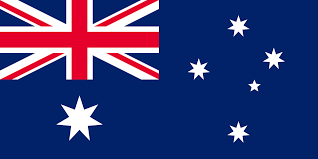
AUSTRALIA
Authors: Valentine SAGE
Published Date: October 20, 2026
Key data
Official name : Commonwealth of Australia.
Capital : Canberra, located within the Australian Capital Territory, created specifically to host the national capital so that it is not within one of the existing states. This territory has a more limited autonomy by being under the authority of the Commonwealth, with powers delegated to it by the Federal Parliament and which can be modified or taken over by the latter. The Territory thus has its own Parliament, government, chief minister and administrative and legal system.
Population : Approximately 28.1 million inhabitants, 32% of whom are foreign-born[1]. With about 3.3 inhabitants per square kilometre, distributed particularly along the coasts, Australia is one of the least densely populated countries on the planet.
Area : 7.69 million km².
Territorial organization : A federal state composed of six federated states and two continental territories, each with relative autonomy.
Official language : At the federal level, no official language has been declared, but English is the de facto language.
Currency : The Australian Dollar (AUD).
Political system : Federal constitutional monarchy and parliamentary democracy. The head of state is represented locally by a governor general, appointed by the Prime Minister.
Head of state : King Charles III.
Governor General : Samanta Mostyn, Governor General since 2024.
Head of government : Anthony Albanese, Prime Minister since 23 May 2022, re-elected for a second term since 3 May 2025. He leads the Labour party.
Parliament : A bicameral federal parliament, composed of a Senate (76 seats) and a House of Representatives (150 seats). The Labor Party has an absolute majority in the House of Representatives, with 94 seats out of 150, and holds 28 seats out of 76 in the Senate, making it the largest political force without achieving an absolute majority[2].
GDP : The IMF indicates Australia’s nominal GDP at around AUD 2,853 billion in 2025, and forecasts an increase to around AUD 3,000 billion in 2026[3].
Inflation : The IMF estimates that inflation is expected to reach 4% on average in 2026, while annual inflation measured is 3.5% in July 2026[4], with the main factors being the rise in energy prices, tensions on production capacity, pressure on services and uncertainties related to international trade.
Employment : The OECD measures the employment rate in 2025 at around 64.1% (15-64 years old), with a participation rate reaching around 81%. The unemployment rate was at 4.4% in May 2026[5].
Structuring sectors of the economy: Minerals and natural resources (iron, coal, natural gas, critical minerals), agriculture and agri-food (livestock, wheat, wine, cereals), energy (coal, natural gas, oil, renewable energies), services (finance, health, trade, education), industry and infrastructure (construction, manufacturing, transport and logistics), tourism (hotels, restaurants, leisure)
The main issues are: a middle power in the Indo-Pacific facing the rise of China in the region; economically dependent on Asia and China in particular, while being securely anchored to the United States; the country’s important place in groupings such as AUKUS and QUAD; a central player in critical minerals; vulnerability to climate change.
- Executive Summary
Often referred to as the « country-continent », Australia encompasses the entire Australian continent as well as the island of Tasmania, and is positioned between the Indian Ocean and the Pacific Ocean, a strategic position at the crossroads of the Asia-Pacific. With an area of about 7.7 million km², it is the sixth largest country in the world, with a relatively small population of 28.1 million, making it one of the least densely populated territories on the planet (about 3.5 inhabitants per km²).[6]
The country is distinguished by a great diversity, both natural and human: its ecosystems range from tropical forests to the Great Barrier Reef, via the aridity of the outback, and are home to endemic fauna and flora that are unique in the world. Its population is shaped by significant immigration (nearly 30% of the inhabitants born abroad) resulting in cohabitation with Aboriginal and island peoples.
Australia is a middle power in the Indo-Pacific region, whose economic model, based on strong integration into international trade, is relatively resilient and stable. Its central position within the region is linked to the combination of several assets: abundant natural resources, institutional stability, a solid financial system and close proximity to the major markets of the Indo-Pacific.
Its economy is based on a large tertiary sector while remaining strongly structured by resource and energy exports, which alone account for about two-thirds of Australia’s exports[7]. The IMF nevertheless considers that the country is entering a phase where the traditional determinants of its growth are no longer sufficient to guarantee the same dynamic in the medium term. It estimates that real GDP growth is expected to slow to 1.9% for the whole of 2026, then to 1.6% in 2027[8].
The challenge for Australia in the coming years is therefore to succeed in transforming its economic model, which is certainly efficient, but still too heavily dependent on its traditional advantages. As the long-term outlook for coal and other fossil fuels is less favourable, Australia must transform its geological advantage into an industrial and economic advantage, by developing its position as a renewable energy powerhouse.
At the same time, China represents one of the main economic and strategic challenges for Australia. Indeed, 25% of Australia’s foreign trade is turned towards China, the latter thus constituting a major market for Australian exports[9]. This dependence leads to considerable opportunity, but also vulnerability to trade tensions and geopolitical events in the region.
By also being securely anchored to the United States, Australia is therefore between the two powers. The country is therefore seeking to diversify its economic partners, by turning to other neighbours, such as Japan, South Korea, or India, with a logic that is not to reduce trade with China, but rather to avoid depending on a single market.
Australia is now facing other issues and issues that divide the population, the first being the housing issue. Population growth, the attractiveness of large cities and the difficulties in rapidly increasing supply, have led to strong pressure on property prices. This affects the growth of the economy, by directly slowing down the population.
The other major vulnerability, which can also become an opportunity, is the climate transition. Australia remains a major exporter of fossil fuels, while possessing the advantages to become a major renewable energy powerhouse. The IMF believes that the green transition can foster investment, productivity and diversification, provided that infrastructure and industrial capacity keep pace with the transition[10].
Australia is therefore a stable economic power that is strongly integrated into the Indo-Pacific, but is facing a necessary change of model and developments and tensions within the region. Its historical prosperity is based on the exploitation of its resources, trade openness and immigration remains solid, but is now producing its own constraints. The Australian challenge then lies in using its historical advantages to develop a more diversified model that is better positioned in the strategic sectors of tomorrow.
- Historical landmarks
Australia’s history does not begin with European settlement, but for 65,000 years with the Aboriginal and Torres Strait Islander peoples, allowing Australia to possess one of the oldest continuous cultures in the world.
It was in 1606 that Australian lands were first seen by Europeans, and in particular by a Dutch navigator, leading to the conquest of the territory a hundred years later by the British captain James Cook. It was in 1770 that the latter explored the east coast for the first time and claimed the territory in the name of the British Crown, naming it « New South Wales ».
Australia was first used as a penal colony. With the arrival of the British fleets, a period of great violence against the Aboriginal populations also began (dispossession of land, massacres, epidemics). Aboriginal children were forcibly taken from their families in order to be placed in convents and with British families. Today we speak of the « Stolen Generation ».[11]
It also began its economic development, first through the wool industry, until it became the world’s main exporter of sheep’s wool at the end of the nineteenth century. The gold rush played a major role in Australia’s economic, cultural and social development, with the discovery of the first gold deposit in Victoria in 1851. This led to great internal migrations, but also external migrations: between 1851 and 1871, the Australian population was almost multiplied by 4 and went from 430,000 inhabitants to 1.7 million[12].
In the nineteenth century, the first anti-immigration policy was born, the « White Australia Policy ». It is a restrictive immigration law, the purpose of which is to restrict the entry of non-white populations into the country[13]. Today, this policy has been repealed, but the issue of immigration still remains an important debate in the country.
Its process of independence began in 1901, when the six British colonies united to form the Commonwealth of Australia, a federation with its own government, although it remained a British dominion at the time.
The country also began a process of recognition of Aboriginal rights, notably with the Mabo decision of the High Court in 1992 , which legally recognised « indigenous title », rejecting the colonial doctrine of « terra nullius » (land belonging to no one).[14]
Australia’s independence was officially proclaimed on 3 March 1986 with the vote of the Australia Acts. Its independence process was thus carried out in several stages, beginning in 1901 and officially ending 85 years later.
His history shapes Australia today, both culturally and in terms of certain policies, particularly related to immigration.
- Economic situation
Australia is the twelfth largest economy in the world, driven by its position as a major exporting country, particularly of agricultural products and primary resources (iron, coal, gas, oil, uranium, gold, copper, rare earths). The mining sector alone accounts for 13.5% of GDP, and agriculture for 2% GDP[15].
The breakdown of its exports is as follows: metal ores and metal waste (29%), coal, coke and briquettes (15%), foodstuffs (14%), gas (7%), manufactured products (6%), machinery and transport equipment (6%), meat (5%), cereals (4%) and non-ferrous metals (4%).[16]
Its proximity to dynamic Asian economies opens up a major export market. Its largest trading partner is China, whose exports (including iron ore, coal and rare earths) reached around $101.75 billion in 2025[17]. Free trade agreements with key Asian partners such as China, Japan, South Korea and ASEAN, as well as regional and bilateral agreements, allow it to open its markets and increase its exports, while diversifying its partners.
Australia is also positioning itself as a player of choice for foreign companies ready to export in the field of renewable energy, new technologies, health and tourism. Ranked 17th in the world in 2026 according to the World Population Review‘s Global Education Index, Australia is also attractive for the quality of its education system. Also attractive in terms of living standards and wages, skilled voluntary immigration is very strong for the country, with about 99% of skilled work visa applications accepted, with very good indicators of economic success and integration. (81.8% of skilled immigrants are employed, with an unemployment rate of 3.8% in 2025) [18].
Australia enjoyed uninterrupted growth for 27 years, until the Covid crisis. The stability of its growth, which has now returned to a pre-crisis level, is now mainly based on a solid service sector, representing 62.7% of GDP, as well as strong proactive skilled immigration. Economic growth in particular reached 3.4% between June 2022 and 2023[19], but it now seems to be slowing down.
However, growth has tended to slow in 2026, due to a few major vulnerabilities:
- The conflict in the Middle East: petroleum products account for about half of its energy consumption, while domestic production is very limited, pushing Australian inflation to 4.6% in March 2026[20].
- Its strong dependence on China: the latter’s economic health directly influences Australian exports. China absorbs about 35% of its merchandise exports in 2024[21], an amount equivalent to that exported to the next five trading partners combined. With a geostrategic position between China and the United States, the Australian economy can thus be directly impacted by the tensions between the two powers. This dependence is tending to decline due to a diversification strategy towards Europe, North America, South Asia and Southeast Asia, which makes it possible to absorb a growing share of Australian production, although the country remains dependent on foreign demand. Its diversification plan is illustrated by the resumption of negotiations in early 2026 for the free trade agreement with the European Union[22].
- Its exposure to the volatility of commodity prices and climate change also represents a risk for agriculture (fires, drought) that could impact the amount of its exports.
As a result of these uncertainties, Australia has launched a plan to diversify its economy, illustrated in particular by strengthening its economic relations with India, the EU and the United Kingdom and Southeast Asia through free trade agreements, while diversifying its exports beyond raw materials, particularly towards technology, services and agribusiness[23].
- Domestic policy
Australia is based on a constitutional monarchy-type political system with a parliamentary system copied from the British model.
In this sense, the head of state is King Charles III, whose role is purely ceremonial, represented locally by the Governor General, Samantha Joy Mostyn, since July 1, 2024, appointed on the recommendation of the Prime Minister, the latter being the head of government.
In addition, since Australia is a federal state, each state has its own state prime minister, parliament, and powers.
The federal elections on 3 May 2025 were won by the Labor Party, led by Anthony Albanese. For his second term, several objectives were announced such as a more ambitious reduction in greenhouse gas emissions (-43% by 2030), the creation of a ministry dedicated to climate change, an increase in the minimum wage, as well as the modernisation of the Australian Armed Forces through a budget increase[24].
The main political rival, the Liberal-National coalition, is now really weakened (change of leader, departure of important figures, etc.). Some disagreements, particularly on nuclear issues, also lead to problems of understanding within the coalition. The latter therefore does not represent a real counter-power to the Labor government, which capitalizes on these weaknesses to settle comfortably and in the long term, thus making the Australian political system one of the most stable.
However, there is a rise of the far-right party, One Nation, supported by persistent pressures related to the cost of living and growing anti-immigration sentiment. This party, led by Pauline Hanson, has long been seen as a pariah but could now establish itself as the second political force in the country. Their main ideas are based on a drastic reduction in immigration and a withdrawal into isolationism. One Nation is thus taking advantage of the Coalition’s declining popularity to rally voters and make an increasingly important place for itself in the Australian political landscape[25].
The Green and Independent parties represent minority parties, while playing key roles, particularly in the Senate, where proportional representation promotes political diversity.
However, several issues divide the population and thus lead to political commitments that have become essential:
- The Labour Party would like to see indigenous peoples better represented in political institutions but also in daily life. In this sense, it had proposed a referendum in 2023 on the recognition of the aborigines as the first peoples of the Nation and the creation of an advisory council on the laws likely to affect them. This referendum ended in the victory of the no, although the debate divided the entire country[26].
- The cost of living, and especially housing: Sydney and Melbourne are among the ten least affordable real estate markets in the world, according to the Demographic Index. The government has therefore responded with a plan to build 1.2 million homes by 2030 to ease pressures on the housing market[27].
- The population is calling on the government to put an end to mass migration, as 568,000 migrants arrived in Australia between 2024 and 2025. Far-right parties, including the One Nation party, have reignited these tensions and pushed the Labor government to put in place measures such as reducing net migration to 245,000 by the end of 2026 and then to 225,000 by 2028, with stricter rules on visa issuance and increased action against illegal residents. On September 10, 2026, the government announced restrictions on student and working holiday visas, saying it wanted to show that the government is « in control » of immigration, by creating 250 new detention places and recruiting 100 additional officers to punish people overstaying[28].
- Regional geopolitical issues and foreign policy
The Indo-Pacific region is now facing new challenges, pushing Australia to establish itself as a major power and counter China’s competitiveness in the region. Its first economic partner can thus become its direct competition for political and maritime influence in the Pacific island states.
Indeed, China does not hesitate to use force to establish its New Silk Roads and to establish its hold on the Pacific islands. In particular, it seeks to increase its hold on the countries recognizing Taiwan as an independent state in order to force them to recognize only the People’s Republic of China as a unified state. To do this, it is providing more and more aid to these countries.
It is not alone, and Australia is also funding development aid for some South Pacific islands, such as the Solomon Islands, which are largely aided for its infrastructure[29].
Australia is also strengthening its influence through agreements, such as the « Nakamal » agreement with the Vanuatu archipelago, signed on 29 June 2026. This agreement commits Canberra to providing increased economic support and prohibits the establishment of foreign military bases in the Pacific archipelago. The agreement also recognises Australia as « Vanuatu’s main and historic law enforcement partner ». Vanuatu’s main creditor being China, this reinforces tensions and power games in the region[30].
Australia is trying to strengthen its ties with the countries of the South Pacific while China, for its part, continues to increase the number of live-fire military exercises, thus trying to establish its power in this geographical area.
Australia’s regional diplomacy also involves its predominant role within the Pacific Islands Forum. It plays a predominant financial, geopolitical and logistical pillar role as a co-founding member since 1971. In particular, it finances 36% of the budget, allowing for development aid and crisis logistics[31].
In November 2018, it also strengthened its « Pacific Step Up » policy through the establishment of a €1.3 billion fund, the opening of five new diplomatic representations, and the signing of bilateral agreements adapted to the needs of Pacific countries[32].
Canberra has also strengthened its ties with neighbouring Asian powers, including Japan, South Korea, ASEAN (especially Indonesia and Singapore), as well as India. It is becoming the main player in the Pacific by being both the largest donor (38% of total aid received) and the main humanitarian actor in the region.
The country is also close to the United States, whose rapprochement was made official with the signing of the ANZUS (Australia, New Zealand, United States) treaty in 1951, and accentuated today with the AUKUS defence partnership between Australia, the United States and the United Kingdom signed in September 2021. These measures serve as a reminder of the United States’ role as Australia’s major strategic partner. Indeed, while the AUKUS Security Agreement aims to counter Chinese expansionism in the Indo-Pacific region and to rely on informal military and diplomatic cooperation, Australian foreign policy aims more at developing a new identity as a strategic ally than at obstructing China, which remains a key economic partner.
Australia is thus trying to diversify its trusted partners and assert its position as a power within the region, torn by various tensions:
- Rising tensions between China and the United States, and in particular indirect trade disputes, may impact Australia’s economic health, which depends largely on its trade with China.
- Its relationship with Taiwan is also influenced by its dependence on China. Since the establishment of diplomatic relations with the People’s Republic of China in 1972, Australia no longer recognizes Taiwan as a sovereign state and applies the one-China policy, in order to maintain its good relations with Taiwan. This does not prevent Canberra from maintaining economic and cultural relations with Taiwan[33].
- The recent tensions in the South China Sea also have direct consequences for Australian security, particularly regarding trade routes. Indeed, 98% of the goods traded by Australia pass through the South China Sea. The risk of military escalation can cause inconvenience, particularly economic for the country[34].
- The rise of China, pushing it to increase its military capabilities and defense partnerships, and to determine strategic security priorities around the stability of the regional order.
- Since the attack of December 14, 2025, the rise of radical Islamist movements and the spread of violence in the Middle East, from which it had been spared until then, have become a cause for concern. A refuge for a large Jewish community, and proud to have built a highly integrated multicultural and multi-ethnic society, this attack increases the country’s fears[35].
The changing balance of power today risks weakening Australia’s place in multilateralism, while regional horizons take on a new importance.
- Defence
Despite its attachment to neighbouring Asian countries, particularly for trade, Australia is also linked to the United States for security issues. Their relations are based on numerous agreements and elements of cooperation:
- ANZUS: Australia’s deterrence capability and American strategic support were demonstrated as early as 1951 by ANZUS, an agreement between Australia, New Zealand and the United States. It still remains a central pillar of Australian defence and security and even represents the basis of this defence cooperation and serves as a strategic framework for more recent engagements such as AUKUS[36].
- AUKUS: a security partnership between Australia, the United States and the United Kingdom signed on 15 September 2021 allowing Australia to receive American and British nuclear-powered submarines in 2027. This marks the first step before acquiring its own tools. Indeed, Australia should in the meantime have started building a British-designed building with American technology in South Australia. The second part of the pact includes joint development and sharing of militarily advanced technologies. This partnership strengthens the alliance with the United States and allows Canberra to be able to militarily confront China and to have the necessary means in the event of a conflict. Concerns about this partnership worry the population, which is afraid of becoming a target in the event of an armed conflict. A citizen campaign « Stop Aukus WA » has been launched since 2021, as well as a citizens’ commission to open discussions on the subject. However, 68% of Australians support AUKUS, according to a poll by the Lowy Institute published on June 22, 2026[37].
- The QUAD: The link between Australia and the United States also runs through the QUAD (Quadrilateral Security Dialogue), which is an informal military and diplomatic cooperation group that also includes India and Japan. It was born after the 2004 tsunami, when cooperation in the Indian Ocean became a real necessity, and was revived with tensions in the Indo-Pacific[38]
- Pine Gap: The Joint Defense Facility Pine Gap, located near Alice Springs in Australia, is a key element of Southern-American intelligence and military cooperation, contributing in particular to intelligence gathering and developments in the arms sector, as well as to the surveillance of strategic threats. It allows Australia to strengthen its capabilities in this area by having access to American intelligence and space surveillance capabilities[39].
Beyond its relations with the United States, Australia also maintains close cooperation with France on defence, and in particular on issues related to the Indo-Pacific. Although this relationship remains marked by the submarine dispute of 2021, when Australia abandoned the contract with Naval Group in favour of the AUKUS agreement, relations were nevertheless re-engaged in 2023, and strengthened in 2026[40], and in particular in several areas:
- Maritime security: The two navies collaborate and participate in multilateral exercises in the Indo-Pacific region.
- The defence industry: the two countries maintain a dialogue on military equipment and the development of new opportunities for collaboration, with regular meetings of the Bilateral Armaments Committee, the last being in 2025[41].
- Regional stability: The two countries, due to their respective territories and interests in the Pacific, see each other as key partners in the security of the region. Within the framework of FRANZ, they also work alongside New Zealand on humanitarian and relief operations after natural disasters[42].
Japan is also becoming a key Asian partner for Australia, especially since the signing of a contract for the delivery of three stealth frigates to the Australian Navy, signed on April 11, 2026, the first of a broader agreement to strengthen Australian defense in the face of the growing Chinese presence in the Asia-Pacific[43].
- Environmental issues
Australia occupies an ambivalent position on the climate scene: both one of the world’s largest exporters of coal and gas, and one of the developed countries most exposed to the impacts of climate change (droughts, wildfires, cyclones, bleaching of the Great Barrier Reef) and wishing to position itself as a renewable energy superpower.
In southwestern Australia, rainfall has decreased by 20 percent between May and July since 1970, according to the Bureau of Meteorology, while annual temperatures have risen by about 0.16 degrees Celsius per decade. In 2016, a fire ravaged some 70,000 hectares of afforestation in Western Australia’s eucalyptus forest, which is one of the world’s 36 biodiversity hotspots.
Its vulnerability to change, which directly threatens its key infrastructure and sectors and costs tens of billions of dollars a year, is pushing Australia to address these issues and bring about a radical change in its long-term development system.
In order to fight against global warming and make Australia a renewable energy superpower, Anthony Albanese’s government is basing its strategy on several levers:
- The « Future Made in Australia Plan », launched in 2024, which mobilizes AUD 22.7 billion over ten years to support the industrial and economic transition.
- The emissions reduction target has been raised to 43% by 2030 (compared to 2005) and aims to achieve carbon neutrality by 2050. In this sense, the « Safeguard Mechanism », the main carbon pricing tool, obliges the country’s largest greenhouse gas emitters to keep their net emissions under a degressive cap[44].
- The « 2030 objective », a federal plan based on the country’s solar potential, has been put in place to aim for more than 82% of electricity to be produced from renewable sources by 2030[45]. Indeed, solar and wind provide shares of the country’s electricity covering up to 80% of the demand on the national territory[46].
- The Forest Management Plan 2024-2033, launched in September 2021, which aims to improve the health of these areas and preserve their biodiversity[47].
These ambitions will be put to the test in 2026, with Australia chairing the COP31 negotiations in November 2026 alongside Pacific states, a deadline seen as a test of credibility for a country still criticised for its slow exit from fossil fuels.
- Points of vigilance
The main challenge for Australia in the coming years will be to monitor its dependence on China and the effectiveness of its economic diversification. Indeed, Australia’s desire to diversify its partners only helped the country temporarily redirect its exports during the 2020-2023 Chinese sections, but their share fell once China’s barriers were lifted. The latter continues to handle 35% of Australian goods exports[48].
Australia must also ensure that it maintains a balance between its security anchor with the United States and its economic interests with China. Tensions between the two powers, but also around Taiwan and the South China Sea, are a major risk for the country.
The competition for influence with China in the South Pacific is a major point of vigilance. Australia must maintain its role as a privileged security partner for the countries of the region, while maintaining good relations with its largest economic partner.
The implementation of AUKUS needs to be monitored, due to cost and the industrial needs required in the long term. The total cost of the submarine component and the construction of the SSN-AUKUS in Australia has been estimated at between AUD$268 billion and AUKUS 368 billion over several decades.[49]
Departmental and energy resources remain a central pillar of Australia’s exports, and reliance on extractive industries exposes Australia to global price fluctuations and changes in the energy transition. Iron ore alone still accounts for more than 25% of Australia’s resource and energy exports.[50]
The country’s other economic and social challenge lies in access to housing. The Productivity Commission believes that Australia is not building enough housing and that development constraints are limiting supply. The subject of the housing crisis is also linked to that of immigration, labour needs and population growth[51].
Indeed, Australia is seeking to maintain skilled immigration to meet labour shortages while reducing post-Covid migration flows. The permanent 2026-27 programme is set at 185,000 places. The challenge is to reconcile economic attractiveness, skills needs and pressure on housing and infrastructure[52].
Climate change and the vulnerability of the Great Barrier Reef, treasures of the world’s marine biodiversity, remain key issues. The Australian government has already identified climate change as the main threat to coral reefs and must therefore reconcile environmental protection, economic development and the maintenance of its industry[53].
After the diplomatic crisis linked to the abandonment of the Naval Group submarine contract in 2021, Franco-Australian relations have gradually recovered. In June 2026, the two countries adopted a new bilateral roadmap based in particular on defence and security, resilience and climate, as well as education and culture[54]. Cooperation between the two countries in the Pacific and in the field of defence is a particularly strategic axis to follow.
- Prospects for development
In the medium term, Australia is likely to remain torn between its Western security anchorage, reinforced by AUKUS and the QUAD, and its persistent economic dependence on China, its largest trading partner.
A first scenario would see Canberra consolidate its economic diversification strategy (agreements with India, the United Arab Emirates, the European Union) while maintaining a peaceful dialogue with Beijing, as initiated in 2023-2024.
A second, more tense scenario would see Sino-American rivalries and the rise of China in the South Pacific force Australia to align more clearly with Washington, at the risk of new trade frictions with China.
Finally, Australia’s presidency of the COP31 negotiations could be an opportunity for the country to reaffirm its role as a regional power.
- Final strategic reading
Australia is a regional power with major strengths: a developed economy, significant mineral and energy resources, a strategic position in the Indo-Pacific and a large network of alliances. But these forces also create vulnerabilities: dependence on Asian markets, tensions with China, pressure on housing and increasing exposure to the consequences of climate change.
Australia must now transform its geographical, mining and diplomatic advantages into more strategic autonomy. Its challenge is not to choose between China and the United States, but to maintain room for manoeuvre in an increasingly competitive Indo-Pacific.
Australia’s challenge is therefore to diversify without disengaging, to strengthen its power without increasing its vulnerabilities and to transform its resources into sustainable economic and strategic capabilities.
[1] Australia’s population by country of birth, Australian Bureau of Statistics (29 April 2026). https://www.abs.gov.au/statistics/people/population/australias-population-country-birth/latest-release
[2] May 2025 election results, IPU Parline. https://data.ipu.org/fr/parliament/AU/AU-UC01/election/AU-UC01-E20250503/
[3] International Monetary Fund, Australia (April 2026). https://www.imf.org/external/datamapper/profile/AUS
[4] International Monetary Fund, Inflation rate, average consumer prices. https://www.imf.org/external/datamapper/PCPIPCH@WEO/OEMDC/AUS/NZL
[5] OECD, Employment Rate. https://www.oecd.org/fr/data/indicators/employment-rate.html
[6] Australia 2025 Country Sheet, Team France Export, Business France (5 November 2025). https://www.teamfrance-export.fr/decryptages/90167-fiche-pays-australie-2025
[7] Resources Sector Plan, Department of Industry, Science and Resources, Australian Government. https://www.industry.gov.au/publications/resources-sector-plan/introduction?
[8] International Monetary Fund, Australia: Staff concluding statement of the 2026 article IV mission (16 September 2026). https://www.imf.org/en/news/articles/2026/09/16/cs-09172026-australia-staff-concluding-statement-2026-aiv-mission?
[9] China country brief, Bilateral Relations, Department of Foreign Affairs and Trade, Australian Government. https://www.dfat.gov.au/geo/china/china-country-brief?
[10] International Monetary Fund, Australia: 2025 Article IV Consultation-Press Release; Staff Report; and Statement by the Executive Director for Australia (15 February 2026). https://www.elibrary.imf.org/view/journals/002/2026/038/002.2026.issue-038-en.xml
[11] Australia’s history and origins, Australia Made to Measure by Nativ. https://www.australie-sur-mesure.com/conseils-voyage/nature/histoire
[12] Australia, the history of a country in statistics, INSEE Library. https://bibliotheque.insee.net/fonds-ancien-australien.aspx?_lg=fr-FR
[13] Australia, the history of a country in statistics, INSEE Library. https://bibliotheque.insee.net/fonds-ancien-australien.aspx?_lg=fr-FR
[14] Australia’s history and origins, Australia Made to Measure by Nativ. https://www.australie-sur-mesure.com/conseils-voyage/nature/histoire
[15] Presentation by Australia, France Diplomatie, Ministry for Europe and Foreign Affairs. https://www.diplomatie.gouv.fr/fr/information-par-pays/australie/presentation-de-l-australie
[16] Australian exports, Trading Economics. https://fr.tradingeconomics.com/australia/exports
[17] Australia Exports by Country, Trading Economics. https://fr.tradingeconomics.com/australia/exports-by-country
[18] Migrant settlement outcomes, Australian Bureau of Statistics. https://www.abs.gov.au/statistics/people/people-and-communities/migrant-settlement-outcomes/latest-release
[19] Presentation by Australia, France Diplomatie, Ministry for Europe and Foreign Affairs. https://www.diplomatie.gouv.fr/fr/information-par-pays/australie/presentation-de-l-australie
[20] Presentation by Australia, France Diplomatie, Ministry for Europe and Foreign Affairs. https://www.diplomatie.gouv.fr/fr/information-par-pays/australie/presentation-de-l-australie
[21] Australia’s economic reliance on China, FcCapital. https://fccapital.com.au/news/australia-s-economic-reliance-on-china.html
[22] The EU-Australia Trade Agreement, European Commission. https://commission.europa.eu/topics/trade/eu-australia-trade-agreement_fr
[23] Trade and investment diversification, Department of Foreign Affairs and Trade, Australian Government. https://www.dfat.gov.au/trade/trade-and-investment/trading-our-way-greater-prosperity-and-security/trade-and-investment-diversification?
[24] Presentation of Australia, France Diplomatie, Ministry for Europe and Foreign Affairs. https://www.diplomatie.gouv.fr/fr/information-par-pays/australie/presentation-de-l-australie
[25] In Australia, the rise of the populist party One Nation, Le Monde. https://www.lemonde.fr/international/article/2026/05/28/en-australie-l-envolee-du-parti-populiste-one-nation_6694428_3210.html?srsltid=AU7gw4VyI33j_3LDXOvWp6s1XUwtPRTNSOqMjbgK64tljCQn0A9iCWRQ
[26] Presentation by Australia, France Diplomatie, Ministry for Europe and Foreign Affairs. https://www.diplomatie.gouv.fr/fr/information-par-pays/australie/presentation-de-l-australie
[27] In Australia, rising rates are struggling to curb the crazy overheating of the real estate market, Le Monde. https://www.lemonde.fr/economie/article/2026/06/22/en-australie-la-hausse-des-taux-peine-a-freiner-la-folle-surchauffe-de-l-immobilier_6707572_3234.html?srsltid=AU7gw4XZWV6JX5nuiClhUENQUODXXGNZrXkLwDHf03fLX-uoJ1M-woCt
[28] « Control immigration »: Australia will lock up tourists who overstay their visas, Le Parisien. https://www.leparisien.fr/societe/maitriser-limmigration-laustralie-va-enfermer-les-touristes-qui-depassent-la-duree-de-leur-visa-18-09-2026-PRNO2FL4FZA4TONVOSNNDIHWX4.php
[29] China-USA: the new battle of the Pacific, Arte. https://www.arte.tv/fr/videos/120408-000-A/chine-usa-la-nouvelle-bataille-du-pacifique/
[30] Australia and Vanuatu sign an agreement excluding any foreign military base in the archipelago, China warns against any « geopolitical game » in the region, Le Monde (29 June 2026). https://www.lemonde.fr/international/article/2026/06/29/australie-et-vanuatu-signent-un-accord-excluant-toute-base-militaire-etrangere-dans-l-archipel_6716902_3210.html
[31] Australia: the temptation of regional power by Fabrice Argounès. https://droit.cairn.info/revue-pouvoirs-2012-2-page-103?lang=fr
[32] Presentation by Australia, France Diplomatie, Ministry for Europe and Foreign Affairs. https://www.diplomatie.gouv.fr/fr/information-par-pays/australie/presentation-de-l-australie
[33] Australia-Taiwan relationship, Department of Foreign Affairs and Trade, Australian Government. https://www.dfat.gov.au/geo/taiwan/australia-taiwan-relationship
[34] Address to the 2026 Shangri-La Dialogue: plenary session three, Australian Government (30 May 2026). https://www.minister.defence.gov.au/speeches/2026-05-30/address-2026-shangri-la-dialogue-plenary-session-three?
[35] The world seen from below: geopolitical issues from Sydney, Australia, Radio France, France Culture. (December 27, 2025). https://www.radiofrance.fr/franceculture/podcasts/affaires-etrangeres/le-monde-vu-d-en-bas-les-enjeux-geopolitiques-depuis-sydney-australie-3384035
[36] 75 years of ANZUS, Defense ministers, Australian Government (1 September 2026). https://www.minister.defence.gov.au/media-releases/2026-09-01/75-years-anzus?
[37] In Australia, the military agreement with the United Kingdom and the United States is taking shape, raising the fears of part of the population, Le Monde (15 September 2026) https://www.lemonde.fr/international/article/2026/09/15/en-australie-l-accord-militaire-avec-le-royaume-uni-et-les-etats-unis-prend-forme-soulevant-les-craintes-d-une-partie-de-la-population_6774423_3210.html
[38] Geoconfluences, Quad (July 2, 2024) https://geoconfluences.ens-lyon.fr/glossaire/quad-dialogue-quadrilateral-pour-la-securite
[39] Securing Australia’s Sovereignty, Australian Government (9 February 2023). https://www.minister.defence.gov.au/statements/2023-02-09/securing-australias-sovereignty?
[40] Politics and Economics, Australia, France Diplomacy, Ministry for Europe and Foreign Affairs (27 April 2026). https://www.diplomatie.gouv.fr/fr/information-par-pays/australie/politique-et-economie
[41] Reinforcing commitment to bilateral roadmap, Defence, Australian Government (6 January 2026). https://www.defence.gov.au/news-events/news/2026-01-06/reinforcing-commitment-bilateral-roadmap
[42] Politics and Economics, Australia, France Diplomacy, Ministry for Europe and Foreign Affairs (27 April 2026). https://www.diplomatie.gouv.fr/fr/information-par-pays/australie/politique-et-economie
[43] Auralie and Japan sign a contract for the delivery of the first three stealth frigates, Le Figaro. https://www.lefigaro.fr/flash-eco/australie-et-japon-signent-un-contrat-pour-la-livraison-de-trois-premieres-fregates-furtives-20260418
[44] Safeguard mechanism overview, Federal Department of Energy and Climate Change (DCCEEW) https://www.dcceew.gov.au/climate-change/emissions-reporting/national-greenhouse-energy-reporting-scheme/safeguard-mechanism/overview
[45] Renewables Australia, WWF Australia. https://wwf.org.au/what-we-do/climate/renewables-australia
[46] Australia reaches a milestone with 80% of electricity supplied by solar and wind, Team FranceExport, Business France (24 September 2026). https://www.teamfrance-export.fr/infos-sectorielles/41797/41797-laustralie-franchit-un-cap-avec-80-delectricite-fournie-par-le-solaire-et-leolien
[47]Australia wonders how to save its ancestral eucalyptus forests: « We must absolutely stop touching them », Le Monde (20 September 2026). https://www.lemonde.fr/planete/article/2026/09/20/l-australie-se-demande-comment-sauver-ses-forets-d-eucalyptus-ancestrales-nous-devons-absolument-arreter-d-y-toucher_6778050_3244.html
[48] No, Australian trade isn’t diversifying away from China, ASPI (Australian Strategic Policy Institute (14 May 2025). https://www.aspistrategist.org.au/no-australian-trade-isnt-diversifying-away-from-china/
[49] Australian Naval Nuclear Power Safety Bill 2023, Parliament of Australia. (2024, February 14). https://www.aph.gov.au/Parliamentary_Business/Bills_Legislation/bd/bd2324a/24bd032
[50] Resources and energy quarterly: June 2026, Department of Industry, Science and Resources, Australian Government (3 July 2026). https://www.industry.gov.au/publications/resources-and-energy-quarterly-june-2026
[51] Housing Supply Regulation, Productivity Commission, Australian Government. https://www.pc.gov.au/inquiries-and-research/housing-supply/
[52] Net Overseas Migration continues to f all, ministry of Home Affairs, Australian Government (18 June 2026). https://minister.homeaffairs.gov.au/TonyBurke/Pages/net-overseas-migration-continues-to-fall.aspx?
[53] State Party Report on the state of conservation for Australia’s Great Barrier Reef – 2026, Department of Climate Change, Energy, the Environment and Water, Australian Government. https://www.dcceew.gov.au/parks-heritage/heritage/publications/state-party-report-gbr-2026?
[54] Politics and Economics, Australia, France Diplomacy, Ministry for Europe and Foreign Affairs (27 April 2026). https://www.diplomatie.gouv.fr/fr/information-par-pays/australie/politique-et-economie