
Sovereignty, stability and credibility in a degraded strategic environment
Thematic Cluster: RIDS – International Relations, Defence and Security
Published date: January, 7, 2026
Introduction – A Misunderstood but Central Weapon
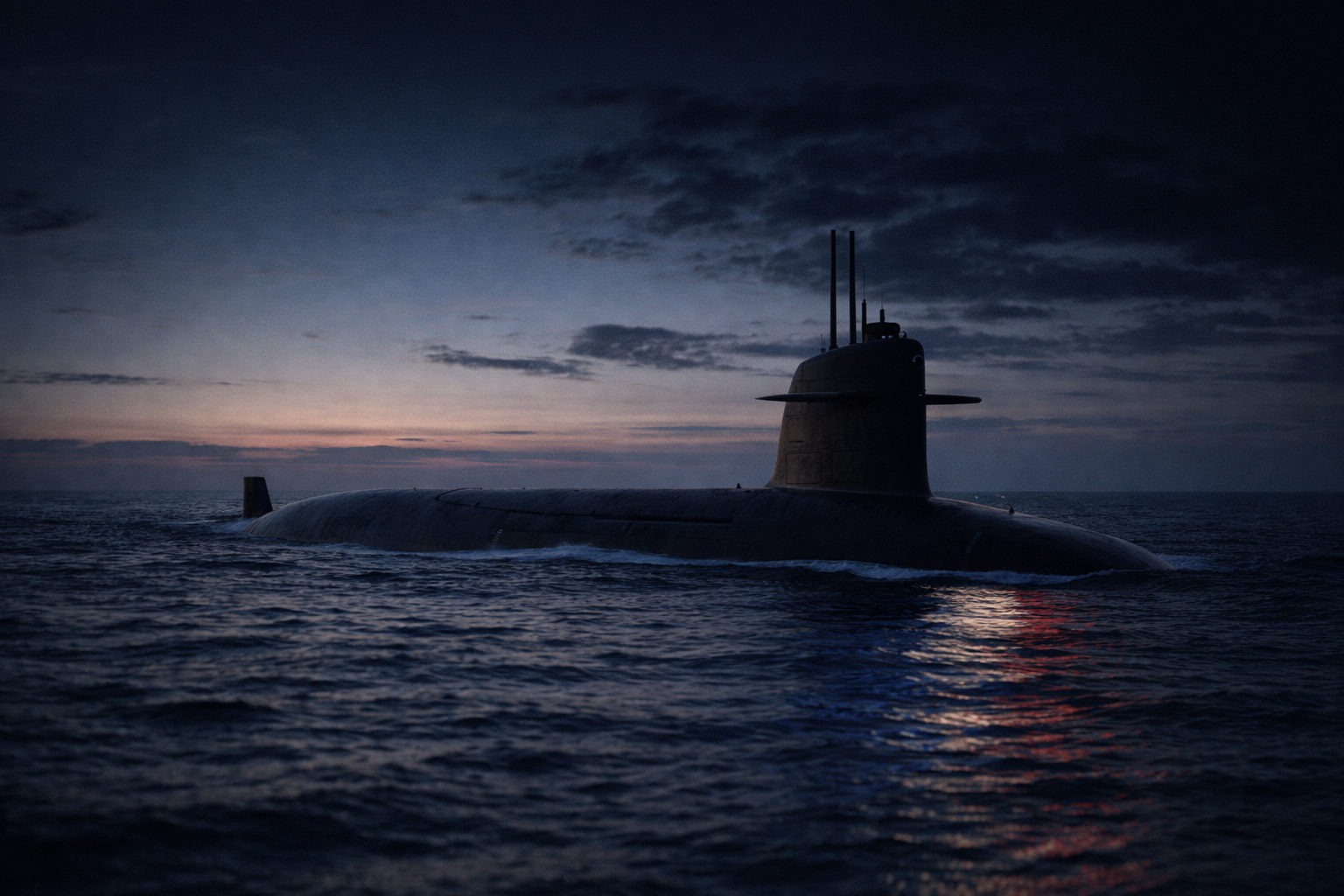
The French nuclear deterrent is the subject of a persistent paradox. It is unanimously recognized as a pillar of national security, but remains poorly understood in the public debate, often reduced to a legacy of the Cold War or a political taboo that is difficult to accept.
In the current strategic context — the return of high-intensity warfare, explicit Russian threats, global rearmament — this misunderstanding constitutes a strategic fragility. Deterrence is not a relic of the past, but an active tool for stabilization, whose value lies in doctrinal clarity, operational credibility, and political constancy.
This memo aims to explain what the French nuclear deterrent is really for, what it does, what it does not do, and why it remains indispensable.
- Strictly sovereign deterrence: the heart of the French model
French nuclear deterrence is based on an intangible principle: the absolute sovereignty of decision-making.
- French nuclear weapons are neither shared nor mutualized.
- The decision on employment is the exclusive responsibility of the President of the Republic.
- There is no foreign co-decision mechanism.
- No automatism is planned, whatever the circumstances.
This architecture aims to guarantee maximum readability for the adversary. Deterrence works precisely because it is based on a short, clear and politically embodied decision-making chain.
Any ambiguity on this point — sharing decisions, European dilution, multilateral integration — would weaken the credibility of the whole system.
- The primary function: to prevent vital aggression
Nuclear deterrence is not intended to win a war. It aims to prevent a major war from occurring, by making any aggression against the vital interests of France unacceptable to the adversary.
It acts as:
- an ultimate lock against any existential attack;
- a strategic restraint factor ;
- a stabilizer of the overall balance of power.
In the current context, marked by Russian coercive nuclear discourse, this function is regaining a centrality that many thought was over.
- An indirect but real contribution to European security
French deterrence does not protect Europe in the legal or contractual sense. It is not part of an American-style logic of « extended deterrence ». However, it contributes de facto to the security of the continent.
How?
- By complicating the opponents’ calculations on escalation;
- By strengthening the overall credibility of the Western camp;
- By supporting a European and allied conventional shield;
- By raising the threshold for any major confrontation in Europe.
This contribution is indirect but strategic. It is based on the adversary’s perception that any uncontrolled escalation could lead to major consequences, including beyond the initial theatre.
- Doctrinal clarity vs. strategic ambiguity
French deterrence is based on a subtle balance between doctrinal clarity and calculated uncertainty.
- Clarity on sovereignty, decision-making, principles.
- Deliberate ambiguity on the precise scenarios, the exact thresholds, the modalities.
This combination is essential. A deterrent that is too vague becomes illegible; A deterrence that is too detailed becomes circumvented.
In this context, political communication plays a key role. Any public contradiction, any excessive relativization, any partisan instrumentalization weakens the credibility of the deterrent message.
- Deterrence and complementarity with conventional
Nuclear deterrence is not a substitute for conventional forces. It completes them.
In French doctrine:
- Nuclear power protects against ultimate aggression;
- The Convention manages crises, graduated deterrence, daily credibility;
- Cyber and hybrid deal with the grey area.
Weakening one of these pillars weakens the whole. Nuclear deterrence is only credible if it is part of a coherent military ecosystem, including robust conventional forces, powerful intelligence and national resilience.
- The pedagogy of deterrence: a democratic issue
In a democracy, deterrence cannot be based solely on silence or implicitness. A minimum of pedagogy is necessary to:
- avoid fantasies;
- prevent disinformation;
- maintain long-term adherence;
- to prevent nuclear weapons from becoming an object of political polarization.
This pedagogy must remain measured, factual, and not sensationalist. It aims to explain the stabilizing role, not to trivialize the weapon.
Conclusion – A weapon of peace in an unstable world
The French nuclear deterrent is neither a tool of domination nor an ideological relic. It is the ultimate strategic insurance, designed for a world where the use of force has not disappeared.
In an environment marked by the brutalization of power relations, deterrence remains one of the few instruments capable of containing escalation, provided that it is assumed, understood and protected from any political ambiguity.