

Antarctica
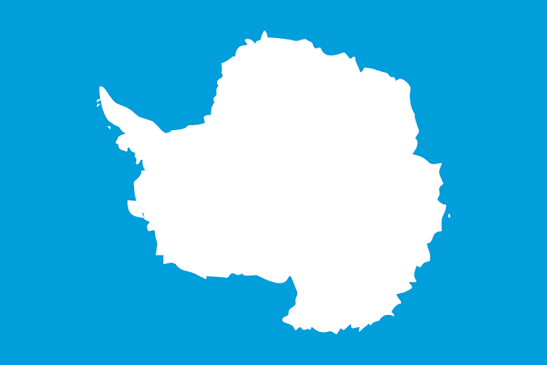
Authors: La Ligne Fine – Institut
Published date: September 8, 2026
Key data
Common name: Antarctica.
Status: Antarctica is not a country. It is a continent without a single sovereign state, without a permanent population and without a national government. It is governed by a specific international regime: the Antarctic Treaty system. This fact sheet is therefore atypical. It does not relate to a state, but to an internationalized strategic space, whose governance, resources, climate and uses concern the entire international system.
Area: about 14 million km², making it the fifth largest continent in the world. Its apparent surface varies greatly with the seasons due to the extension or retreat of the sea ice.
Population: no indigenous or permanent population. The human presence is composed of scientists, technicians, non-combat logistics support personnel, base personnel, ship personnel, crews and tourists. It varies according to the seasons: much stronger during the austral summer, much more limited during the winter.
Main governance: Antarctic Treaty, signed in 1959 and entered into force in 1961. The treaty enshrines the peaceful use of the continent, freedom of scientific research, international cooperation, the prohibition of offensive military activities, the prohibition of nuclear explosions and the prohibition of the deposit of radioactive waste. The Antarctic Treaty Secretariat is the institutional entry point to the system[1].
Environmental protection: Madrid Protocol on Environmental Protection, signed in 1991 and entered into force in 1998. It designates Antarctica as a « nature reserve, dedicated to peace and science » and prohibits activities relating to mineral resources other than scientific research[2][3].
Territorial claims: Seven states claim parts of the continent: Argentina, Australia, Chile, France, New Zealand, Norway, and the United Kingdom. The treaty does not remove these claims, but freezes them. It prevents their extension and prohibits them from being settled by force. The United States and Russia do not recognize these claims and reserve their rights.
Major players: claimant states, the United States, Russia, China, India, Germany, Japan, South Korea, Italy, Spain, Brazil, South Africa and several other states with active scientific or logistical programs.
Strategic resources: ice, freshwater, climate data, marine biological resources, krill, fish, biodiversity, meteorites, climate archives, atmospheric observation sites, Southern Ocean, scientific, logistical and space positioning.
Economic activities: no national economy in the traditional sense. The main economic activities are indirect or supervised: polar tourism, regulated fishing in the Southern Ocean, scientific logistics, transport, construction and maintenance of bases, shipping services.
Tourism: Antarctic tourism has been growing significantly since the 1990s. The International Association of Antarctica Tour Operators tracks tourist attendance data and publishes seasonal statistics, especially for the 2025-2026 season[4].
Fisheries: Southern Ocean fisheries are overseen by the Commission for the Conservation of Antarctic Marine Living Resources, or CCAMLR. CCAMLR publishes the conservation measures in force, particularly for the 2025-2026 season[5].
Major climate indicator: According to NASA, between 2002 and 2025, Antarctica lost about 135 gigatons of ice per year, contributing to sea level rise[6].
The main risks: glacial melt, retreat or instability of the sea ice, rising sea levels, pressure on krill, growing tourism, scientific and logistical rivalries between powers, diplomatic blockages, dual uses of certain infrastructures, difficulty in controlling an immense space, future temptation of resources.
- Executive Summary
Antarctica is not a state, but it is one of the most strategic areas on the planet. Its centrality does not come from a population, a government, an army or an internal market. It comes from its systemic function. Antarctica concentrates issues that immediately go beyond its territory: global climate, sea levels, ocean circulation, biodiversity, scientific research, governance of the commons, power rivalries, marine resources, polar tourism and the future of international environmental law.
The continent is governed by an exceptional legal architecture. The Antarctic Treaty, signed in 1959, neutralized an area that could have become a classic theater of territorial rivalries. It did not suppress sovereignty claims, but put them on hold. It transformed a potentially conflictual space into a continent dedicated to peace and science. The Madrid Protocol reinforced this logic by designating Antarctica as a nature reserve dedicated to peace and science, while prohibiting mining[7].
This legal success is remarkable. It shows that states can agree to suspend their pretensions, to cooperate scientifically and to preserve a common space. But this success is not irreversible. It is based on a fragile condition: the shared conviction that cooperation is better than ownership. However, this conviction is now subject to several pressures. The climate is physically transforming the continent. Human activities are increasing. Tourism is developing. Marine resources are attracting more interest. Sino-American, Russian-Western and technological rivalries are gradually contaminating the polar areas. Science remains the official language of presence, but it is also an instrument of status, data, logistics and projection.
The first issue is climate. Antarctica is not just a remote white desert. It is a planetary regulator. Its ice sheet contains a major part of the Earth’s fresh water. Its melting contributes to rising sea levels. Its sea ice influences albedo, ecosystems, ocean circulation and the reproduction of several species. NASA estimates that between 2002 and 2025, the continent lost about 135 gigatonnes of ice per year, contributing to a global rise in sea level[8]. This figure does not mean a uniform melting: the dynamics are different between East Antarctica, West Antarctica and the Antarctic Peninsula. But it confirms that the continent is already undergoing a major transformation.
Sea ice has become a major warning signal. The British Antarctic Survey points out that, since the first signs of retreat in 2016-2017, Antarctica has experienced persistently low sea ice levels, particularly during the winters of 2023 and 2024[9]. These developments are difficult to interpret with certainty, because the satellite series remains relatively short and climate models still struggle to represent certain dynamics of the Southern Ocean. But the magnitude of the recent anomalies is enough to make Antarctic sea ice a strategic indicator. What is at stake is not only the amount of visible ice: it is the organization of habitats, food chains, exchanges between the ocean and the atmosphere, and therefore part of the Earth system.
The second issue is biological and fisheries. Antarctic krill occupy a central place in the Southern Ocean ecosystem. They feed whales, seals, penguins, fish and seabirds. But they are also of interest to the aquaculture, feed supplements and animal feed industries. CCAMLR regulates fisheries through conservation measures, including for the 2025-2026 season (https://www.ccamlr.org/en/conservation-and-management/conservation-measures). The krill issue condenses one of Antarctica’s fundamental dilemmas: how to exploit a marine resource without weakening the ecosystem on which it is based?
The third challenge is tourism. Antarctica is attracting more and more visitors. The IAATO has been monitoring this progress since 1991 and publishes data on the tourist seasons, including the 2025-2026 season (https://iaato.org/news-room/data-statistics). This growth poses a contradiction: Antarctica is valued as a virgin, exceptional and preserved space, but this enhancement attracts additional human flows. The more symbolically desirable the continent becomes, the more materially vulnerable it becomes: ships, emissions, landings, disturbance of wildlife, possible introduction of invasive species, pollution risks and complex rescue operations.
The fourth issue is geopolitical. Antarctica remains officially demilitarized and peaceful, but it is not out of the world. States build and modernize bases, fund programs, collect data, map, train specialists, test logistical capabilities, and assert their presence. Science is real, but it also produces power. A scientific base is a laboratory; it is also a national presence, an infrastructure, a projection point, an observation station, and an argument in negotiations.
Strategic reading: Antarctica is an organized commons, but not a definitively pacified commons. It is not threatened in the short term by a conventional war, but by a slower accumulation: climate change, economic pressures, scientific rivalries, dual uses, institutional blockages, increased tourism and possible weakening of consensus. Its future will depend on the ability of states to maintain a regime of exception in a world that is less and less tolerant of cooperative exceptions.
- Strategic historical landmarks
The history of Antarctica is different from that of other continents. There is no indigenous Antarctic society, no pre-colonial state, no internal political history comparable to that of Africa, Europe, Asia or the Americas. The political history of the continent is therefore a history of external projections: exploration, hunting, science, sovereignty, prestige, cooperation and rivalries.
The first representations of the southern continent were for a long time based on the geographical hypothesis. Europeans imagined a « Terra Australis » intended to balance the continental masses of the northern hemisphere. The great maritime explorations of the eighteenth and nineteenth centuries gradually transformed this hypothesis into knowledge. The Southern Ocean was travelled, the sub-Antarctic islands were exploited, the coasts of the continent were sighted, and scientific and commercial expeditions multiplied.
In the nineteenth century, Antarctica was first and foremost a hunting area. Seals, then whales, attracted ships. Extractive violence preceded organized science. As is often the case in the history of so-called « virgin » spaces, economic interest came before environmental awareness. Antarctica entered the world system through its biological resources before becoming a scientific sanctuary.
The beginning of the twentieth century was marked by the heroic age of Antarctic exploration. Roald Amundsen reached the South Pole in 1911. Robert Falcon Scott’s expedition, which arrived shortly afterwards and disappeared on its return, helped to forge a mythology of endurance, sacrifice and polar conquest. This period gave the continent a considerable symbolic dimension. Antarctica became the extreme place par excellence: a space of cold, risk, national exploit and science in frontier conditions.
Territorial claims were gradually structured in the twentieth century. The United Kingdom, France, Norway, Australia, New Zealand, Argentina and Chile claimed sectors. Some claims overlapped, particularly in the Antarctic Peninsula. The United States and the Soviet Union refused to recognize these claims, while reserving the possibility of asserting their own rights. At this stage, Antarctica could have become a theatre of territorial competition comparable to other colonized areas.
The Cold War changed the logic. The International Geophysical Year of 1957-1958 showed that scientific cooperation was possible between competing powers. In a world structured by nuclear rivalry, Antarctica could become an additional theatre of confrontation, or on the contrary a neutralized space. States chose the second option. The Antarctic Treaty was signed in 1959 by twelve states and entered into force in 1961[10].
The treaty is a remarkable diplomatic invention. It does not settle the question of territorial claims. It suspends them. The claiming states do not formally renounce their claims. The non-claiming states do not recognize them. But all accept that these claims are neither extended, nor imposed, nor transformed into conflict. Antarctica thus becomes an area of frozen sovereignty. This formula is one of the great successes of contemporary international law.
The Convention for the Conservation of Antarctic Marine Living Resources, which entered into force in 1982, adds an ecological dimension to the governance of the Southern Ocean. It created CCAMLR, whose objective is not only to manage fisheries as an economic stock, but to conserve Antarctica’s living marine resources in an ecosystem approach[11]. This logic is essential, as it recognizes that the Southern Ocean is not just a reservoir of resources, but an interdependent living system.
The Madrid Protocol of 1991, which entered into force in 1998, was the major environmental turning point. It prohibited activities relating to mineral resources, except for scientific research, and established Antarctica as a nature reserve dedicated to peace and science[12]. This choice radically distinguished Antarctica from other resource areas. The continent was protected not because it was worthless, but because its value was deemed incompatible with conventional extractive exploitation.
Since the 2000s, the Antarctic regime has entered a more complex phase. States are still cooperating, but the global context is changing. China is expanding its polar presence. Russia remains a historical player. The United States maintains a major scientific and logistical capacity. Australia, France, the United Kingdom, Argentina and Chile are defending their interests as claimants. Tourism is increasing. Krill is becoming more strategic. The climate is changing faster than the institutions. The Treaty’s consultative meetings and CCAMLR meetings must therefore deal with increasingly sensitive subjects.
The 2026 consultative meeting in Hiroshima was to focus on the transparency of activities, the increase in Antarctic tourism and the impacts of climate change on the region, according to Japanese announcements[13][14]. This orientation sums up the evolution of the issue: Antarctica is no longer just a space to be protected against militarization and territorial claims; it is a space to be governed in the face of the cumulative pressure of human activities and the climate.
Historical reading: Antarctica was protected by a diplomatic solution of suspension. The contemporary challenge is to transform this suspension into sustainable resilience.
- Current political structure
Antarctica does not have a central government. Its political structure is an international regime, based on treaties, consultative meetings, inspection mechanisms, scientific committees and cooperative practices. This absence of a state does not mean the absence of politics. On the contrary, Antarctica is a dense political space, but this politics is played out between states, scientific institutions and international organizations, not between citizens and national government.
The Antarctic Treaty system is based on an important distinction between ordinary and consultative parties. The consultative parties are those who participate in the decisions, because they demonstrate a substantial interest in Antarctica, in particular through the conduct of significant scientific activities. This mechanism is fundamental: in Antarctica, science is a condition of political legitimacy. A state has a say in the governance of the continent if it is present, if it finances programmes, if it maintains stations, if it produces knowledge and if it participates in meetings.
This architecture produces a singular scientific diplomacy. Research is not only a neutral activity; it is also the support of the state presence. Scientific bases are places of data production, but also marks of suspended sovereignty or influence. Ships, runways, stations, satellites, laboratories and communication systems constitute an infrastructure of power. This does not mean that Antarctic science is fictitious or instrumental. It is indispensable and often of very high quality. But it is also integrated into national strategies.
The consensus rule protects the regime. It prevents a majority from brutally imposing a decision on a minority. It forces states to negotiate, to seek compromises and to preserve the unity of the system. But it is also a vulnerability. A single actor can block progress, particularly on marine protected areas, fisheries or certain rules relating to tourism. In a context of growing international rivalries, consensus can become less a tool for stability than an instrument of blockage.
The Antarctic regime is also based on inspection. States parties can inspect stations, facilities, ships and equipment to verify compliance with the treaty. This mechanism maintains trust and limits militarization. But the continent is huge, access is difficult and inspection capacity is necessarily limited. Control is therefore based on a balance between voluntary transparency, ad hoc inspection, scientific trust and diplomatic pressure.
Territorial claims remain at the heart of the system, even though they are legally frozen. France claims Adélie Land. Australia claims the largest sector. The United Kingdom, Argentina and Chile have overlapping claims on the peninsula. Norway and New Zealand also have claims. The United States and Russia do not recognise these claims. This situation is stable because it is suspended. But it remains a potential source of tension if the regime weakens.
The governance of the Southern Ocean is mainly the responsibility of CCAMLR. This institution is central, as some of the most immediate issues do not concern continental ice, but marine resources. Krill, toothfish, marine protected areas, illegal fishing, quotas and conservation methods are the subject of complex negotiations. The 2025-2026 conservation measures are a reminder of the existence of a detailed regulatory framework, but also of the ongoing need to update the rules[15].
Political interpretation: Antarctica is governed by an authority without a sovereign. Its stability is based on law, science, restraint and consensus. Its vulnerability lies in the fact that each of these pillars can be weakened by international competition.
- Economic structure
Antarctica has no national economy. It has no currency, no continental public budget, no internal market, no permanent working population and no taxation of its own. However, there is an Antarctic economy. It is made up of fragmented, supervised and external activities: tourism, fishing, scientific logistics, transport, base construction, polar services, extreme technologies and data production.
Tourism is the most visible economic activity. It is mainly based on expedition cruises, often departing from Ushuaia, Argentina, but also on specialized flights and highly supervised stays. The IAATO publishes statistical data on tourist arrivals, including for the 2025-2026 season[16]. This growth reflects a global demand for extreme, rare and symbolically prestigious experiences. Antarctica is sold as the last continent, the space of silence, ice, penguins and exceptionality.
But this tourist economy poses a fundamental contradiction. Antarctic tourism depends on the preservation of what it helps to disrupt. Ships consume fuel, visitors disembark at sensitive sites, operations require strict biosecurity rules, and the risks of maritime accidents require rescue capacities that are difficult to mobilize. Even if supervised, tourism transforms Antarctica into a destination. However, a sanctuary that becomes a destination changes its nature.
Fishing is the other economic pillar. It mainly concerns krill and certain species of fish, in particular Patagonian toothfish. CCAMLR oversees these activities through conservation measures and fisheries management rules in the Southern Ocean[17]. Krill is particularly sensitive because it is both a commercial resource and a pivotal species. It feeds many emblematic species of Antarctica. Overexploitation or excessive concentration of fishing in certain areas could have cascading effects on predators.
Scientific logistics is a more discreet but substantial economy. Maintaining a station in Antarctica is expensive. Fuel, food, materials, machinery, scientific equipment, spare parts and personnel must be transported. Suitable ships, aircraft, runways, communication systems, medical resources, evacuation protocols and specialists capable of working in extreme conditions are required. This logistics mobilizes industries, public operators, private service providers and significant national budgets.
Antarctic scientific data also have strategic value. Ice cores make it possible to reconstruct past climates. Atmospheric observations make it possible to understand greenhouse gas cycles. Ocean measurements improve climate models. Biological observations track the effects of climate change on species. Space, geophysical and astronomical observations benefit from special conditions. Antarctica is therefore a global infrastructure for knowledge.
Mining is prohibited. This ban is one of the foundations of the Madrid Protocol[18]. It distinguishes the continent from other strategic areas where competition for resources structures rivalries. But this ban is also a long-term line of tension. In a world of competition for critical minerals, the issue of Antarctic resources could reappear, even if any rapid challenge to the regime seems politically unlikely.
Economic reading: Antarctica does not have an economy in the sovereign sense, but it does have a political economy. This is played out in the tension between sanctuarization, limited exploitation, tourism, biological resources and the strategic value of science.
- Climate, Ice and the Earth System
Antarctica is one of the major regulators of the Earth system. Its function goes far beyond its geography. The continent influences sea level, ocean circulation, albedo, marine ecosystems, carbon cycles, and global climate stability.
The Antarctic ice sheet is the main reserve of land ice. Its stability is therefore a global issue. NASA estimates that between 2002 and 2025, Antarctica lost about 135 gigatonnes of ice per year, resulting in a measurable contribution to sea level rise[19]. This data must be analysed with nuance: the loss is not homogeneous. Some regions are experiencing temporary gains due to precipitation, while West Antarctica and some coastal areas are recording significant losses. But the general trend warns of the vulnerability of the ice sheet.
West Antarctica is particularly monitored. Several glaciers lie on a basement below sea level. This makes them vulnerable to the intrusion of warmer ocean waters under the ice shelves. When these shelves thin, they are less effective in holding back the flow of continental ice to the ocean. The risk is that of dynamic instability, gradual but difficult to reverse. In this context, glaciers such as Thwaites or Pine Island have become objects of international scientific monitoring.
Antarctic sea ice is a second critical indicator. It does not directly contribute to sea level rise when it melts, since it is already floating. But its climatic and ecological role is major. It reflects part of the sun’s radiation, protects certain ocean areas, structures habitats, influences the formation of deep waters and supports ice-dependent species. The British Antarctic Survey points out that Antarctica experienced exceptionally low sea ice levels between 2022 and 2025, with a break observed after 2016-2017 and particularly weak winters in 2023 and 2024[20].
This evolution remains scientifically complex. Antarctica has long been more difficult to interpret than the Arctic, because Antarctic sea ice is influenced by fine interactions between winds, ocean, ice, atmosphere and natural variability. The satellite series, of about 45 years, is relatively short to establish certain trends. But the magnitude of the recent anomalies and their persistence raise a strategic question: has the Antarctic system entered a new regime?
The ecological effects are already becoming visible. Emperor penguins, which depend on sea ice for reproduction, are particularly vulnerable. Reuters reported that record low levels of sea ice had contributed to breeding failures in about a fifth of the emperor penguin colonies studied, according to scientists at the British Antarctic Survey[21]. This phenomenon illustrates the transformation of a physical indicator into a biological hazard.
Finally, the Southern Ocean plays a major role in the absorption of heat and carbon. It connects the major ocean basins, participates in the formation of deep waters and influences climates from a distance. Any change in its dynamics can have global effects. Antarctica is therefore less a periphery than a functional centre of the climate system.
Climate reading: Antarctica is a global multiplier. It transforms local changes into global consequences: sea levels, ecosystems, currents, climate, biodiversity and coastal safety.
- International positioning and power rivalries
Antarctica is officially dedicated to peace and science. But it is not out of power. It is a space where states position themselves, monitor each other, produce data, maintain options and assert their status.
The claimant states have a particular interest in maintaining the system. The treaty protects their claims by freezing them. It prevents them from being challenged by force, but it does not cancel them. France, for example, maintains its claim to Adélie Land. Australia claims a very large area. The United Kingdom, Argentina and Chile have overlapping claims. These claims are not active in the adversarial sense, but they structure presences and priorities.
Major non-claimant states have a different interest: to maintain access to the continent, to prevent exclusive appropriation, and to preserve their right to participate in the Antarctic future. The United States and Russia have historically reserved their rights. China, India, South Korea, and other powers are strengthening their presence to influence future governance. The logic is clear: in Antarctica, the absence of presence today can become an absence of voice tomorrow.
China occupies an increasing place in strategic perceptions. Its scientific and logistical activity is officially part of polar cooperation. But, in a context of Sino-American rivalry, every new station, every logistical capacity and every observation infrastructure are scrutinized. This suspicion is not unique to China. American, Russian, Australian, British or French infrastructures can also produce data of strategic interest. But the rise of China comes at a time when dual technologies, data, space and communications are becoming power issues.
Dual uses are one of the most sensitive areas. A scientific station can be used for meteorology, glaciology, geophysics or astronomy. But some facilities can also have useful applications for navigation, satellites, communications, surveillance or strategic knowledge of the environment. The treaty prohibits militarization, but it does not eliminate the duality of modern technologies. The difficulty is therefore to maintain trust in an environment where the boundary between science and strategic interest is sometimes porous.
Antarctica is also linked to space. Ground stations, atmospheric observations, visibility conditions, communications and satellites give the continent a special value. In a world where space is becoming a strategic field of competition, polar infrastructures can be reread through this prism. Antarctica is not only a white continent; it is also a platform for observing the Earth and space system.
Geopolitical interpretation: Antarctica remains an area of cooperation, but this cooperation is increasingly crossed by competition. The risk is not the abrupt rupture of the treaty, but the slow transformation of science into the acceptable language of power.
- Risks and vulnerabilities
The first risk is climatic. It exceeds all others because it directly modifies the physical conditions of the continent. Melting continental ice, instability of sea ice, disruption of the Southern Ocean, effects on ecosystems and rising sea levels: these dynamics are global.
The second risk is institutional. The Antarctic system is based on consensus. This rule avoids imposed decisions, but it can prevent necessary decisions. The difficulties in creating new marine protected areas or tightening certain fishing rules show the limits of a regime where a small number of actors can block collective action.
The third risk is fisheries. Krill is both an economic resource and an ecological base. Its fishing is regulated, but demand is increasing. The risk is not only the overall volume; it is also the spatial and temporal concentration of catches in areas frequented by krill-dependent predators. CCAMLR’s conservation measures are therefore essential, but they must keep pace with the rapid evolution of ecosystems[22].
The fourth risk is tourism. The growth of visitors increases the risks of pollution, accidents, disturbance of species and introduction of invasive species. Even if well regulated, tourism brings a commercial logic into an area that is supposed to remain exceptional.
The fifth risk is geopolitical. International rivalries can move to Antarctica in the form of scientific, logistical and technological competition. The treaty can remain formally intact while being politically weakened by suspicion.
The sixth risk is legal. The ban on mining is strong, but it could be challenged politically in the long term if global pressure on critical resources increases. This is not an immediate risk, but a strategic point of vigilance.
The seventh risk is lack of control. Antarctica is huge, hostile and difficult to monitor. Inspections exist, but they cannot cover all activities on a permanent basis. Governance is therefore based on a mixture of law, trust and transparency. If this trust deteriorates, control will become more difficult.
- Opportunities and dynamics to follow
The first opportunity is scientific. Antarctica is indispensable for understanding past, present and future climates. Ice cores, atmospheric observations, ocean measurements, glacier studies and ecosystem monitoring produce essential data for global climate policies.
The second opportunity is diplomatic. The Antarctic system remains one of the few international regimes where the great powers continue to cooperate despite their rivalries elsewhere. Preserving this space for cooperation has a strategic value in itself.
The third opportunity is environmental. The creation or extension of marine protected areas in the Southern Ocean would strengthen the resilience of ecosystems. CCAMLR has a general framework for marine protected areas, but their extension depends on difficult political negotiations[23].
The fourth opportunity is regulatory. The rise in tourism may lead to more robust rules: caps, disembarkation restrictions, enhanced requirements for vessels, biosecurity, route control and emergency procedures.
The fifth opportunity is French and European. France, through Adélie Land, the TAAF, the Paul-Émile Victor French Polar Institute and its scientific capacities, can play an active role in the defence of the Antarctic regime. The European Union can also influence through research, climate, fisheries, oceans and environmental diplomacy.
The sixth opportunity is that of strategic pedagogy. Antarctica shows that climate, international law, power, science and economics are not separate subjects. They form the same system.
- Final strategic reading
Antarctica is one of the great tests of the contemporary international order. It shows that states can sometimes suspend their rivalries, prohibit militarization, protect science, and recognize a higher value than the preservation of space. But it also shows the limits of this success. The law can freeze claims. It cannot prevent ice from melting. It can prohibit mining. It cannot remove the future temptation of resources. It can organize scientific cooperation. It cannot cancel rivalry between powers.
The main challenge in Antarctica is the preservation of the exceptional. As long as Antarctica remains thought of as an exceptional space, dedicated to peace, science and environmental protection, the regime retains its strength. If the continent gradually becomes a space like any other (touristified, exploited, disputed, instrumentalized) the system will weaken without necessarily collapsing.
The climate crisis makes this issue urgent. Antarctica is not a faraway setting. It is one of the physical centers of the world. Its evolution influences oceans, coastlines, coastal cities, ecosystems, currents, and the global climate. The continent is empty of permanent inhabitants, but full of political consequences.
Strategic conclusion: Antarctica is a nature reserve and a reserve of tensions. The treaty system has succeeded in preventing conflictual sovereignty. It must now succeed in preventing slow degradation: climatic, touristic, fisheries, institutional and geopolitical. The future of Antarctica will depend less on a major new treaty than on the ability of states to respect the spirit of the existing regime in a world where competition is once again becoming the norm.
[1] Antarctic Treaty Secretariat. (n.d.). Antarctic Treaty Secretariat. https://www.ats.aq/index_f.html
[2] Antarctic Treaty Secretariat. (n.d.). The Protocol on Environmental Protection to the Antarctic Treaty. https://www.ats.aq/e/protocol.html
[3] Australian Antarctic Division. (2019, May 17). Protocol on Environmental Protection to the Antarctic Treaty (The Madrid Protocol). Australian Antarctic Program. https://www.antarctica.gov.au/about-antarctica/law-and-treaty/the-madrid-protocol/
[4] International Association of Antarctica Tour Operators. (n.d.). Data & statistics. https://iaato.org/news-room/data-statistics
[5] Commission for the Conservation of Antarctic Marine Living Resources. (2025, November 30). Conservation measures. https://www.ccamlr.org/en/conservation-and-management/conservation-measures
[6] National Aeronautics and Space Administration. (2024, March 8). Antarctic ice mass loss 2002–2025. NASA Scientific Visualization Studio. https://svs.gsfc.nasa.gov/31158
[7] Antarctic Treaty Secretariat. (n.d.). The Protocol on Environmental Protection to the Antarctic Treaty. https://www.ats.aq/e/protocol.html
[8] National Aeronautics and Space Administration. (2024, March 8). Antarctic ice mass loss 2002–2025. NASA Scientific Visualization Studio. https://svs.gsfc.nasa.gov/31158
[9] Holmes, C., Doddridge, E., & Fretwell, P. (2025, July 23). Antarctic sea ice #4: Record lows between 2022 and 2025. Antarctic Environments Portal, British Antarctic Survey. https://www.bas.ac.uk/data/our-data/publication/antarctic-sea-ice-4-record-lows-between-2022-and-2025/
[10] Antarctic Treaty Secretariat. (n.d.). Antarctic Treaty Secretariat. https://www.ats.aq/index_f.html
[11] Commission for the Conservation of Antarctic Marine Living Resources. (n.d.). Commission for the Conservation of Antarctic Marine Living Resources (CCAMLR). https://www.ccamlr.org/
[12] Antarctic Treaty Secretariat. (n.d.). The Protocol on Environmental Protection to the Antarctic Treaty. https://www.ats.aq/e/protocol.html
[13] Ministry of the Environment, Government of Japan. (2026, April 22). The 48th Antarctic Treaty Consultative Meeting (ATCM48) to be convened in Hiroshima, Japan. https://www.env.go.jp/en/press/press_01887.html
[14] Ministry of Foreign Affairs of Japan. (2026, May 22). The 48th Antarctic Treaty Consultative Meeting (ATCM48). https://www.mofa.go.jp/ic/ge/pagewe_000001_00354.html
[15] Commission for the Conservation of Antarctic Marine Living Resources. (n.d.). Conservation measures. https://www.ccamlr.org/en/conservation-and-management/conservation-measures
[16] International Association of Antarctica Tour Operators. (n.d.). Data & statistics. https://iaato.org/news-room/data-statistics
[17] Commission for the Conservation of Antarctic Marine Living Resources. (n.d.). Conservation measures. https://www.ccamlr.org/en/conservation-and-management/conservation-measures
[18] Antarctic Treaty Secretariat. (n.d.). The Protocol on Environmental Protection to the Antarctic Treaty. https://www.ats.aq/e/protocol.html
[19] National Aeronautics and Space Administration. (2024, March 8). Antarctic ice mass loss 2002–2025. NASA Scientific Visualization Studio. https://svs.gsfc.nasa.gov/31158
[20] British Antarctic Survey. (2025, July 23). Antarctic sea ice #4: Record lows between 2022 and 2025. https://www.bas.ac.uk/data/our-data/publication/antarctic-sea-ice-4-record-lows-between-2022-and-2025/
[21] Dickie, G. (2024, April 25). Emperor penguins suffered mass breeding failures in 2023 amid record low sea ice. Reuters. https://www.reuters.com/business/environment/emperor-penguins-suffered-mass-breeding-failures-2023-amid-record-low-sea-ice-2024-04-25/
[22] Commission for the Conservation of Antarctic Marine Living Resources. (n.d.). Conservation measures. https://www.ccamlr.org/en/conservation-and-management/conservation-measures
[23] Commission for the Conservation of Antarctic Marine Living Resources. (n.d.). Browse measures and resolutions. https://cm.ccamlr.org/en/browse-measures-and-resolutions