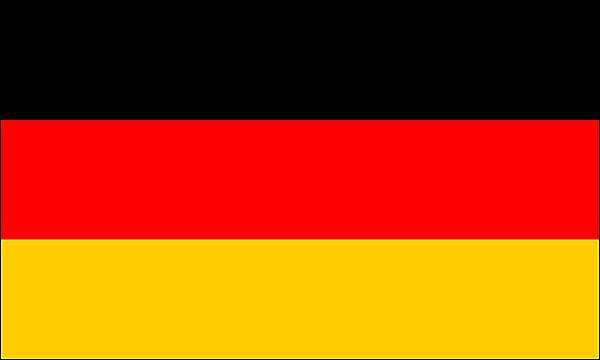
Germany
Federal Republic of Germany
La Ligne Fine – Institut
Published date: August 11, 2026
Key data
Official: Federal Republic of Germany.
Capital: Berlin.
Population: around 83.5 million inhabitants in 2026 according to the IMF, making Germany the most populous state in the European Union[1].
Area: approximately 357,000 km².
Official language: German.
Currency: euro.
Political system: Parliamentary federal republic. Germany is organised into sixteen Länder with a high degree of institutional, administrative and political autonomy.
The European Union recalls that Germany is a federal parliamentary republic, with a chancellor who is head of government and a federal president whose functions are mainly representative[2].
Head of state: Frank-Walter Steinmeier, Federal President.
Head of government: Friedrich Merz, Federal Chancellor since 6 May 2025.
Government coalition: CDU/CSU – SPD, centre-right and centre-left coalition led by Friedrich Merz, after the federal elections in February 2025.
Structuring electoral results: in the 2025 federal elections, the CDU won 164 seats, the CSU 44, i.e. 208 seats for the Union; the AfD won 152 seats; the SPD 120; the Greens 85; Die Linke 64; the SSW 1. The size of the Bundestag is now set at 630 seats[3].
Current GDP: around $5.45 trillion in 2026 according to IMF data, which keeps Germany among the world’s leading economies and as the largest economy in the European Union[4].
Projected growth: 0.8% in 2026 according to the IMF, while the European Commission forecasts 0.6% in 2026 and 0.9% in 2027, after two years of recession and very weak growth in 2025[5][6].
Projected inflation: 2.7% in 2026 according to the IMF[7].
European status: founding member of the European Community, then of the European Union; the EU’s largest economy; central pillar of the euro zone; industrial, exporting and normative power.
Atlantic status: a member of NATO since 1955, the central power on the European flank, engaged since 2022 in a transformation of its defence posture.
Military spending: Germany reached $114 billion in military spending in 2025 according to SIPRI, with a 24% year-on-year increase; its military burden exceeded 2% of GDP for the first time since 1990, reaching 2.3% of GDP[8].
Key economic sectors: automotive, machine tools, chemicals, pharmaceuticals, engineering, capital goods, electrical industry, industrial technologies, energy, finance, logistics, Mittelstand exporter.
Main vulnerabilities: economic stagnation, ageing population, dependence on exports, Chinese pressure on the car industry, energy costs, administrative slowness, numerical backwardness, strain on infrastructure, rise of the AfD, difficulty in converting the Zeitenwende into effective military capabilities.
- Executive Summary
Germany is a central power weakened by its own transition. It remains the economic heart of the European Union, the continent’s main industrial state, the pivot of the euro zone, one of the world’s leading exporters and an indispensable diplomatic player. But it is going through a period of profound readjustment: its post-war model, based on relatively cheap energy, industrial exports, wage moderation, political stability, European integration, American security and access to world markets, is now under pressure.
The contemporary German question is not one of collapse. Germany retains solid institutions, a considerable industrial base, a qualified workforce, public finances that are still credible, a European normative power and a strong investment capacity. The question is rather one of relative downgrading: Germany remains powerful, but its ability to dictate the economic, political and strategic rhythm of Europe has diminished.
The first shock is economic. After two years of recession and growth limited to 0.2% in 2025, the European Commission forecasts a weak recovery of 0.6% in 2026 and 0.9% in 2027[9]. The IMF projects growth of 0.8% in 2026[10]. These figures do not describe an acute crisis, but a breakdown in the growth regime. The German economy, long considered to be the mechanical engine of Europe, now appears to be one of the weak points of the European dynamic.
The second shock is industrial. The automotive sector, emblematic of the German model, is simultaneously attacked by the electric transition, Chinese competition, production costs, weak European demand, trade tensions and regulatory uncertainties. Reuters reported in June 2026 that the German government wanted to avoid Volkswagen plant closures, as the group faced competition from China, U.S. tariffs and weakened European demand; Scenarios of the closure of several factories and massive job cuts were mentioned[11]. This case goes beyond Volkswagen: it touches on the heart of the German industrial pact between exports, territories, trade unions, the Länder and global groups.
The third shock is geopolitical. Russia’s war against Ukraine has destroyed one of the unspoken pillars of the German model: the idea that strong economic interdependence with Russia could guarantee European stability and provide abundant energy. The end of cheap Russian gas has increased costs, weakened some energy-intensive industries and forced Berlin to rethink its security. The Zeitenwende announced by Olaf Scholz in 2022 continues under Friedrich Merz, but it remains incomplete. Germany is spending more, but still has to transform budgets into capacities, announcements into industrial production, and prudent doctrines into strategic posture. SIPRI indicates that in 2025 Germany became the largest European military spender within NATO, with $114 billion in spending and a military burden of 2.3% of GDP[12].
The fourth shock is political. The 2025 federal elections confirmed deep fragmentation. The CDU/CSU came out on top, but with an insufficient score to govern alone. The AfD became the second parliamentary force, with 152 seats, while the SPD fell to 120 seats and the FDP disappeared from the Bundestag. The Merz coalition is therefore based on a CDU/CSU-SPD cooperation, which aims to govern the centre while isolating the far right[13].
But this coalition is fragile, contested and faced with difficult trade-offs on immigration, taxation, pensions, investment, defence, energy and the welfare state. Reuters noted in May 2026 that the Merz government was weakened by internal differences over taxes, health and the welfare state, in a context of declining popularity and the rise of the AfD[14].
The fifth shock is demographic and social. Germany is ageing, with a lack of skilled labour, a debate over the retirement age, depends on immigration for several sectors and is seeing tensions deepen between West and East Germany, large metropolises and industrial areas, the protected middle classes and the worried working classes. Merz’s pension reform project in 2026, including a funded fund logic inspired by the Swedish model and a discussion on the retirement age, illustrates the demographic pressure on the German social model[15].
Strategic reading: Germany is in the process of moving from a power of stability to a power of rearmament, reinvestment and correction. But this transformation is slow, politically confrontational and socially costly. The main German challenge for 2026-2030 will be whether Berlin can convert its financial and industrial power into effective modernisation: infrastructure, defence, digital, energy, innovation, labour, political cohesion. Germany remains the centre of gravity of Europe. But a hesitant centre of gravity is also becoming a factor of uncertainty for the entire continent.
- Strategic historical landmarks
Contemporary Germany is the product of a history of power, catastrophe, division and reconstruction. His trajectory cannot be understood without articulating four sequences: the unification of the nineteenth century, the two world wars, the division of the Cold War and European reunification.
The German unification of 1871 created a belated, but immediately powerful, national state. The German Empire quickly became a major industrial, scientific, and military power. This rapid rise in power is changing the European balance. It feeds both German ambition and the mistrust of its neighbours. The German question, in the European sense, arises from this paradox: Germany is too big to be an ordinary state, but too central to be kept apart.
The First World War and the Treaty of Versailles opened up a profound political, social and memorial crisis. The Weimar Republic embodies a fragile democratic attempt, caught between national humiliation, ideological polarization, economic crisis and political violence. The coming to power of Nazism in 1933 led to the destruction of democracy, total war, the Holocaust and the moral and material collapse of Germany. This sequence is still the foundation of contemporary German political culture: distrust of militarism, attachment to constitutionalism, centrality of memory, strategic prudence, official rejection of the far right.
The defeat of 1945 divided Germany. The Federal Republic of Germany, created in 1949 in the West, is part of the Western camp, NATO, parliamentary democracy and the social market economy. The German Democratic Republic, in the East, became a socialist state under Soviet influence. This division transformed Germany into the central border of the Cold War. It produces two very different political, economic and social experiences, the traces of which still persist in electoral behaviour, perceptions of the state, economic structures and regional identities.
The post-war Federal Republic built its power through restraint. Its model is based on the social market economy, federalism, co-management, European integration, the American alliance and trade interdependence. West Germany became an economic power without seeking an autonomous military power. Its international legitimacy is based on its inclusion in multilateral frameworks: the European Community, NATO, and then the European Union. This model of controlled power became the key to its rehabilitation.
The reunification of 1990 changed the scale. Germany is once again becoming a state of more than 80 million inhabitants in the centre of Europe. But this reunification is integrated into the European order. The euro, the enlargement of the EU, NATO and the Franco-German relationship provide a framework for the return of German power. Berlin became the capital of a reunified Germany, but Germany continued to define its power through Europe.
The Merkel years consolidated a model of stability. Angela Merkel governed from 2005 to 2021 in a culture of crisis management: financial crisis, euro crisis, migration crisis, Brexit, pandemic. Germany appears to be a power of compromise, prudence and budgetary discipline. But this stability masks several dependencies: energy dependence on Russian gas, export dependence on China, underinvestment in infrastructure, numerical backwardness, relative military weakness, and an ageing population.
The war in Ukraine in 2022 puts an end to several illusions. It shows that economic interdependence is not enough to pacify Russia. It reveals the weakness of European military capabilities. It is forcing Germany to rethink its relationship with defence, energy and sovereignty. The Zeitenwende is therefore less a sectoral policy than a paradigm shift. But this change does not happen instantly. He came up against German strategic culture, bureaucracy, industrial constraints, political divisions and budgetary tensions.
The arrival of Friedrich Merz as chancellor in 2025 opens a new phase. Merz wants to embody a firmer, more Atlantic, more pro-Ukraine Germany, more favourable to investment in defence and more attached to competitiveness. But he governs a coalition with the SPD, in a fragmented country, while the economy is stagnating and the AfD is growing. Germany is thus entering a period where its structural power is no longer enough: it must make choices, quickly, in a harsher environment.
- Current political structure
Germany is a federal parliamentary republic. The Chancellor is the real head of government. The Federal President embodies the state, represents institutional continuity and has mainly symbolic and constitutional functions. The Bundestag is the centre of political legitimacy. The Bundesrat allows the Länder to participate in federal legislation. German federalism is not a simple administrative division: it structures education, the police, the administration, infrastructure, regional policies and part of the state’s capacity for implementation.
The German political system has long been considered one of the most stable in Europe. It was based on large parties of government, a coalition culture, a robust constitutional consensus, a strong anti-totalitarian memory, and a dominant political center. This stability remains institutionally real, but it is politically weakened. The 2025 elections confirmed a fragmentation of the landscape. The CDU/CSU came out on top, but without hegemony. The AfD has become the second largest parliamentary force. The SPD has suffered a historic setback. The Greens have lost ground. The FDP has disappeared from the Bundestag. Die Linke maintained itself with a significant group. The official results show a Bundestag divided between the Union, the AfD, the SPD, the Greens, Die Linke and SSW[16].
The Merz coalition, formed between the CDU/CSU and the SPD, is therefore a coalition of necessity. It aims to govern the centre, avoid prolonged instability and keep the AfD out of federal power. This logic is reminiscent of some of the grand coalitions of the Merkel era, but in a much harsher context. The grand coalition is no longer the expression of a comfortable consensus; it has become a government cordon sanitaire.
Friedrich Merz embodies a break in style with Merkel and Scholz. More conservative, more pro-business, more Atlantic, more direct, he seeks to restore competitiveness and political authority. But his margin is limited by the coalition with the SPD, by the strength of the AfD, by the weakness of growth and by the social sensitivity of the reforms. Reuters reported in May 2026 that Merz was maintaining his coalition with the SPD despite tensions over taxation, health care and the welfare state, while his and his party’s approval ratings were declining amid economic gloom[17].
The rise of the AfD is the major political fact. The party became the second parliamentary force in 2025, with 152 seats. Its presence is particularly strong in the east, where it has become the main force in several Länder. Reuters reported in May 2026 that the AfD could outpace the conservatives in some national polls and that it hoped to get its regional prime minister-president in Saxony-Anhalt in regional elections[18]. This dynamic is changing the nature of German politics. The risk is not only electoral; it is institutional, territorial and cultural.
The themes that feed the AfD are well known: immigration, the cost of living, rejection of the elites, a feeling of regional downgrading, fatigue with the energy transition, mistrust of Brussels, opposition to support for Ukraine in certain electoral segments, a feeling of abandonment in the East, mistrust of the media and digital polarisation. The difficulty for the government parties is to respond to these concerns without trivializing the far right or taking over its entire frameworks.
German politics has therefore entered a phase of tension between institutional stability and partisan instability. The institutions are holding up. Federalism works. The Constitutional Court retains a central role. Coalitions remain possible. But the formation of majorities is becoming more difficult, polarization is increasing, and the capacity for reform is shrinking at the very moment when the country must transform its economic, military and energy model.
Political reading: Germany is not in a crisis of regime, but it is in a crisis of political performance. It must produce heavy reforms with a fragile coalition, in the face of a strong far-right opposition and in a context of economic stagnation.
- Economic structure
The German economy remains one of the most powerful in the world, but it is going through a model crisis. The country retains considerable assets: industry, engineering, exports, Mittelstand, vocational training, applied research, financial stability, logistics infrastructure, central position in the European market. But several historical pillars have weakened simultaneously.
The German model was based on an effective combination of relatively cheap energy, export industry, globalized value chains, fiscal discipline, product quality, strong Chinese demand, U.S. security, wage moderation, and European integration. However, each of these elements is now under pressure. Energy is more expensive. China has become a competitor. The U.S. is making greater use of industrial policy and tariffs. Europe is slowing down. The population is aging. Defence requires higher expenditures. Infrastructure needs massive investment. Digital technology remains insufficient.
Growth is weak. The European Commission estimates that the German economy is emerging from two years of recession and very weak growth of 0.2% in 2025, with an expected growth of 0.6% in 2026 and 0.9% in 2027[19].
The IMF forecasts 0.8% growth in 2026[20]. These levels are insufficient to sustain massive industrial transformation without social tensions.
The automotive sector illustrates the crisis. Volkswagen, BMW, Mercedes-Benz and major OEMs are facing intense competition from China, especially in electric vehicles. German manufacturers have long dominated the premium segment and the Chinese market. But Chinese brands are making rapid progress, have better control over certain costs, are accelerating their electric vehicles and are more responsive to local preferences. Reuters reported in February 2026 that German car exports to China had fallen by about a third in 2025, and by more than half compared to the peak in 2022[21].
In June 2026, reports of possible Volkswagen plant closures and massive job cuts gave a political dimension to this industrial crisis[22].
This automotive crisis is more than a business problem. It touches on the German industrial social contract. The automobile industry structures regions, unions, subcontractors, research centres, exports, tax revenues and part of the national economic identity. If the German car industry loses its position in electric cars and in China for a long time, the entire export model must be rethought.
The electro-intensive industry also remains exposed to the cost of energy. The nuclear phase-out, the reduction of Russian gas, the transition to renewables, grid needs and price volatility are weighing on competitiveness. Germany has managed to avoid the energy collapse after 2022, but the new balance is more expensive and complex. The issue is not just about producing green electricity; it is to produce sufficiently, at a competitive price, with networks capable of supplying industry, transport and heating.
The German state is trying to respond with a budgetary change. In 2025, Parliament approved a historic shift with a massive special fund for infrastructure and a relaxation of debt rules for defence spending. Reuters reported that the IMF considered this fiscal expansion likely to offset the negative effects of trade tensions and prolonged weakness in growth from 2026 onwards[23].
This development marks a cultural break: Germany, long the guardian of budgetary orthodoxy, recognises that underinvestment has become a strategic risk.
But investment is not enough. You have to spend quickly and well. However, Germany suffers from lengthy procedures, administrative fragmentation, slow permits, digital delays and federal complexity. The Merz government has announced measures to speed up infrastructure, digitise procedures and reduce some administrative bottlenecks[24]. But administrative transformation is often more difficult than the budget announcement.
Economic reading: Germany remains an industrial powerhouse, but it must move from an optimised export model to a model of resilience, innovation and investment. His problem is not lack of wealth; it is the gap between the speed of the shocks and the slowness of the adaptation.
- Energy, climate and infrastructure
Energy has become one of the main indicators of German tensions. The Energiewende, long thought of as a climate and industrial transition, is now also a question of sovereignty, competitiveness and national security. Germany must simultaneously phase out nuclear power, reduce coal, replace Russian gas, massively expand renewables, strengthen networks, maintain a competitive industry and avoid a social rejection of the transition.
Since April 2023, Germany has no longer produced nuclear electricity. The phase-out of coal is still provided for in law by 2038, even if debates persist on schedules, costs and security of supply needs. The US Commerce Department’s energy guide recalls that Germany stopped its nuclear production in April 2023 and that the exit from coal and lignite is scheduled by 2038[25].
The target of 80% renewable electricity in electricity consumption by 2030 remains central. Clean Energy Wire points out that Germany is now aiming for an 80% share of renewables in electricity consumption by 2030, as part of its climate neutrality goal[26]. But this objective presupposes a massive acceleration of networks, storage, flexibility, electrification of uses and territorial acceptability.
The electricity grid is one of the bottlenecks. The Federal Ministry for Economic Affairs and Energy emphasises that the expansion and restructuring of the grids is essential to support the expansion of renewables[27]. The problem is well known: wind capacity is significant in the north, while part of industrial demand is located in the south and west. Without sufficient power lines, the transition becomes a constraint.
Germany also has to deal with the issue of dispatchable power plants. In January 2026, the German government and the European Commission reached an agreement on key elements of a capacity mechanism, providing for a first round of auctions in 2026 for 10 GW of new capacity that can generate electricity when renewables are not enough[28]. This policy illustrates the contradiction of the German transition: to get out of fossil fuels, it is still necessary to finance controllable capacities, often gas-powered, which are supposed to ensure the stability of the system.
The social cost of the transition remains politically sensitive. The heating law adopted under the Scholz government provoked a strong political reaction. The Merz coalition has announced that it wants to replace it with a more flexible framework, while maintaining climate objectives[29]. This sequence shows that the transition can no longer be only technocratic. It must be socially legible, financially bearable and administratively simple.
Infrastructure is the other major project. Roads, bridges, rail, schools, digital technology, administration, defence, energy: Germany has accumulated an investment deficit. This underinvestment has become visible in daily life and in competitiveness. The special infrastructure fund therefore represents a historic attempt to catch up. But the risk is that the billions will not be transformed into real projects fast enough.
Energy reading: Germany has entered a second-rate transition. It must no longer only decarbonise; It must make its decarbonisation compatible with industrial power, security of supply, energy prices and social acceptability.
- International positioning
Germany is an anchoring power. It anchors the European Union economically, NATO territorially, Central Europe politically and the eurozone financially. But it must now learn to exercise a more explicit power.
For decades, German diplomacy has been based on three pillars: European integration, the American alliance, and world trade. This diplomacy has produced a considerable, but often indirect, influence. Germany preferred to structure the rules rather than project force, to finance compromises rather than to lead head-on, to export rather than to coerce. This culture is still present, but it is being put to the test.
The relationship with France remains central. The Franco-German couple remains indispensable to the European Union, but it is less automatic. The differences concern nuclear energy, European defence, budgetary rules, industry, relations with the United States, China, enlargement and European governance. Germany needs France to give a political direction to Europe; France needs Germany to give an economic mass to its ambitions. But the imbalance between French voluntarism and German caution remains an obstacle.
The relationship with the United States remains structuring. German security remains backed by NATO and American capabilities. But US political uncertainty, trade tensions, tariffs, the Inflation Reduction Act, pressures on burden-sharing and competition with China are pushing Berlin to think about relative European autonomy. This autonomy does not mean leaving NATO; It means increased European capacity in the event of a partial withdrawal or American unpredictability.
The relationship with Russia has been deeply broken. Before 2022, Germany believed it could combine limited political firmness with energy interdependence. Nord Stream embodied this logic. The invasion of Ukraine has made this strategy untenable. Berlin is now supporting Ukraine, increasing its defence spending and reducing its energy dependence. But this transformation is taking place against a backdrop of internal debates, particularly in the east, where part of the public remains more sceptical about the confrontation with Moscow.
The relationship with China is one of the most difficult issues. China is at the same time a market, supplier, competitor and systemic rival. German companies have long benefited from the Chinese market. Chinese companies are now competing with German champions, particularly in electric cars, batteries, green technologies and industrial goods. Reuters reported that German car exports to China fell sharply in 2025, a sign of the loss of position in this strategic market[30]. Berlin must therefore reduce dependencies without abruptly breaking with a major economic partner.
In the European Union, Germany is expected. Member states want Berlin to invest, secure, support Ukraine, accept more strategic mutualisation, defend European competitiveness and provide stable leadership. But they also fear that Germany is too dominant. German leadership is therefore still ambivalent: necessary, but monitored.
International reading: Germany must move from a power of framework to a power of decision. It can no longer only guarantee the rules; it must assume the choices.
- Security, defence and conflict
Defence is the area where the German transformation is the most spectacular in terms of numbers, but the most difficult in substance. Germany is massively increasing its spending, but the question is whether this increase will produce a truly ready, equipped, mobile and credible Bundeswehr.
SIPRI reports that Germany spent $114 billion on its defense in 2025, an increase of 24%, and that its military burden reached 2.3% of GDP, exceeding 2% for the first time since 1990[31].
The German federal budget also indicates that defense spending in 2025, combined with the Bundeswehr special fund and other federal spending, reached 2.4% of GDP according to the NATO definition[32].
For 2026, Reuters reported that the Budget Committee had approved the defence budget and the plan for the Bundeswehr special fund, totalling more than €108 billion[33].
But spending is not transforming. The Bundeswehr suffers from problems of availability, stocks, ammunition, recruitment, procurement bureaucracy, maintenance, interoperability, air defense and deployability. The Zeitenwende presupposes a cultural change: accepting that defence is no longer peripheral, but central to German politics. It touches on memory, society, finance, industry and strategic education.
Ukraine is the main test. Germany has become one of Kyiv’s main European backers, but it has often been criticised for its slowness or initial hesitation. The German question is not only to deliver equipment; it is to know whether Berlin can assume a sustainable continental security posture in the face of a hostile Russia.
The territorial defence of Eastern Europe also became central. Germany must play an increased role in NATO, especially on the eastern flank, in Lithuania, in Poland, in air defence, logistics, military mobility and industrial capabilities. Germany’s geography is once again becoming strategic: located in the centre of Europe, Germany is an essential logistics hub for any reinforcement of the eastern flank.
Hybrid security is another issue. Cyberattacks, disinformation, sabotage, industrial espionage, attacks on critical infrastructure, cables, energy grids, ports, railways: Germany is vulnerable because it is open, industrial, interconnected and federal. Internal security and external defence are getting closer.
Security reading: Germany is once again becoming a major European military power, but it still has to learn to think about and organize this power. The Zeitenwende is not a budget; it is a transformation of the State.
- Risks and vulnerabilities
The first risk is economic stagnation. Growth of around 0.6% to 0.8% is not enough to simultaneously finance defence, infrastructure, energy transition, pensions, innovation and social cohesion. If growth remains weak, each budgetary arbitration will become politically more confrontational.
The second risk is industrial. The automotive crisis can become systemic. If Volkswagen, Mercedes, BMW and the equipment manufacturers lose competitiveness for a long time, the territorial and social effect will be massive. The tensions around Volkswagen show that German industry is no longer just facing a difficult cycle, but a transformation of the model[34].
The third risk is political. The AfD is making progress against a backdrop of economic discontent, migratory tensions and mistrust of the governing parties. If it wins a major Land or becomes a long-term leader in certain regions, the German political system will enter a new phase.
The fourth risk is demographic. Ageing, pensions, a shortage of skilled labour, dependence on immigration and tensions over integration constitute a bundle of vulnerabilities. The debate on the pension reform shows that the German social compromise is under pressure[35].
The fifth risk is energy. Germany must reconcile low prices, coal phase-out, renewables, networks, storage, electrification, security of supply and social acceptability. Any further increase in prices can weaken competitiveness and fuel the protest vote.
The sixth risk is administrative. Investment funds can be massive, but blocked by permitting, planning, recourse, federalism, labour shortages, and skill fragmentation.
The seventh risk is geopolitical. Germany still depends on American security, European stability, access to global markets, Chinese chains and NATO cohesion. An American, Chinese or Russian shock can directly affect its model.
- Opportunities and dynamics to follow
The first opportunity is investment. Germany’s fiscal change can correct years of underinvestment. If the funds are well used, Germany can modernise its infrastructure, its railways, its bridges, its digital technology, its energy, its schools and its defence.
The second opportunity is industrial. Germany still has considerable companies, engineers, research centres, a Mittelstand and a considerable production base. It can succeed in batteries, hydrogen, industrial technologies, semiconductors, automation, robotics, green chemistry and transition equipment.
The third opportunity is European. If Berlin assumes more active leadership, the European Union can accelerate on defence, competitiveness, the capital market, energy, enlargement and Ukraine. Germany is indispensable to any strategic Europe.
The fourth opportunity is military. Rising budgets can lead to a more robust European defence industrial base, especially if Berlin cooperates with Paris, Warsaw, Rome, Stockholm and other partners.
The fifth opportunity is demographic. A better organised migration policy, better integration, an increase in full-time female work, vocational training and the mobilisation of older people can compensate for some of the ageing.
The sixth opportunity is administrative. If Germany succeeds in simplifying its procedures, it can free up considerable enforcement capacity. The German problem is often not so much the lack of resources as the slowness of converting resources into results.
Conclusion
Germany is the European country whose transformation will most directly determine the continent’s trajectory. If Germany recovers, Europe gains time, industrial power, military capability and geopolitical credibility. If Germany gets bogged down, the European Union loses its economic engine at the very moment when it has to confront Russia, China, American uncertainty, the energy transition, industrial competition and the rise of extremes.
The German question was no longer one of domination but more of conversion. Converting savings into investment, converting defence budgets into capabilities, converting the automotive industry into an electric and digital industry, converting Energiewende into a competitive advantage, converting federalism into efficiency, converting strategic prudence into leadership, converting immigration into a demographic response, converting the history of restraint into the ability to act…
Germany remains strong. But it is no longer protected by the environment that made it successful. Cheap Russian energy is gone. The Chinese market has become competitive. The United States is less predictable. German industry must reinvent itself. The AfD is undermining political stability. The defence became central again. Ageing is accelerating.
Germany is a forced transitional power. It has the means for a recovery, but not yet the political speed for this recovery. Its future 2026-2030 will depend less on its accumulated wealth than on its ability to execute. For Europe, the challenge is simple: a slow Germany produces a hesitant Europe; a transformed Germany can once again become the foundation of a strategic Europe.
[1] International Monetary Fund. (n.d.). Germany. Retrieved August 11, 2026, from https://www.imf.org/en/countries/deu
[2] European Union. (n.d.). Germany. Retrieved August 11, 2026, from https://european-union.europa.eu/principles-countries-history/eu-countries/germany_en
[3] Federal Returning Officer. (n.d.). Results Germany: Bundestag election 2025. https://www.bundeswahlleiterin.de/en/bundestagswahlen/2025/ergebnisse/bund-99.html
[4] International Monetary Fund. (n.d.). IMF DataMapper: Germany. Retrieved August 11, 2026, from https://www.imf.org/external/datamapper/profile/DEU
[5] International Monetary Fund. (n.d.). Germany. Retrieved August 11, 2026, from https://www.imf.org/en/countries/deu
[6] European Commission. (2026, May 21). Economic forecast for Germany. https://economy-finance.ec.europa.eu/economic-surveillance-eu-member-states/country-pages-including-country-reports/germany/economic-forecast-germany_en
[7] International Monetary Fund. (n.d.). Germany. Retrieved August 11, 2026, from https://www.imf.org/en/countries/deu
[8] Stockholm International Peace Research Institute. (2026, April 27). Global military spending rise continues as European and Asian expenditures surge.https://www.sipri.org/media/press-release/2026/global-military-spending-rise-continues-european-and-asian-expenditures-surge
[9] European Commission. (2026, May 21). Economic forecast for Germany. https://economy-finance.ec.europa.eu/economic-surveillance-eu-member-states/country-pages-including-country-reports/germany/economic-forecast-germany_en
[10] International Monetary Fund. (n.d.). Germany and the IMF. Retrieved August 11, 2026, from https://www.imf.org/en/countries/deu
[11] https://www.reuters.com/business/berlin-says-it-wants-prevent-vw-plant-closures-2026-06-29/
[12] Stockholm International Peace Research Institute. (2026, April 27). Global military spending rise continues as European and Asian expenditures surge. https://www.sipri.org/media/press-release/2026/global-military-spending-rise-continues-european-and-asian-expenditures-surge
[13] The Federal Returning Officer. (n.d.). Results Germany: Bundestag election 2025. https://www.bundeswahlleiterin.de/en/bundestagswahlen/2025/ergebnisse/bund-99.html
[14] Wacket, M., & Mackenzie, J. (2026, May 5). Germany’s struggling coalition government strives to bridge differences. Reuters. https://www.reuters.com/world/germanys-struggling-coalition-government-strives-bridge-differences-2026-05-05/
[15] Reuters. (2026, June 24). Germany’s Merz aims to pass pension reform by year end. https://www.reuters.com/world/germanys-merz-aims-pass-pension-reform-by-year-end-2026-06-24/
[16] The Federal Returning Officer. (n.d.). Results Germany: Bundestag election 2025. https://www.bundeswahlleiterin.de/en/bundestagswahlen/2025/ergebnisse/bund-99.html
[17] Wacket, M., & Mackenzie, J. (2026, May 5). Germany’s struggling coalition government strives to bridge differences. Reuters. https://www.reuters.com/world/germanys-struggling-coalition-government-strives-bridge-differences-2026-05-05/
[18] Neumayer-Remter, S., & Mackenzie, J. (2026, May 20). As Merz struggles, Germany’s far-right AfD goes local to woo voters. Reuters. https://www.reuters.com/world/merz-struggles-germanys-far-right-afd-goes-local-woo-voters-2026-05-20/
[19] European Commission. (2026, May 21). Economic forecast for Germany. https://economy-finance.ec.europa.eu/economic-surveillance-eu-member-states/country-pages-including-country-reports/germany/economic-forecast-germany_en
[20] International Monetary Fund. (n.d.). Germany and the IMF. Retrieved August 11, 2026, from https://www.imf.org/en/countries/deu
[21] Reuters. (2026, February 24). German car exports to China plunge by a third in 2025, says economic institute. https://www.reuters.com/world/china/german-car-exports-china-plunge-by-third-2025-says-economic-institute-2026-02-24/
[22] Reuters. (2026, June 29). Germany says it wants to prevent Volkswagen plant closures. https://www.reuters.com/business/berlin-says-it-wants-prevent-vw-plant-closures-2026-06-29/
[23] Martinez, M. (2025, April 25). Germany’s fiscal shift will offset trade drag starting in 2026, IMF official says. Reuters. https://www.reuters.com/markets/europe/germanys-fiscal-shift-will-offset-trade-drag-starting-2026-imf-official-says-2025-04-25/
[24] Reuters. (2025, December 11). German coalition agrees to fast-track infrastructure, scrap unpopular heating law. https://www.reuters.com/sustainability/climate-energy/german-coalition-agrees-fast-track-infrastructure-scrap-unpopular-heating-law-2025-12-11/
[25] International Trade Administration. (2025, August 1). Germany – Energy. https://www.trade.gov/country-commercial-guides/germany-energy
[26] Clean Energy Wire. (2026, April 7). Q&A: Germany’s greenhouse gas emissions and energy transition targets. https://www.cleanenergywire.org/factsheets/germanys-greenhouse-gas-emissions-and-climate-targets
[27] Federal Ministry for Economic Affairs and Energy. (n.d.). Grid expansion. https://www.bundeswirtschaftsministerium.de/Redaktion/EN/Artikel/Energy/electricity-grids-of-the-future-02.html
[28] Federal Ministry for Economic Affairs and Energy. (2026, January 27). Agreement with European Commission on key aspects of the power plant strategy.https://energiewende.bundeswirtschaftsministerium.de/EWD/Redaktion/EN/Newsletter/2026/01/Meldung/topthema.html
[29] Reuters. (2025, December 11). German coalition agrees to fast-track infrastructure, scrap unpopular heating law. https://www.reuters.com/sustainability/climate-energy/german-coalition-agrees-fast-track-infrastructure-scrap-unpopular-heating-law-2025-12-11/
[30] Reuters. (2026, February 24). German car exports to China plunge by a third in 2025, says economic institute. https://www.reuters.com/world/china/german-car-exports-china-plunge-by-third-2025-says-economic-institute-2026-02-24/
[31] Stockholm International Peace Research Institute. (2026, April 27). Global military spending rise continues as European and Asian expenditures surge.https://www.sipri.org/media/press-release/2026/global-military-spending-rise-continues-european-and-asian-expenditures-surge
[32] Federal Ministry of Finance. (2025, June 24). Fiscal foundations for the coming years: German government adopts 2025 federal budget, benchmark figures to 2029 and implementation of the €500bn investment package. https://www.bundesfinanzministerium.de/Content/EN/Pressemitteilungen/2025/2025-06-24-2-government-draft-2025-federal-budget.html
[33] Reuters. (2025, November 13). German budget committee passes 2026 defence budget, defence ministry says. https://www.reuters.com/business/german-budget-committee-passes-2026-defence-budget-defence-ministry-says-2025-11-13/
[34] Reuters. (2026, June 29). Germany says it wants to prevent Volkswagen plant closures. https://www.reuters.com/business/berlin-says-it-wants-prevent-vw-plant-closures-2026-06-29/
[35] Reuters. (2026, June 24). Germany’s Merz aims to pass pension reform by year end. https://www.reuters.com/world/germanys-merz-aims-pass-pension-reform-by-year-end-2026-06-24/