

Antigua and Barbuda
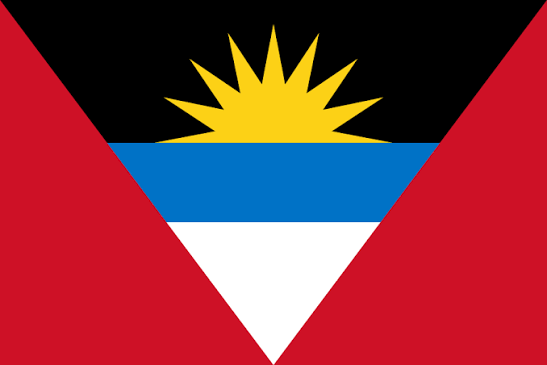
Authors: Alek UMONT
Published date: September 15, 2026
Key data
Official name: Antigua and Barbuda.
Capital: Saint John’s, located on the island of Antigua.
Status: Independent sovereign state since 1981, member of the Commonwealth, the Organization of American States, CARICOM, the Organization of Eastern Caribbean States, and the United Nations.
Head of state: King Charles III, represented by a governor general. Antigua and Barbuda remains a parliamentary constitutional monarchy, even if the republican debate exists in the Caribbean political space.
Head of government: Gaston Browne, Prime Minister, leader of the Antigua and Barbuda Labour Party. He won a fourth consecutive term in 2026, after an early election that strengthened his party’s majority[1].
Political system: Westminster-style parliamentary democracy, with a bicameral Parliament composed of an elected House of Representatives and an appointed Senate.
Population: about 94,000 inhabitants according to IMF estimates for 2026[2]. The population is mainly concentrated on the island of Antigua, Barbuda being much less populated.
Area: about 442 km² for the entire state, consisting mainly of the islands of Antigua and Barbuda, plus several small islands and islets.
Official language: English.
Currency: Eastern Caribbean dollar, administered by the Eastern Caribbean Central Bank. The currency is common to several states and territories of the Organization of Eastern Caribbean States.
GDP: about $2.3 billion in current events in 2024 according to the World Bank[3].
Income level: A high-income economy according to international classifications, but with a high vulnerability to external shocks, natural disasters, debt and sector concentration.
Recent growth: The IMF highlights the continued economic expansion in 2026, supported by resilient tourism and construction activity, with a moderation in inflation[4].
Public debt: According to the IMF, public debt has declined from about 101% of GDP in 2020 to about 68% of GDP in 2025, thanks in part to the improvement in the fiscal position[5].
Dominant economic sectors: tourism, construction, real estate, services, public finance, activities related to the citizenship by investment program, transportation, trade, hospitality, maritime and nautical activities.
Sensitive strategic programme: Citizenship by Investment Programme, established by the 2013-2014 texts, allowing the acquisition of citizenship for investment under certain conditions[6]. This programme represents a significant financial lever, but it is subject to increasing pressure from the European Union and the United States.
Major diplomatic event: Antigua and Barbuda will host the 2026 Commonwealth Heads of Government Meeting, from 1 to 4 November 2026, under the theme « Accelerating Partnerships and Investment for a Prosperous Commonwealth ».[7]
Main vulnerabilities: dependence on tourism, exposure to hurricanes, public debt still high despite improvement, dependence on imports, international pressure on citizenship by investment, land and political tensions around Barbuda, cost of living, small administrative size, climate vulnerability, limited capacity for diversification.
- Executive Summary
Antigua and Barbuda is a small Caribbean state whose power is measured neither by its size, nor by its population, nor by its military capabilities, but by its ability to transform vulnerability into diplomacy. The country is tiny, exposed to hurricanes, dependent on tourism and inserted into a global economy that it does not control. However, it has an active international voice, visible regional leadership, a strong position on climate justice, a diplomatic reception capacity greater than its demographic weight and an economic strategy based on attractiveness, mobility, taxation, investment and services.
Antigua and Barbuda’s trajectory illustrates the contradictions of small island states. The country is statistically classified as a high-income economy, but this wealth does not remove vulnerability. On the contrary, it can sometimes mask it. An economy based on tourism, construction, real estate, and external flows can have robust indicators while remaining highly exposed to a few variables: North American and European tourist arrivals, energy prices, air transport costs, hurricanes, international standards, financial reputation, and European Union or U.S. decisions on citizenship-by-investment programs.
The IMF acknowledges in 2026 that the economy continues to grow, driven by tourism and construction, with moderate inflation. But it also highlights the risks: global uncertainty, trade tensions, volatility in financial markets and commodity prices, climate vulnerability and limited administrative capacity[8]. The country is therefore improving, but it remains structurally fragile.
Public debt is one of the major issues. The IMF estimates that it has fallen from around 101% of GDP in 2020 to around 68% in 2025, which is a significant improvement[9]. This decline reflects a fiscal effort, an economic recovery and increased revenues. But the level remains high for a small state vulnerable to natural disasters. The issue is not just debt in normal times. It is the ability to absorb a major shock without losing the sustainability trajectory.
The country is very dependent on tourism. This dependence is classic in the Caribbean, but it is particularly strategic for Antigua and Barbuda. Tourism provides jobs, tax revenues, foreign exchange, investment, construction and a large part of domestic demand. But it also exposes the state to external cycles. A hurricane, a pandemic, a US recession, an energy crisis or a change in air routes can produce an immediate shock. The Covid-19 pandemic has reminded us that tourism is a mobility rent: when it stops, the island economy contracts sharply.
The second sensitive economic lever is the citizenship by investment program. This program makes it possible to attract capital and finance the state, but it exposes Antigua and Barbuda to increasing pressure. The government indicated in July 2026 that it had received a communication from the European Commission calling for the gradual elimination of the program by June 1, 2028, under penalty of risk on visa-free access to the Schengen area[10]. This request is strategic. It goes to the heart of the financial model of several small Caribbean states: selling a form of international mobility for investment, while maintaining the confidence of Western partners.
Domestic politics is dominated by Gaston Browne and the Antigua and Barbuda Labour Party. The 2026 election victory, presented by Reuters and AP as a fourth consecutive term and a strengthened victory, consolidates the prime minister’s grip on political life[11].
This stability can facilitate decision-making, but it also raises the question of pluralism, the quality of democratic debate and political renewal. In small states, the concentration of power can be effective, but it can also reduce checks and balances.
Barbuda is another point of tension. The island was devastated by Hurricane Irma in 2017. Since then, debates over reconstruction, land, tourism development, collective land ownership and the rights of the Barbudans have fuelled significant tensions. In July 2026, the cabinet announced the ratification of the first freehold certificates for Barbudans, a milestone presented as historic and paving the way for a Barbuda land registry[12]. This issue is highly strategic: it touches on the relationship between development, reconstruction, local identity, property, tourism investment and community sovereignty.
Finally, Antigua and Barbuda is seeking to convert its vulnerability into international leadership. The country has positioned itself strongly on the issues of climate justice, loss and damage financing, small island states’ debt and international financial reform. The hosting of CHOGM 2026 should be read in this perspective. For a country with fewer than 100,000 inhabitants, hosting a Commonwealth summit is an instrument of visibility, influence, investment and niche diplomacy[13].
Strategic reading: Antigua and Barbuda is a small state, but not a marginal player. Its strategy is to use tourism, climate diplomacy, the Commonwealth, citizenship by investment and its Caribbean position to compensate for its structural vulnerability. The main challenge for 2026-2030 will be whether the country can reduce its dependencies without losing the rents that finance its stability.
- Strategic historical landmarks
The history of Antigua and Barbuda is one of dual heritage: colonial and insular. The country is made up of two main islands, Antigua and Barbuda, whose trajectories are linked but not identical. Antigua has been further integrated into the colonial plantation economy and political infrastructure. Barbuda has retained a specific community and land identity, the importance of which is shown by contemporary tensions.
Before European colonization, the islands were frequented and inhabited by Amerindian populations, particularly Arawak and Caribs. European colonization radically transformed the space. The British established their domination over Antigua in the seventeenth century. The island became a plantation territory, mainly sugar-based, integrated into the Atlantic slave economy. The enslaved African workforce became the demographic, economic and social foundation of the island.
Slavery profoundly structured society. As in the whole of the British Caribbean, the plantation produced a racial hierarchy, a concentration of land, a dependence on exports and lasting social violence. The abolition of slavery in 1834 did not eliminate inequalities. It opened a complex transition to free work, but economic relations remained marked by the plantation heritage. The memory of slavery remains central to contemporary Caribbean politics, particularly in claims for reparations.
Barbuda occupies a particular trajectory. Long associated with forms of community land management, it differs from Antigua by its low density, a strong local identity and a specific relationship with the land. This difference explains the contemporary tensions over tourism projects, post-Irma reconstruction and land reform. The Barbudan issue cannot be reduced to a technical question of development; it is an identity and political issue.
In the twentieth century, Antigua and Barbuda followed the trajectory of the British colonies in the Caribbean towards internal autonomy, then independence. The country became independent on 1 November 1981, while retaining the British sovereign as head of state within the framework of the Commonwealth. This independence was part of a compromise: external sovereignty, British parliamentary system, persistent links with London, membership of CARICOM and the Caribbean space.
The independent political system is dominated by parties that emerged from social, trade union and post-colonial struggles. The Bird family and the Antigua Labour Party have long occupied a central place. This domination has helped to stabilise the state, but it has also fuelled criticism of clientelism, the concentration of power and the weakness of alternations.
The end of the twentieth century and the beginning of the twenty-first century saw the country increasingly move towards tourism, services, offshore finance and capital attraction policies. Like many small island states, Antigua and Barbuda sought to transform its sovereignty into an economic asset. Citizenship, taxation, flagging, financial regulation, legal stability and visa-free access became resources. This logic produced revenue, but it made the state dependent on standards decided elsewhere.
Hurricane Irma in 2017 was a historic shock. Barbuda was devastated and a large part of its population was evacuated. This event showed the extreme climate vulnerability of the country. It also revived debates on land, reconstruction and the type of development to be favoured. For some, reconstruction should open Barbuda to tourism investment. For others, it threatened the island’s land and community identity.
The 2020s were marked by a double sequence: the Covid-19 pandemic, which hit tourism directly, and then the recovery. Antigua and Barbuda bounced back, but with high debt, investment needs and renewed dependence on exposed sectors. In 2026, the country entered a new phase: Gaston Browne’s fourth term, European pressure on citizenship by investment, hosting the CHOGM and consolidating the climate diplomatic role.
Historical reading: Antigua and Barbuda is a state born of plantation, slavery, decolonization and tourism specialization. Its contemporary trajectory consists of transforming a small island sovereignty into an instrument of attractiveness and international advocacy.
- Current political structure
Antigua and Barbuda is a Westminster parliamentary constitutional monarchy. The British sovereign is head of state, represented by a governor general. Effective political power belongs to the government, led by the Prime Minister, who is the result of the parliamentary majority. This institutional architecture is common to several Caribbean states of the Commonwealth.
Political life is dominated by Gaston Browne and the Antigua and Barbuda Labour Party. The 2026 victory reinforced that dominance. Reuters reported that Browne’s party increased its majority by winning 15 of the 17 seats in the lower house according to official preliminary data, after a campaign dominated by the economy and concerns over U.S. visa restrictions[14]. AP described the victory as an unprecedented fourth consecutive term, reducing the main opposition to a very limited presence in parliament[15].
This situation produces strong governmental stability. Browne has a clear majority, significant political control and the ability to drive the economic and diplomatic agenda. For a small state, this stability can be an advantage. It facilitates quick decisions, international negotiations, the preparation of events such as the CHOGM, budgetary arbitrations and sensitive reforms.
But it also creates a risk of concentration. When parliamentary opposition is reduced, the quality of public debate depends more on the media, civil society, independent institutions, courts and administrative oversight mechanisms. In small states, where personal and political networks are very dense, the long-term dominance of a party can reinforce clientelism, perceptions of favouritism and weak checks and balances.
The republican debate exists, but it is not the most immediate issue. After the death of Elizabeth II, Gaston Browne raised the possibility of a referendum on the transition to a republic. The debate is part of a broader Caribbean dynamic, after Barbados’ decision to become a republic in 2021. But the constitutional question is less urgent than the economic, climate and financial issues. The maintenance of the monarchy does not prevent active sovereign diplomacy, but it does raise a symbolic question: how far should institutional decolonization go?
The relationship between Antigua and Barbuda is an important internal political issue. Barbuda has a specific identity and its own local institutions, including the Barbuda Council. Debates over land, post-Irma reconstruction and tourism development have fuelled a lasting tension between the national logic of development and the Barbudan community logic. The central government presents land reforms as a way to modernise and give the Barbudans clearer property rights. Critics sometimes see them as a challenge to traditional collective ownership and an excessive openness to real estate and tourism interests.
The government communiqué of July 2026 announcing the ratification of the first freehold certificates of ownership for Barbudans and the creation of a Barbudan land registry illustrates the importance of this issue[16]. This is not just an administrative reform. It is a transformation of the relationship to land, investment and identity of Barbuda.
Political interpretation: Antigua and Barbuda is stable, but this stability is based on strong partisan dominance. The main political risk is not immediate governmental instability; it is the weakening of pluralism, tension with Barbuda and the politicization of economic reforms under external constraint.
- Economic structure
Antigua and Barbuda’s economy is a service economy, highly dependent on tourism. This dependence is both the basis of its prosperity and the source of its vulnerability. The country has neither a large domestic market, nor heavy industry, nor an agriculture capable of structuring the economy on its own. It depends on external flows: visitors, investments, transfers, capital, imports, transport, financial standards, services and reputation.
Tourism is the main driver. Antigua has an image as a high-end beach destination, with beaches, marinas, hotels, cruises, nautical events and proximity to North American and European markets. Tourism supports construction, trade, restaurants, transport, services and tax revenues. But it makes the country vulnerable to any shock that affects international mobility.
Construction is the other cyclical driver. The IMF notes that the recent economic expansion is supported by construction activity and resilient tourism[17]. Construction responds to several dynamics: hotel projects, housing, infrastructure, tourism-related investments, projects supported by citizenship by investment and reconstruction in Barbuda. But it can also create real estate cycles, land tensions and dependence on external investors.
The Citizenship by Investment Program is a sensitive financial pillar. The official website of the program recalls that the scheme was established on the basis of the 2013-2014 legislative framework[18]. It allows foreign investors to obtain citizenship under conditions, in exchange for financial contributions, real estate investments or other authorized forms of investment. For the State, these programs are an important source of revenue, particularly useful when the tax base is limited and investment needs are high.
But the model is under pressure. The European Union and the United States are concerned about the risks of security, money laundering, tax evasion, financial crime, and visa-free mobility for people who may have only limited ties to the country. In July 2026, the government of Antigua and Barbuda reported that the European Commission had asked it to phase out its citizenship by investment program by June 1, 2028[19].
The Prime Minister then called for a united response from the Caribbean countries concerned to the European position, stressing that the very existence of the programme could become a basis for suspending visa-free access to the EU[20].
This issue is strategic because it touches on an essential resource of small states: the monetization of citizenship. Large states can finance their policies through broad tax bases, debt, industry or currency. Small island states have fewer options. Their sovereignty then becomes an economic asset: passport, taxation, flag, jurisdiction, residence, reputation. If the EU and the United States reduce this margin, Antigua and Barbuda will have to compensate with other revenues.
The fiscal position has improved. The IMF estimates that the primary balance in 2025 has reached nearly 5% of GDP, supported by higher tax revenues, larger flows from the citizenship by investment program, a withholding of current expenditures, and a slight increase in investment spending[21]. This performance is positive, but it depends in part on a program that is precisely contested by international partners.
Public debt has declined, but remains an issue. The IMF reports that it has fallen from about 101% of GDP in 2020 to about 68% in 2025[22]. This decline is real progress. But an island country vulnerable to hurricanes cannot read its debt like an ordinary continental state. Sustainability must include disaster risk, climate adaptation needs, reconstruction costs, insurance, tourism volatility, and access to finance.
Economic reading: Antigua and Barbuda has returned to a positive trajectory, but this trajectory is still based on vulnerable rents: tourism, construction, real estate and citizenship by investment. Its challenge is to convert these rents into sustainable resilience.
- Barbuda: Land, Reconstruction and Internal Strategic Tension
Barbuda is one of the most sensitive issues in Antigua and Barbuda. The island cannot be treated as a simple secondary territory. It concentrates issues of memory, land, identity, reconstruction, tourism, investment and the relationship between the centre and the periphery.
Barbuda was deeply affected by Hurricane Irma in 2017. The destruction caused the evacuation of the population and opened a long sequence of reconstruction. But this reconstruction was not limited to infrastructure. It revived the fundamental question of land status. Traditionally, Barbuda has been associated with a community-based conception of land. This conception distinguishes the island from a classic model of private tourist and real estate ownership.
The central government is championing a reform that gives the Barbudans individual title deeds. It presents this development as a recognition of rights, legal security and a basis for development. The July 2026 communiqué announcing the ratification of the first freehold certificates for Barbudans and the creation of a Barbuda land registry is presented by the cabinet as a historic step[23].
But the debate is more complex. For advocates of community land tenure, individualization can pave the way for land sales, speculation, real estate pressure, and the erosion of Barbudan identity. In a context of high-end tourism development, land is not just a local asset. It becomes an object of desire for investors, resorts, residential projects, and infrastructure. Land reform is therefore inseparable from a question of power: who controls the future of Barbuda?
The risk is that Barbuda will become a space for development decided from Antigua in the name of national growth, but experienced locally as dispossession. Conversely, the absence of investment and infrastructure can also keep Barbuda in a situation of relative underdevelopment. The dilemma is therefore real: how to develop without dispossessing? How to rebuild without erasing? How to attract capital without transforming land into a mere product?
This issue also has a climate dimension. Barbuda is vulnerable to hurricanes, sea level rise and coastal risks. Development projects must therefore incorporate very high standards of resilience. Developing tourism or real estate vulnerable to climate shocks would mean creating wealth that is exposed, likely to be destroyed or costly to protect.
Strategic reading: Barbuda is Antigua and Barbuda’s internal test. If development is perceived as inclusive, respectful of local identity, and climate-resilient, it can strengthen the state. If it is perceived as land predation or dispossession, it can fuel a lasting divide.
- International positioning
Antigua and Barbuda practices the diplomacy of a small, vulnerable but active state. Its demographic weight is limited, but its international agenda is relatively visible. The country speaks out on climate justice, international finance reform, loss and damage, the debt of small island states, slavery reparations, the vulnerability of the Caribbean and the right to development.
The first circle is Caribbean. Antigua and Barbuda is a member of CARICOM and the Organization of Eastern Caribbean States. These frameworks are essential for collective influence. Small Caribbean states have little individual capacity, but more weight when they act as a bloc on climate, international finance, regional security, taxation, or mobility.
The second circle is the Commonwealth. Hosting the CHOGM 2026 is a major diplomatic moment. The official website indicates that the meeting will take place from 1 to 4 November 2026 in Antigua and Barbuda, under the theme « Accelerating Partnerships and Investment for a Prosperous Commonwealth ».[24] For a small state, hosting a summit of this size is an act of projection. It allows it to attract international attention, enhance national logistical capacities, mobilize the diaspora, promote investment and place itself at the center of a network of 56 states.
The third circle is North American. The United States and Canada are essential for tourism, diaspora, services, students, investment, and security. U.S. concerns about visas and the citizenship-by-investment program weighed in on the 2026 campaign, according to Reuters[25]. This shows that the formal sovereignty of a small state can be heavily affected by the administrative decisions of a major power.
The fourth circle is European. The European Union has considerable normative power over citizenship-by-investment programs, taxation, finance, jurisdictional lists, and visa-free access. The European demand for the phasing out of the citizenship-by-investment program by 2028 illustrates this power[26]. Antigua and Barbuda may challenge this pressure, but must consider its potential cost.
The fifth circle is climate and multilateral. Antigua and Barbuda belongs to the group of small island developing states. Its diplomacy emphasizes a fundamental contradiction: the countries least responsible for global emissions are among the most exposed to climate consequences. This positioning gives the country moral and political authority, especially when advocating for loss and damage, access to concessional finance, and reform of per capita income-based eligibility criteria.
International reading: Antigua and Barbuda is not powerful, but it is audible. Its influence depends on its ability to speak on behalf of a vulnerability shared by small island states.
- Security, climate and resilience
Antigua and Barbuda’s security is not primarily military. It is climatic, economic, financial, energy, food, health and infrastructural. The country is not exposed to a major conventional threat. But it is exposed to shocks capable of producing rapid systemic effects.
The first risk is climate. Hurricanes are the most spectacular threat. Irma has shown that an extreme event can destroy infrastructure, displace a population, disrupt public finances and reopen deep political debates. In a small island state, a natural disaster does not only affect a region; it can affect the entire country.
Climate change also increases the risks of sea level rise, coastal erosion, reef degradation, water stress, extreme heat and changing storm patterns. The tourism economy is directly dependent on beaches, landscapes, coastal infrastructure, marinas and the environmental image. Climate security is therefore also economic security.
The second risk is energy. Antigua and Barbuda is largely dependent on fuel imports. This dependence weighs on the external balance, the cost of living, businesses, transport and electricity. Renewables are therefore a strategic lever. Reducing energy dependence would improve resilience, reduce exposure to world prices and strengthen the country’s climate credibility.
The third risk is food. Like many small island states, Antigua and Barbuda imports a significant part of its food. Shocks to world prices, transport, foreign exchange or disasters can therefore affect food security. Local agricultural development remains constrained by size, climate, water, costs and import competition.
The fourth risk is financial. The country depends on tourism flows, revenue from the citizenship by investment program, market access, and international confidence. Pressure from the EU or the US on the citizenship by investment program can become a fiscal risk. A natural disaster can become a debt risk. A reputational downgrade can become a banking risk.
The fifth risk is administrative. A small state has to manage complex obligations: anti-money laundering, tax compliance, climate, tourism, maritime security, international standards, debt, disaster preparedness, social programs, infrastructure, diplomatic relations. The small size of the administration makes the execution capacity particularly strategic.
Security reading: Antigua and Barbuda’s security is not the defence of a territory against an external enemy. It is the state’s ability to continue to function after a climatic, financial or tourist shock.
- Risks and vulnerabilities
The first vulnerability is dependence on tourism. The country is exposed to global economic cycles, air flows, company decisions, regional competition, disasters and pandemics. The second vulnerability is debt. Despite the recent improvement, public debt remains significant. The decline from 101% of GDP in 2020 to 68% in 2025 is positive, but only one major shock can reverse the trajectory[27].
The third vulnerability is the citizenship by investment program. It provides revenue, but it is politically and diplomatically contested. European pressure for an exit by 2028 threatens an important source of funding[28].
The fourth vulnerability is climate. Hurricanes, coastal erosion, rising sea levels and adaptation costs can have a lasting impact on public finances.
The fifth vulnerability is land-based. Barbuda concentrates a tension between ownership, development, local identity and tourism investment.
The sixth vulnerability is political. The strong majority of the ruling party provides stability, but reduces the parliamentary space of the opposition. This can weaken the quality of democratic control.
The seventh vulnerability is small administrative size. International obligations grow faster than domestic capacity. This creates a risk of dependence on external expertise.
- Opportunities and dynamics to follow
The first opportunity is to host CHOGM 2026. The summit can boost the country’s international visibility, attract investment, enhance its climate leadership, and show its organizational capacity.
The second opportunity is climate diplomacy. Antigua and Barbuda can continue to play a leading role for small island states, particularly on loss and damage, climate debt and international finance reform.
The third opportunity is tourism diversification. The country can move upmarket, develop ecotourism, boating, events, heritage, culture, long stays and higher value-added activities.
The fourth opportunity is renewable energy. Solar, storage, microgrids, and energy efficiency can reduce dependence on imports.
The fifth opportunity is the reform of the citizenship by investment program. If the country can strengthen transparency, due diligence, and alignment with its partners, it can preserve some of this resource or organize a less abrupt transition.
The sixth opportunity is Barbuda. A well-conducted reconstruction could become a model of climate resilience, island development and community participation.
- Points of vigilance
Track the implementation of the CHOGM 2026 and associated economic announcements. Track negotiations with the European Union on citizenship by investment. Track U.S. decisions on visas and related controls. Track the evolution of CBI program revenue in the budget. Track public debt and arrears. Track tourist arrivals and hotel capacity. Track tourism-related construction projects. Track the land situation in Barbuda. Track climate risks and hurricane preparedness. Track investments in renewables. Track administrative capacity to meet international standards of financial transparency. Track the evolution of the Republican debate. Track the quality of political pluralism after the ruling party’s massive victory.
- Final strategic reading
Antigua and Barbuda is a small state that is trying to transform vulnerability into a strategy. Its small size is not only a weakness: it allows it to be agile, visible in certain forums and capable of mobilizing niche diplomacy. But this agility does not remove fundamental constraints: tourism, climate, debt, external dependence and normative pressure.
The country has several assets. It is stable. It has a strong tourism brand. It belongs to the Commonwealth and Caribbean organizations. It has continuous political leadership. It can speak with credibility on behalf of small island states. It is hosting a major international summit in 2026. It has reduced its debt since the pandemic crisis. It has a citizenship by investment program that, despite criticism, has provided it with resources.
But its vulnerabilities are strong. Tourism can turn around. The climate can destroy. The EU can weaken the CBI programme. The debt can rise. Barbuda can become a hotbed of tension. The political domination of the ruling party can reduce checks and balances. The small administration can be overwhelmed by ever heavier international obligations.
The challenge for 2026-2030 is therefore the transition from a rent-seeking economy to a resilient economy. Tourism rent, citizenship rent, diplomatic rent, real estate rent: these resources are only useful if they finance sustainable capacities. Infrastructure, climate adaptation, energy, training, governance, diversification, transparency and cohesion between Antigua and Barbuda.
[1] Associated Press. (2026). [Article on Antigua and Barbuda]. AP News. https://apnews.com/article/d447535a8fdd8eeb9969449812a88dfa
[2] Citizenship by Investment Unit Antigua & Barbuda. (n.d.). Citizenship by investment. Government of Antigua and Barbuda. https://cip.gov.ag/citizenship/
[3] International Monetary Fund. (2026). Antigua and Barbuda: 2026 Article IV consultation—Press release; staff report; and statement by the Executive Director for Antigua and Barbuda (IMF Country Report No. 26/97). International Monetary Fund. https://www.elibrary.imf.org/view/journals/002/2026/097/article-A000-en.xml
[4] International Monetary Fund. (2026, May 7). IMF Executive Board concludes 2026 Article IV consultation with Antigua and Barbuda. International Monetary Fund. https://www.imf.org/en/news/articles/2026/05/07/pr26142-antigua-and-barbuda-imf-executive-board-concludes-2026-article-iv-consultation
[5] International Monetary Fund. (n.d.). Antigua and Barbuda. IMF DataMapper. https://www.imf.org/external/datamapper/profile/ATG
[6] Citizenship by Investment Unit Antigua & Barbuda. (n.d.). Citizenship by investment. Government of Antigua and Barbuda. https://cip.gov.ag/citizenship/
[7] Commonwealth Heads of Government Meeting 2026. (2026, June 29). [Press release]. Government of Antigua and Barbuda. https://chogm26.gov.ag/press_release_detail_page.php?press_release_page_id=pr_june_29_2026
[8] International Monetary Fund. (2026, May 7). IMF Executive Board concludes 2026 Article IV consultation with Antigua and Barbuda. International Monetary Fund. https://www.imf.org/en/news/articles/2026/05/07/pr26142-antigua-and-barbuda-imf-executive-board-concludes-2026-article-iv-consultation
[9] International Monetary Fund. (2026). Antigua and Barbuda: 2026 Article IV consultation—Staff report (IMF Country Report No. 26/97). International Monetary Fund. https://www.elibrary.imf.org/view/journals/002/2026/097/article-A001-en.xml
[10] Government of Antigua and Barbuda. (2026, July 7). Government responds to EU communication on Citizenship by Investment Programme. Government of Antigua and Barbuda. https://ab.gov.ag/detail_template.php?page=press_release%2F2026%2Fjuly%2F2026_july_07-govt_responds_to+eu_communication_on_cip
[11] Reuters. (2026, May 1). Antigua and Barbuda PM Gaston Browne wins fourth term amid U.S. visa fallout. Reuters. https://www.reuters.com/world/americas/antigua-barbuda-pm-gaston-browne-wins-fourth-term-amid-us-visa-fallout-2026-05-01/
[12] Government of Antigua and Barbuda. (2026, July 22). Report from the Cabinet. Government of Antigua and Barbuda. https://ab.gov.ag/detail_template.php?page=press_release%2F2026%2Fjuly%2F2026_july_22-report_from_the_cabinet
[13] Government of Antigua and Barbuda. (2026). Commonwealth Heads of Government Meeting 2026 (CHOGM 2026). https://chogm26.gov.ag/
[14] Reuters. (2026, May 1). Antigua and Barbuda PM Gaston Browne wins fourth term amid U.S. visa fallout. Reuters. https://www.reuters.com/world/americas/antigua-barbuda-pm-gaston-browne-wins-fourth-term-amid-us-visa-fallout-2026-05-01/
[15] Associated Press. (2026). [Article on Antigua and Barbuda]. AP News. https://apnews.com/article/d447535a8fdd8eeb9969449812a88dfa
[16] Government of Antigua and Barbuda. (2026, July 22). Report from the Cabinet. Government of Antigua and Barbuda. https://ab.gov.ag/detail_template.php?page=press_release%2F2026%2Fjuly%2F2026_july_22-report_from_the_cabinet
[17] International Monetary Fund. (2026, May 7). IMF Executive Board concludes 2026 Article IV consultation with Antigua and Barbuda. International Monetary Fund. https://www.imf.org/en/news/articles/2026/05/07/pr26142-antigua-and-barbuda-imf-executive-board-concludes-2026-article-iv-consultation
[18] Citizenship by Investment Unit Antigua & Barbuda. (n.d.). Citizenship by investment. Government of Antigua and Barbuda. https://cip.gov.ag/citizenship/
[19] Government of Antigua and Barbuda. (2026, July 7). Government responds to EU communication on Citizenship by Investment Programme. Government of Antigua and Barbuda. https://ab.gov.ag/detail_template.php?page=press_release%2F2026%2Fjuly%2F2026_july_07-govt_responds_to+eu_communication_on_cip
[20] Government of Antigua and Barbuda. (2026, July 13). PM Browne’s call for united response to EU position on CIP. Government of Antigua and Barbuda. https://ab.gov.ag/detail_template.php?page=press_release%2F2026%2Fjuly%2F2026_july_13-pm_browne%27s_call_for_united_response_to_eu_position_on_cip
[21] International Monetary Fund. (2026, May 7). IMF Executive Board concludes 2026 Article IV consultation with Antigua and Barbuda. International Monetary Fund. https://www.imf.org/en/news/articles/2026/05/07/pr26142-antigua-and-barbuda-imf-executive-board-concludes-2026-article-iv-consultation
[22] International Monetary Fund. (2026). Antigua and Barbuda: 2026 Article IV consultation—Press release; staff report; and statement by the Executive Director for Antigua and Barbuda (IMF Country Report No. 26/97). International Monetary Fund. https://www.elibrary.imf.org/view/journals/002/2026/097/article-A000-en.xml
[23] Government of Antigua and Barbuda. (2026, July 22). Report from the Cabinet. Government of Antigua and Barbuda. https://ab.gov.ag/detail_template.php?page=press_release%2F2026%2Fjuly%2F2026_july_22-report_from_the_cabinet
[24] Commonwealth Heads of Government Meeting 2026. (2026, June 29). [Press release]. Government of Antigua and Barbuda. https://chogm26.gov.ag/press_release_detail_page.php?press_release_page_id=pr_june_29_2026
[25] Reuters. (2026, May 1). Antigua and Barbuda PM Gaston Browne wins fourth term amid U.S. visa fallout. Reuters. https://www.reuters.com/world/americas/antigua-barbuda-pm-gaston-browne-wins-fourth-term-amid-us-visa-fallout-2026-05-01/
[26] Government of Antigua and Barbuda. (2026, July 7). Government responds to EU communication on Citizenship by Investment Programme. Government of Antigua and Barbuda. https://ab.gov.ag/detail_template.php?page=press_release%2F2026%2Fjuly%2F2026_july_07-govt_responds_to+eu_communication_on_cip
[27] International Monetary Fund. (2026). Antigua and Barbuda: 2026 Article IV consultation—Press release; staff report; and statement by the Executive Director for Antigua and Barbuda (IMF Country Report No. 26/97). International Monetary Fund. https://www.elibrary.imf.org/view/journals/002/2026/097/article-A000-en.xml
[28] Government of Antigua and Barbuda. (2026, July 7). Government responds to EU communication on Citizenship by Investment Programme. Government of Antigua and Barbuda. https://ab.gov.ag/detail_template.php?page=press_release%2F2026%2Fjuly%2F2026_july_07-govt_responds_to+eu_communication_on_cip