

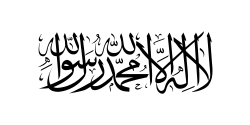
(Flag readopted on August 15, 2021)
Author: Alek UMONT
Published Date: April 8, 2026
Radio France – France Culture, Géographie à la carte, « Afghanistan: Geography, the Mother of History ».
General context
Located at the crossroads of Central Asia, the Middle East and the Indian subcontinent, Afghanistan occupies a major geostrategic position in regional balances. A landlocked country, marked by a largely mountainous terrain dominated by the Hindu Kush, it has been a space of passage and rivalry between regional and extra-regional powers for several centuries.
With an estimated population of more than 40 million, Afghanistan is characterized by strong ethnic and linguistic diversity. The main groups are Pashtuns, Tajiks, Hazaras and Uzbeks. This diversity, combined with a social organization that is still largely structured around tribal and local logics, has historically made it difficult to consolidate a stable central power.
Since August 2021, the country has been ruled by the Taliban movement that restored the Islamic Emirate of Afghanistan after the withdrawal of Western forces and the rapid collapse of the internationally backed government. This regime change has profoundly transformed the country’s internal political balance and relations with the rest of the world.
- Historical landmarks
Afghanistan’s contemporary history is marked by a succession of conflicts and external interventions that have profoundly shaped its political and social structures.
In the nineteenth century, Afghan territory became a central strategic space in the « Great Game », a geopolitical rivalry between the British Empire and the Russian Empire for control of Central Asia. Afghanistan then functioned as a buffer state between the two empires.
In the twentieth century, several major political transformations took place. In 1973, the monarchy was overthrown and a republic was proclaimed. A few years later, in 1979, the Soviet invasion triggered a protracted war that mobilized Soviet forces, Afghan mujahideen and several international actors.
After the Soviet withdrawal in 1989 and the collapse of the communist regime in 1992, the country sank into a civil war that led to the capture of Kabul by the Taliban in 1996 and the establishment of the first Islamic Emirate.
Following the attacks of September 11, 2001, an international coalition led by the United States intervened in Afghanistan and overthrew the Taliban regime. This marked the beginning of a twenty-year period marked by the Western military presence and by attempts at institutional reconstruction.
In August 2021, the withdrawal of US and NATO forces led to the rapid collapse of the Afghan government and allowed the Taliban to regain control of the country.
- Political organization and Taliban power
Since 2021, Afghanistan has been ruled by the Taliban who have re-established the Islamic Emirate of Afghanistan. This political system is based on a rigorous interpretation of Islamic law and a largely centralized power structure around the Taliban movement.
The real power is held by the movement’s supreme leader, Hibatullah Akhundzada, who wields major religious and political authority. The interim government, led by Mohammad Hassan Akhund, is composed mainly of historical figures of the Taliban movement.
The political institutions set up during the republican period were largely dismantled. Electoral processes have been suspended and the organisation of power is mainly based on religious structures and the internal networks of the Taliban movement.
To date, the Taliban regime is not officially recognized by the majority of states and international organizations, which contributes to keeping Afghanistan in a situation of diplomatic isolation.
- Security situation
Since the Taliban takeover, the security situation in Afghanistan has evolved but remains fragile. The Taliban movement controls most of the territory and has succeeded in reducing some forms of armed violence related to the civil war.
However, several armed groups continue to operate in the country, in particular the Islamic State – Khorasan Province (ISKP), which regularly carries out attacks against civilian, religious and institutional targets.
The presence of these groups is a major challenge for the Taliban regime, which is seeking to assert its monopoly on violence throughout the country.
In addition, some local tensions persist, particularly in regions where ethnic and religious minorities are present.
- Economic situation
The Afghan economy has been going through a deep crisis since the Taliban takeover. The country was already one of the poorest in the world before 2021, but the situation has worsened following the withdrawal of Western forces and the suspension of much international aid.
Several factors contribute to this economic fragility:
- the freezing of part of Afghanistan’s financial assets abroad;
- the drastic reduction of international aid;
- the collapse of some financial institutions.
The country’s economy remains largely dominated by agriculture and informal activities. Opium production is also an important source of revenue in some areas, although the Taliban have announced policies to limit such production.
Dependence on international humanitarian aid remains very high for a large part of the population.
- Social and humanitarian situation
The humanitarian situation in Afghanistan is now one of the most worrying in the world. Several million people face food insecurity and depend on international aid.
The policies of the Taliban regime have also attracted a lot of international criticism, especially with regard to the rights of women and girls.
Since 2021, several important restrictions have been put in place:
- limitation of women’s access to secondary and higher education;
- restrictions on women’s participation in working life;
- limitations on public freedoms.
These measures contribute to the regime’s international isolation and complicate efforts to cooperate with international organizations.
- Regional geopolitical issues
Despite its diplomatic isolation, Afghanistan remains a strategic territory in the regional balance. Neighbouring states are closely monitoring the country’s political and security developments.
Pakistan has a complex relationship with the Taliban regime, including the presence of armed groups active in border areas.
Iran is closely monitoring the situation of Shia minorities and migration dynamics along its eastern border.
China is showing a growing interest in Afghanistan’s stability, especially due to the proximity to the Xinjiang region and the country’s potential mineral resources.
Russia and several Central Asian states are also concerned about the risks of the spread of instability and jihadist movements in the region.
- Structural vulnerabilities
Several factors are undermining Afghanistan’s stability in the long term.
The country continues to face:
- structural weakness of state institutions;
- persistent ethnic and tribal tensions;
- a significant dependence on international aid;
- a largely informal economy.
These vulnerabilities limit the regime’s ability to sustainably stabilize the country and promote economic and institutional reconstruction.
- Outlook
In the medium term, several paths remain possible for Afghanistan. A first scenario would be that of a gradual stabilisation of the Taliban regime and a partial normalisation of international relations. A second scenario would see a continuation of long-term diplomatic isolation, accompanied by a prolonged dependence on humanitarian aid. Finally, a third scenario could be marked by a rise in internal tensions and the emergence of new forms of instability.
The country’s development will largely depend on the regime’s ability to consolidate its power, manage internal security challenges and redefine its place in regional balances.
Sources
- International Monetary Fund. (2024). World Economic Outlook database.
- United Nations. (2024). Afghanistan humanitarian needs overview.
- World Bank. (2024). Afghanistan country overview.
- SIPRI. (2024). Security and conflict data.
- Radio France – France Culture, Géographie à la carte, « Afghanistan: Geography, the Mother of History ».